FUTURES GROUP INTERNATIONAL, LLC
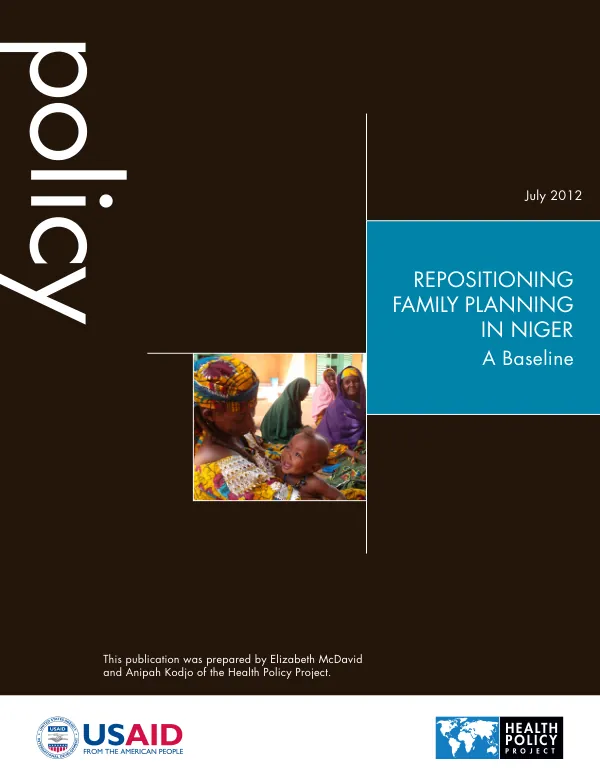
Repositioning Family Planning in Niger: A Baseline
Niger's demographic pressures and lack of progress toward the Millennium Development Goals have encouraged countries and donors to reevaluate family planning (FP) programs.
2012 · 80 pages
Sign in to readA free account is required to download.
Abstract
Since 2001, the United States Agency for International Development (USAID), the World Health Organization (WHO), and other partners have joined with national governments in sub-Saharan Africa in an initiative to raise the priority for family planning programs, known as repositioning family planning. The initiative aims to ensure that family planning remains a priority for donors, policymakers, and service providers in sub-Saharan Africa in an era when HIV, malaria, and tuberculosis programs dominate the global health agenda and receive a majority of the resources. Family planning is one of the most cost-effective, high-yield interventions to improve health and accelerate development. However, West Africa is lagging behind all other regions in FP use, with an average of 5.5 children per woman, one of the highest fertility rates and fastest growing populations in the world. High fertility leads to many unplanned pregnancies that pose serious health risks for mothers and children. In Francophone West Africa, approximately three women die from maternal causes every hour, and one child under age five dies every minute. The Health Policy Project conducted a baseline assessment to evaluate the repositioning of family planning in Niger. The assessment aimed to identify the current state of family planning in Niger, including the availability of resources, multisectoral coordination, and policies that support family planning. The study also examined barriers to community-based distribution of family planning in Niger and identified recommendations for repositioning family planning in the country. The assessment found that Niger has made progress in increasing resources for family planning, allocating and spending them more effectively and equitably. However, there are still significant barriers to community-based distribution of family planning, including lack of infrastructure, limited access to family planning services, and inadequate training for community health workers. The study recommended increasing multisectoral coordination, improving policies that support family planning, and strengthening individual and institutional capacity to assume leadership and support the family planning agenda. The Health Policy Project's assessment highlights the need for continued support and investment in family planning programs in Niger. With an estimated one-third or more of currently married women having an unmet need for family planning, there is substantial demand for family planning services in the country. By repositioning family planning in Niger, the country can improve health outcomes, accelerate development, and reduce the burden of unplanned pregnancies on mothers and children. The study's findings and recommendations provide a foundation for future efforts to reposition family planning in Niger. The assessment's results can inform policy dialogue, policy development, planning, resource allocation, budgeting, advocacy, program design, guidelines, regulations, and program improvement and management. By building on the study's findings, stakeholders can work together to strengthen family planning programs in Niger and improve the health and well-being of the country's population.