USAID DEC
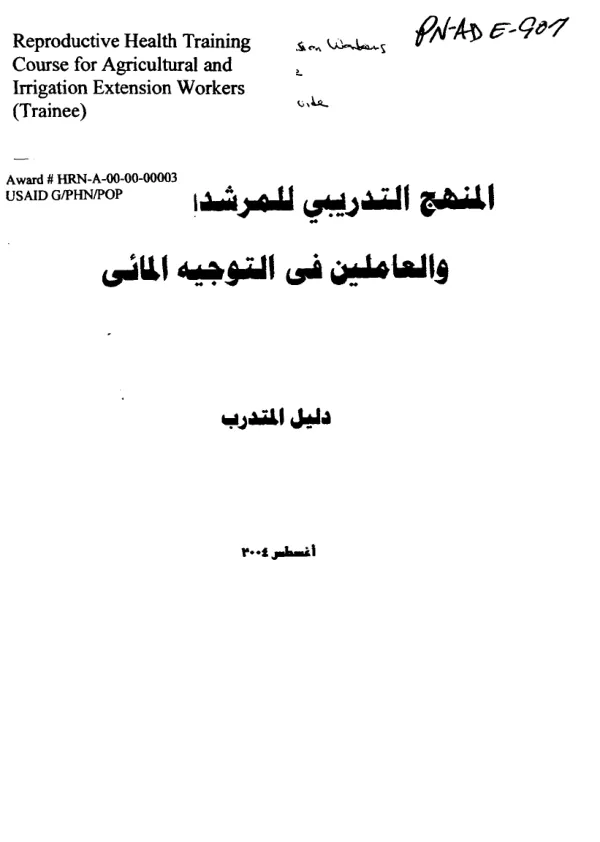
Reproductive Health Training Course for Agricultural and Irrigation Extension Workers
Sign inUSAID
Reproductive Health Training Course for Agricultural and Irrigation Extension Workers
The Reproductive Health Training Course for Agricultural and Irrigation Extension Workers is a comprehensive program designed to equip trainees with essential knowledge and skills in reproductive health.
97 pages
Sign in to readA free account is required to download.
Abstract
The course is tailored to meet the specific needs of agricultural and irrigation extension workers, who play a crucial role in promoting healthy behaviors and practices among rural communities. The training program is part of the USAID Global Health Initiative, which aims to improve health outcomes and reduce maternal and child mortality in developing countries. The course curriculum focuses on key areas of reproductive health, including family planning, maternal and child health, and HIV/AIDS prevention. Trainees learn about the importance of reproductive health in agricultural development, as well as the role of extension workers in promoting healthy behaviors and practices among farmers and their families. The training program also emphasizes the need for extension workers to provide accurate and unbiased information on reproductive health, as well as to address the social and cultural barriers that may hinder access to reproductive health services. The training course consists of both theoretical and practical components. Trainees participate in lectures, discussions, and group activities that cover topics such as reproductive anatomy, fertility awareness, and contraceptive methods. They also engage in hands-on exercises and simulations that help them develop their communication and counseling skills. The course also includes a module on gender and reproductive health, which highlights the importance of addressing the unique needs and concerns of women and girls in rural communities. One of the key objectives of the training program is to equip extension workers with the skills and knowledge needed to provide accurate and unbiased information on reproductive health. Trainees learn about the different types of reproductive health services available, including family planning, maternal and child health, and HIV/AIDS prevention. They also learn how to address common misconceptions and myths about reproductive health, as well as how to provide counseling and support to individuals and families. The training program has been designed to be highly interactive and participatory, with a focus on building the capacity of extension workers to promote healthy behaviors and practices among rural communities. The course is delivered through a combination of lectures, discussions, group activities, and hands-on exercises, and is tailored to meet the specific needs and concerns of agricultural and irrigation extension workers. By equipping extension workers with the knowledge and skills needed to promote reproductive health, the training program aims to improve health outcomes and reduce maternal and child mortality in rural communities.