USAID DEC
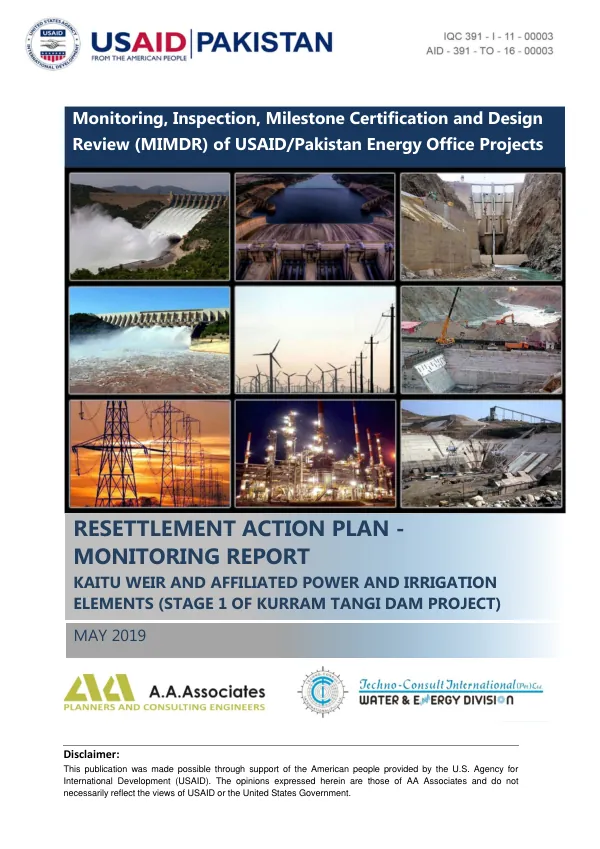
RESETTLEMENT ACTION PLAN - MONITORING REPORT KAITU WEIR AND AFFILIATED POWER AND IRRIGATION ELEMENTS (STAGE 1 OF KURRAM TANGI DAM PROJECT)
Sign inABT ASSOCIATES
RESETTLEMENT ACTION PLAN - MONITORING REPORT KAITU WEIR AND AFFILIATED POWER AND IRRIGATION ELEMENTS (STAGE 1 OF KURRAM TANGI DAM PROJECT)
The Kaitu Weir and Affiliated Power and Irrigation Elements project, a stage 1 component of the Kurram Tangi Dam Project, is a USAID-funded initiative aimed at providing energy and irrigation services to the region.
2019 · 11 pages
Sign in to readA free account is required to download.
Abstract
The project is being implemented by the Frontier Organization for Reforms and Transformation (FORT) in collaboration with the Tribal Areas Electric Supply Company (TESCO). The project's resettlement action plan (RAP) has been developed to address the social and economic impacts of the project on the local communities. The RAP outlines the measures to be taken to mitigate the impacts of the project, including the establishment of a project management unit (PMU) and a land acquisition unit (LAU). The PMU is responsible for overseeing the implementation of the project, while the LAU is responsible for acquiring land and compensating affected individuals. The project has established a community grievance management system (CGMS) to address any grievances or concerns raised by the local communities. The CGMS involves the establishment of a resettlement committee in each affected community, which is responsible for resolving grievances at the local level. In addition, an independent mediation committee (IMC) has been established to resolve grievances that cannot be resolved at the local level. The project has also implemented a comprehensive social development program in the areas of health, education, and economic development for economically displaced people. However, no economic displacement has occurred during stage 1 of the project. Vocational training and scholarships have also been provided to economically displaced people, but no such displacement has occurred during stage 1. The project has followed local law and instructions of the local administration for compensation rates decided through the Jirga system. Compensation rates have been decided by the local administration through the Jirga system involving Maliks and communities. Payments have been made to affected individuals in accordance with the entitlement matrix. The project has not yet monitored progress on quarterly progress indicators. TESCO has not initiated work on transmission lines. The project has followed local law and instructions of the local administration for compensation rates decided through the Jirga system. Compensation rates have been decided by the local administration through the Jirga system involving Maliks and communities. The project's implementation is subject to strict security protocol, making it impossible to bring international experts to the region. The project has not yet established a system for monitoring and reporting on quarterly progress indicators. The project's social development program has been implemented, but no economic displacement has occurred during stage 1. The project's resettlement action plan has been developed to address the social and economic impacts of the project on the local communities. The project has established a community grievance management system and a comprehensive social development program to mitigate the impacts of the project. The project has followed local law and instructions of the local administration for compensation rates decided through the Jirga system. The project's implementation is subject to strict security protocol, making it impossible to bring international experts to the region. The project has not yet monitored progress on quarterly progress indicators. TESCO has not initiated work on transmission lines. The project has followed local law and instructions of the local administration for compensation rates decided through the Jirga system.
Related documents
Documents in this collection
 2019
2019USAID DEC
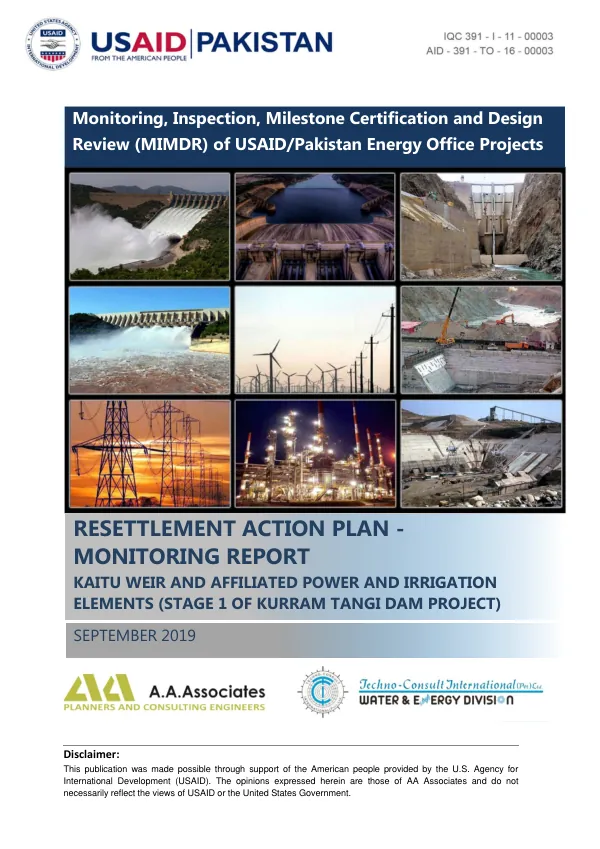
RESETTLEMENT ACTION PLAN - MONITORING REPORT KAITU WEIR AND AFFILIATED POWER AND IRRIGATION ELEMENTS (STAGE 1 OF KURRAM TANGI DAM PROJECT)
Open record 2019
2019USAID DEC