UNICEF
Role of CBOs in MNCH Care_V2
Community-based organizations (CBOs) play a crucial role in bridging access gaps for vulnerable populations in Myanmar.
2023 · 10 pages
Sign in to readA free account is required to download.
Abstract
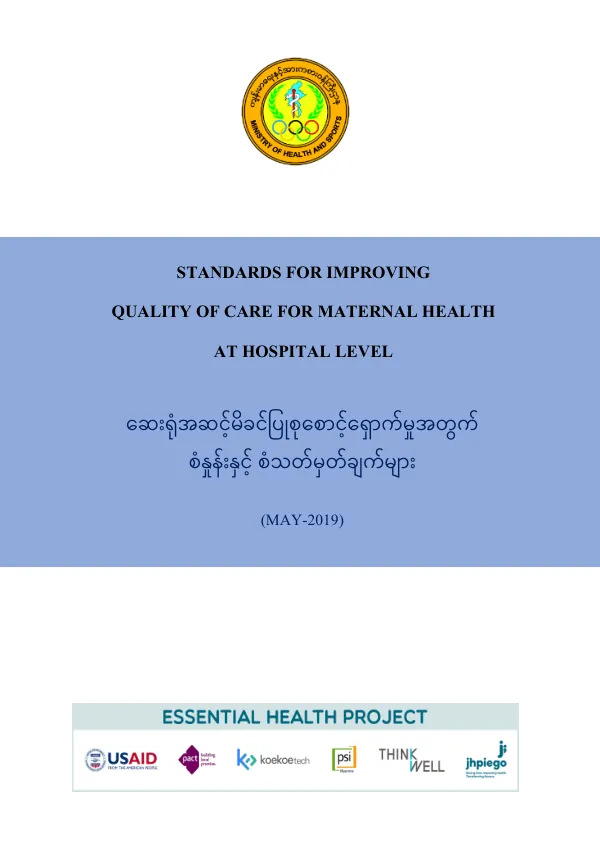
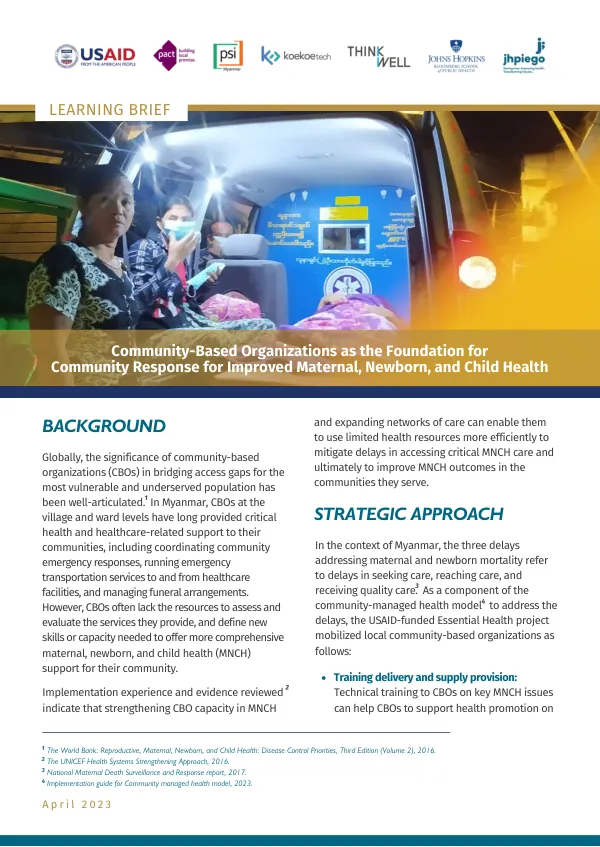
At the village and ward levels, CBOs have long provided critical health and healthcare-related support, including emergency response coordination, transportation services, and funeral arrangements. However, CBOs often lack the resources to assess and evaluate their services, and define new skills or capacity needed to offer more comprehensive maternal, newborn, and child health (MNCH) support. The World Bank's Reproductive, Maternal, Newborn, and Child Health: Disease Control Priorities, Third Edition (Volume 2), 2016, and the UNICEF Health Systems Strengthening Approach, 2016, highlight the importance of addressing the three delays in maternal and newborn mortality: delays in seeking care, reaching care, and receiving quality care. In Myanmar, the USAID-funded Essential Health project mobilized local CBOs to address these delays through a community-managed health model. The project's strategic approach focused on training delivery and supply provision, partnerships and networking, and financial resource development. Technical training on MNCH issues helped CBOs support health promotion and improve referral capacity. Partnerships with local health facilities and other CBOs enabled CBOs to access additional resources, expertise, and networks. Financial resource development ensured that CBOs had access to stable and sufficient funding to support families in need and reduce out-of-pocket expenditure. The project implemented a multi-pronged strategy for building community resilience through strengthened CBOs, including technical trainings on emergency care and basic life support, training delivery and supply provision, partnerships and networking, and financial resource development. Essential Health provided medical equipment, such as BVM Resuscitator Sets, oxygen cylinders, and pulse oximeters, to support CBOs in basic life support care. The project also developed MNCH awareness-raising materials, such as antenatal care posters and safe motherhood pamphlets, to reinforce CBOs' community outreach activities. Essential Health implemented networking meetings involving CBOs, focal persons from clinical service delivery sites, community networks, and other MNCH key stakeholders to facilitate effective communication, coordination, and collaboration. The project allocated MNCH emergency referral funds to CBOs during an official fund handover ceremony, with terms and conditions for grant transfer reviewed before signing CBO agreements. Essential Health staff conducted mentoring and coaching visits to collaborating CBOs to assess grant support for MNCH emergency referrals and introduced different fund-raising methods to strengthen CBOs' fund-raising capacity and improve their financial sustainability. The project's implementation experience and evidence reviewed indicate that strengthening CBO capacity in MNCH and expanding networks of care can enable them to use limited health resources more efficiently to mitigate delays in accessing critical MNCH care and ultimately improve MNCH outcomes in the communities they serve.