USAID. MISSION TO GUATEMALA
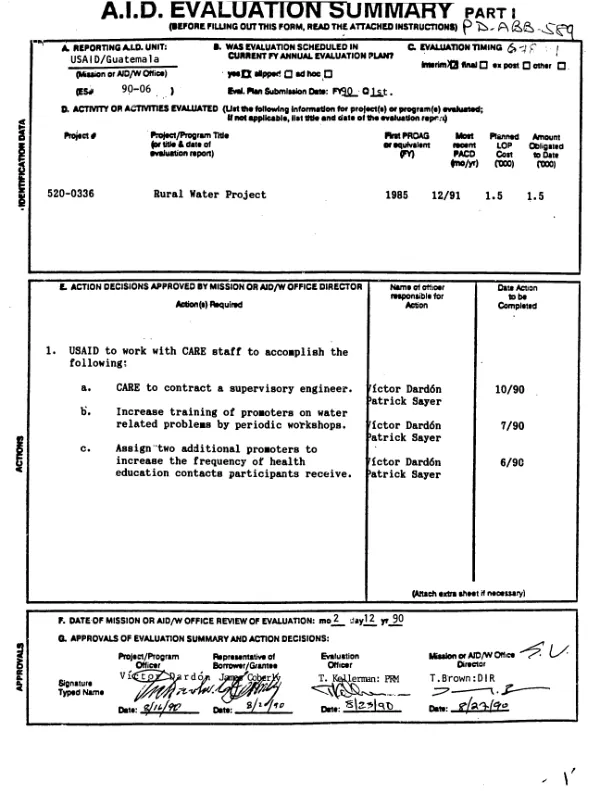
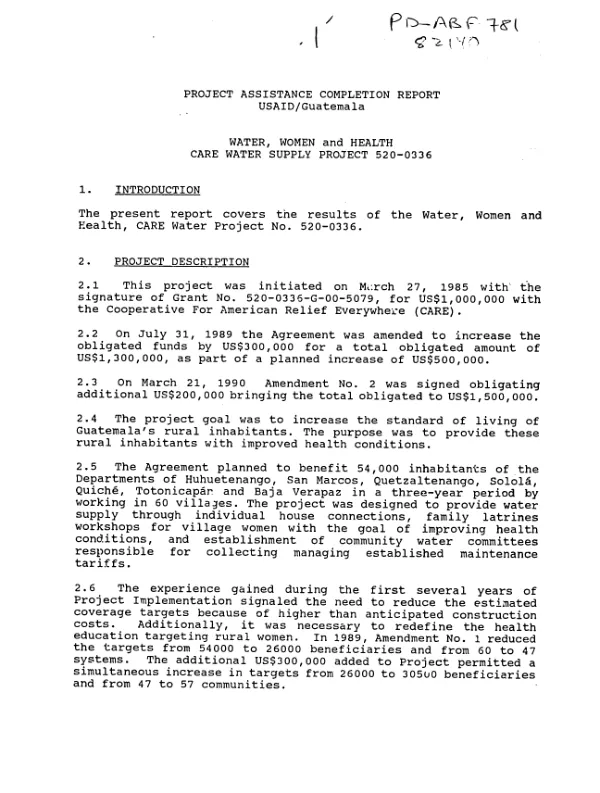
Rural water project
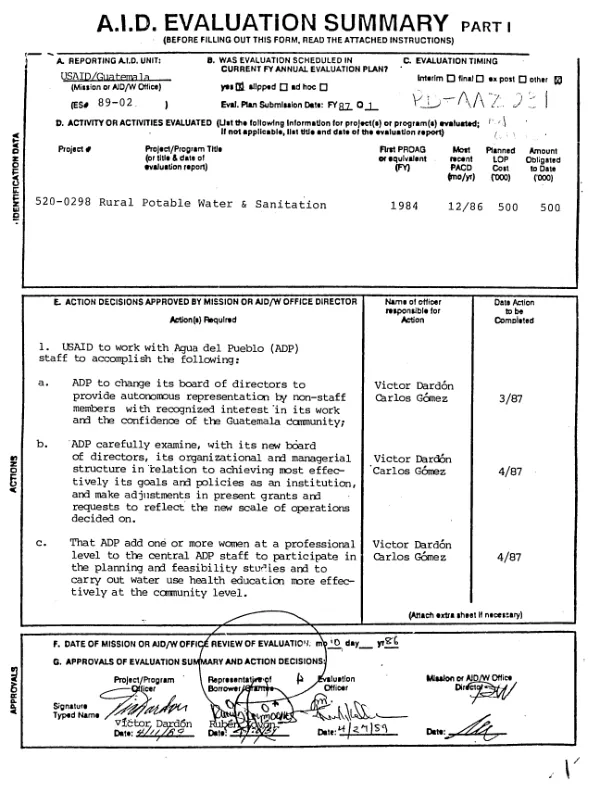
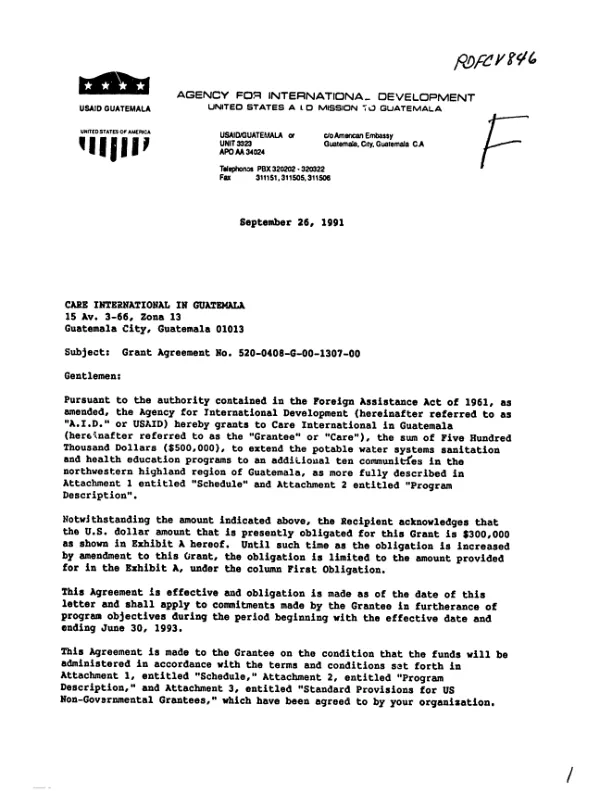
Summarizes mid-term external evaluation (1/84-6/86) of a project implemented by CARE to improve potable water and sanitation services in 60 rural communities.
1989
Sign in to readA free account is required to download.
Abstract
That evaluation (PD-AAZ-234) also covers two water and sanitation projects (5200298 and 5200335) implemented by Agua del Pueblo, a Guatemalan PVO. The project is behind schedule due to CARE"s managerial problems and due to the necessity to sign agreements with the newly established Ministry of Urban and Rural Development. In communities where CARE has not initiated a latrine program or health education (the latter is yet to be implemented), there was awareness, especially among the women, of a need for improved disposal of human excreta. However, while CARE has helped to develop local water committees, it has not integrated women into project implementation. Despite its problems, the project should attain most of its objectives by the 6/30/88 PACD. A sanitary engineer and a social scientist should evaluate the technical and community aspects of all project systems to determine whether they are working and whether the designs are appropriate for long-term service, operation, and maintenance. The selection criteria for at least a percentage of new CARE projects should include at least one of the following: (1) that health education or training of primary health care workers be underway; (2) that some existing or introduced income-generating activity for women be in place so that the opportunity costs of time and effort saved by better water supplies can be locally utilized; (3) that USAID/G provide agencies (and perhaps others in the water and sanitation sector) with TA aimed at improving their use of computers and their coordination with each other and with Government of Guatemala (GOG) planning; (4) that a departmental-level support system be set up, perhaps within a GOG water agency, to assist in major repairs, stock basic supplies, etc. Several lessons were learned. (1) Environmental sanitation education is very important to ensure that the water and latrines will actually benefit the users. (2) The design of large projects is beyond the technical capacity of rural aqueduct technicians. (3) Health education programs should commence simulatenously with construction. (4) Construction of latrines should not be delayed until the construction of the water system is completed. (5) Perhaps most importantly, project objectives should be more flexible so that resources can be used to provide a greater number of beneficiaries a full range of services rather than to establish a specific number of systems. The effective and long-term viability of the water systems should be emphasized.
Related documents