FHI 360
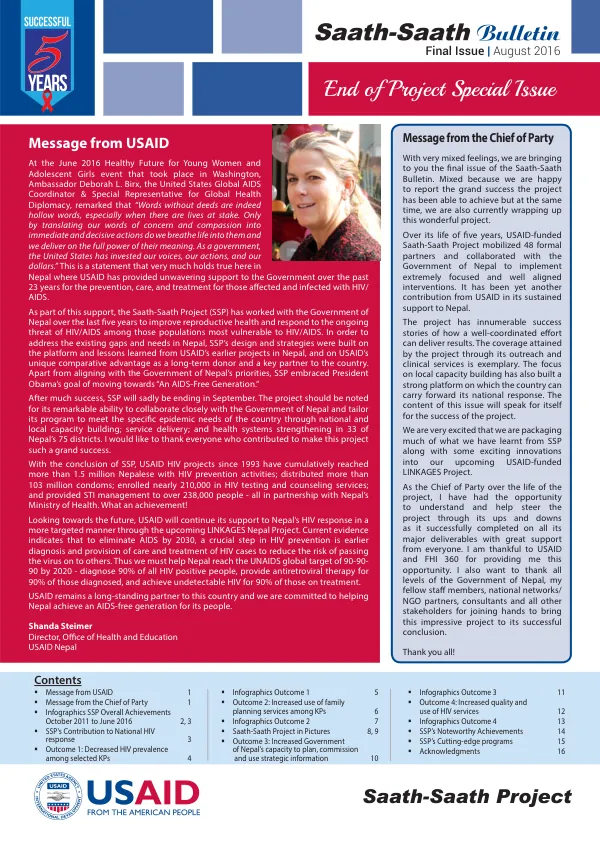
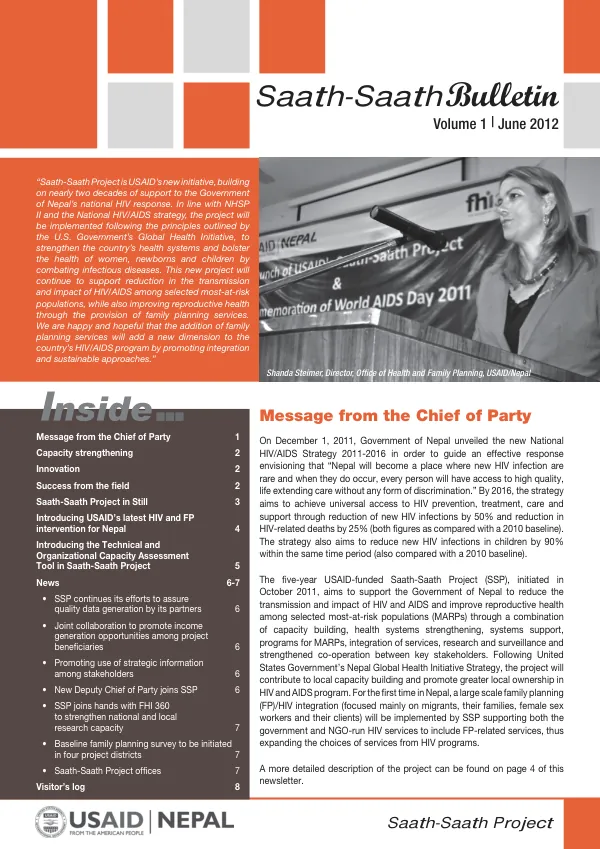
Saath-Saath Project Bulletin Volume 1 June 2012
The Saath-Saath Project is a USAID initiative implemented in Nepal to support the country's national HIV response.
2012 · 8 pages
Sign in to readA free account is required to download.
Abstract
The project aims to strengthen the country's health systems and improve the health of women, newborns, and children by combating infectious diseases, including HIV/AIDS. The project focuses on reducing the transmission and impact of HIV/AIDS among selected most-at-risk populations, while also improving reproductive health through the provision of family planning services. The project is implemented in line with the National HIV/AIDS Strategy 2011-2016, which aims to achieve universal access to HIV prevention, treatment, care, and support by 2016. The strategy also aims to reduce new HIV infections in children by 90% within the same time period. The Saath-Saath Project contributes to local capacity building and promotes greater local ownership in HIV and AIDS programs. The project incorporates a gender perspective from the planning phase and makes conscious efforts to work with implementing agencies to bring it into practice. Gender specialists under the project use the FHI 360 Gender Integration Framework as a guiding tool to promote a gender-based approach in all activities. The project ensures that its plans and activities are implemented through a gender lens and contributes to gender equality and social inclusion indicators. The project has implemented various interventions, including capacity strengthening, innovation, and success from the field. The capacity strengthening component focuses on empowering women in the project, with 15 out of 38 implementing agencies having women as the head of the organization or board member. The innovation component includes the use of new age technology, such as web-based short message services (SMS), to reach female sex workers and provide them with HIV and STI prevention and sexual and reproductive health-related information. The project has also implemented community and home-based care (CHBC) programs in remote districts, including Achham, to provide continuum of HIV-related services to those infected with HIV at their doorstep. The CHBC program has helped address existent HIV-related stigma and discrimination in the community. From October 2011 to March 2012, a total of 3,473 HIV-infected individuals were availing CHBC services under the project throughout its project districts. The project has also piloted the community-based Prevention of Mother-to-Child Transmission (PMTCT) program in 2009, in collaboration with UNICEF and the Government of Nepal, to reduce transmission of HIV from mother to child. The project has interlinked the CB-PMTCT and CHBC programs to ensure continuum of services among those infected with HIV and prevent HIV among newborns. The Saath-Saath Project has made significant progress in reducing the transmission and impact of HIV/AIDS among selected most-at-risk populations, while also improving reproductive health through the provision of family planning services. The project's innovative approaches, including the use of web-based SMS and CHBC programs, have helped reach the unreached and provide them with essential health services.
Related documents