FHI 360
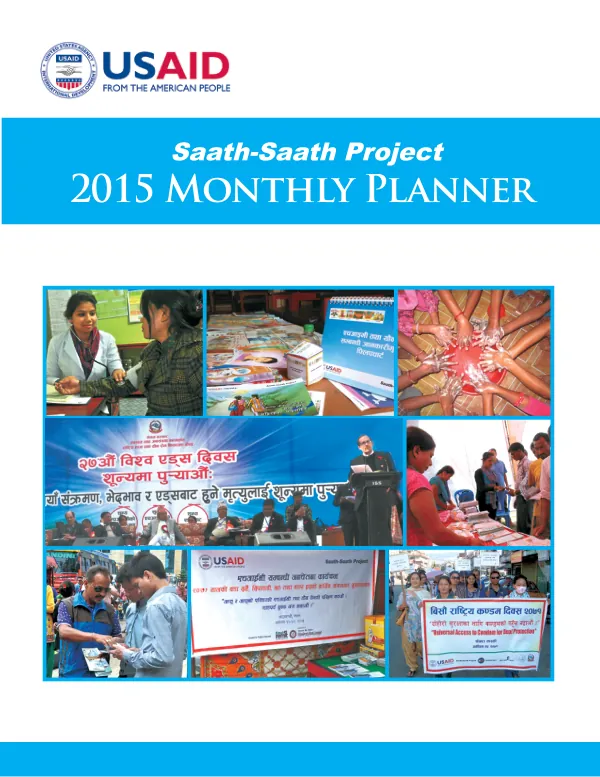
Saath-Saath Project (SSP) Final Report
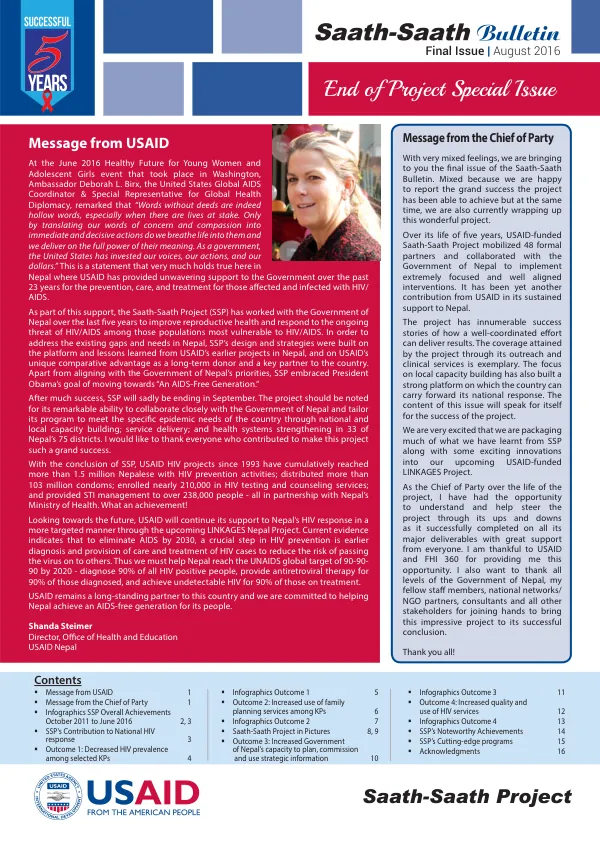
The Saath-Saath Project (SSP) is a USAID-funded initiative aimed at reducing the transmission and impact of HIV/AIDS and improving reproductive health among selected key affected populations (KAPs) in Nepal.
2016 · 2 pages
Sign in to readA free account is required to download.
Abstract
The project operates in partnership with the Government of Nepal (GoN), Ministry of Health and Population (MoHP), and other local stakeholders. SSP contributes to the GoN's National HIV/AIDS Strategy 2011-2016 and the Nepal HIV Investment Plan (NHIP) 2014-2016. The project's goal is to reduce HIV prevalence and improve reproductive health among KAPs, including female sex workers (FSWs), migrant couples, and people living with HIV (PLHIV). SSP works in 33 districts across Nepal, focusing on five outcome areas: decreased HIV prevalence, increased use of family planning services, increased GoN capacity, increased quality and use of HIV services, and strengthened coordination among HIV/AIDS partners. By 2016, SSP aims to achieve several key results, including reducing HIV prevalence among FSWs to 2%, increasing the Contraceptive Prevalence Rate (CPR) among migrant couples to 30% in four districts, and providing targeted HIV prevention services to 43,000 FSWs, 150,000 migrants and their wives, and 25,000 KAPs. The project also aims to provide HIV care and support services to 10,000 PLHIV and reach 7,500 FSWs and transgender sex workers (TG SWs) with specific interventions addressing gender-based violence (GBV) and coercion related to HIV/AIDS. SSP works in collaboration with FHI 360 Nepal, Association of Medical Doctors of Asia (AMDA) Nepal, and 40 local NGO partners. The project's guiding principles include strengthening country and local ownership, increasing effectiveness, institutionalizing coordination and collaboration, and building local capacity.
Related documents