USAID DEC
Safe Handling of Chlorine Products for Drinking Water Treatment in Emergency Contexts
Sign inUSAID
Safe Handling of Chlorine Products for Drinking Water Treatment in Emergency Contexts
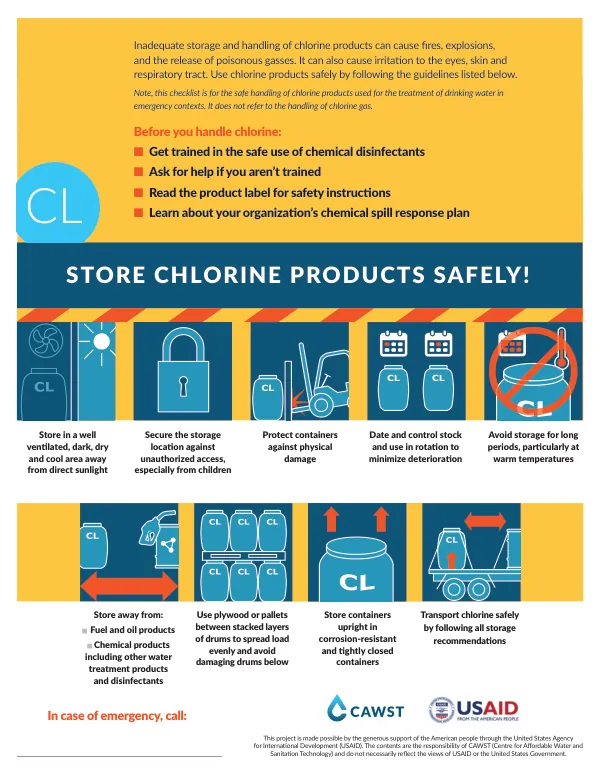
Proper storage and handling of chlorine products is crucial to prevent accidents and ensure safe use in emergency contexts.
2021 · 1 pages
Sign in to readA free account is required to download.
Abstract
Chlorine products should be stored in a well-ventilated, dark, dry, and cool area, away from direct sunlight. The storage area must be secure against unauthorized access, particularly from children. Containers should be stored upright in corrosion-resistant and tightly closed containers to prevent damage. To prevent physical damage to containers, it is recommended to use plywood or pallets between stacked layers of drums to spread the load evenly. Date and control stock to minimize deterioration, and use in rotation to ensure the oldest stock is used first. Chlorine products should be stored away from fuel and chemical products, including other water treatment products and disinfectants, as these can react with chlorine to cause accidents. Inadequate storage and handling of chlorine products can lead to serious consequences, including fires, explosions, and the release of poisonous gases. These can cause irritation to the eyes, skin, and respiratory tract. To prevent such accidents, it is essential to follow the guidelines for safe handling of chlorine products. Before handling chlorine, individuals should get trained in the safe use of chemical disinfectants, read the product label for safety instructions, and familiarize themselves with their organization's chemical response plan. The guidelines for safe handling of chlorine products are designed for emergency contexts, where the treatment of drinking water is critical. These guidelines do not apply to the handling of chlorine gas. The American people, through the United States Agency for International Development (USAID), have made this project possible. The contents of this document are the responsibility of the Centre for Affordable Water and Sanitation Technology (CAWST) and do not necessarily reflect the views of USAID or the United States Government. In case of an emergency, it is essential to have a plan in place, including knowing the contact information for emergency services.
Related documents
Documents in this collection
 2021
2021USAID DEC
Remote Developmental Evaluation: A Guide for Funders and Practitioners
Open record
USAID DEC
Design, Implementation, Monitoring, and Evaluation of Cross-Cultural HIV-Related Mental Health and Psychosocial Assistance Programs: A User’s Manual for Researchers and Program Implementers (Adult Version)
Open record