HELLEN KELLER INTERNATIONAL
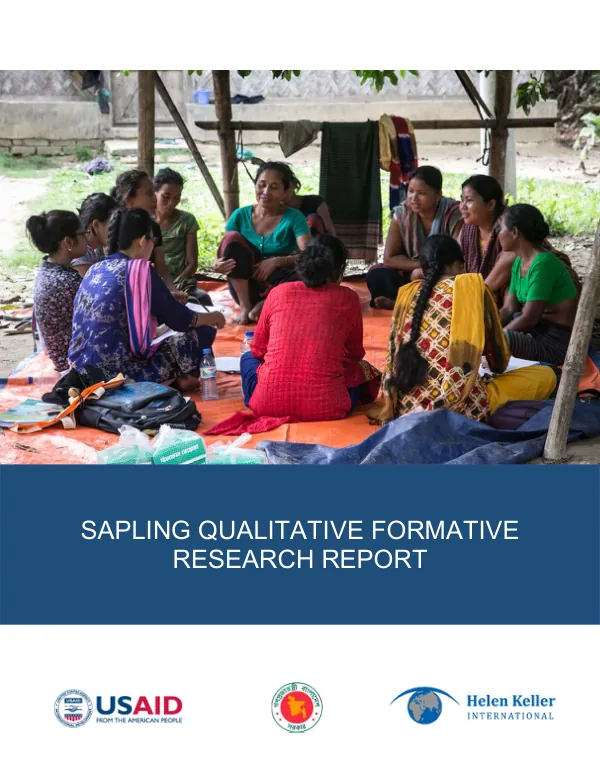
SAPLING Qualitative Formative Research Report
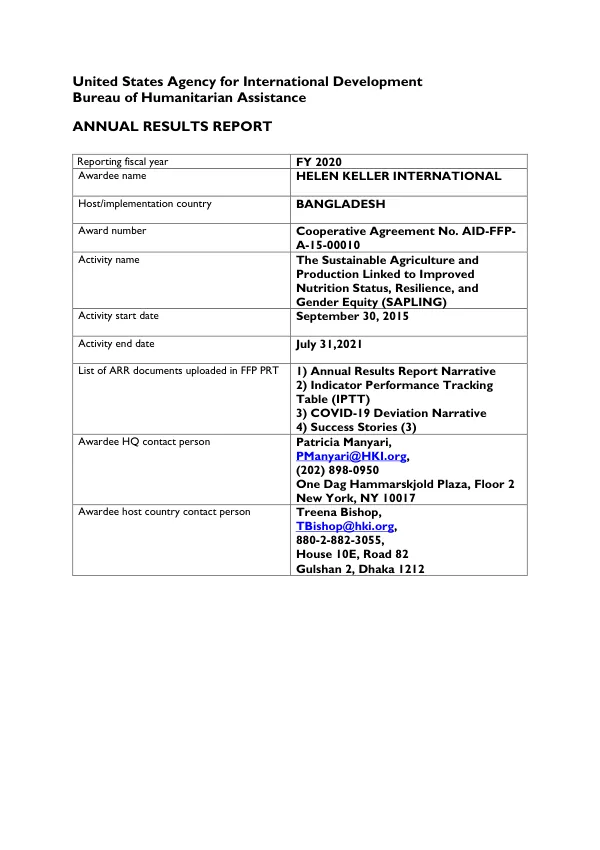
Sustainable Agriculture and Production Linked to Improved Nutrition Status, Resilience, and Gender Equity (SAPLING) is a qualitative formative research report submitted to the United States Agency for International Development (USAID) under the terms of the Cooperative Agreement AID-FFP-A-15-00010.
2018 · 64 pages
Sign in to readA free account is required to download.
Abstract
The report aims to assess the effectiveness of the SAPLING initiative in improving nutrition status, resilience, and gender equity in Bangladesh. The SAPLING initiative focuses on sustainable agriculture and production practices that are linked to improved nutrition status, resilience, and gender equity. The initiative is implemented in Bangladesh, with a specific focus on the Chittagong Hill Tracts (CHT) region. The research methodology employed in the study includes in-depth interviews, group activities and discussions, daily clock, mind mapping, household and community resource mapping, WASH focus group discussions, DRM focus group discussions, and adolescent aspirations. The study objectives are to assess the effectiveness of the SAPLING initiative in improving nutrition status, resilience, and gender equity, and to identify the key factors that contribute to these outcomes. The research methodology involved data collection from 15 districts in Bangladesh, with a total of 1,200 participants. The data collection tools used in the study included in-depth interviews, group activities and discussions, daily clock, mind mapping, household and community resource mapping, WASH focus group discussions, DRM focus group discussions, and adolescent aspirations. The results of the study indicate that the SAPLING initiative has been effective in improving nutrition status, resilience, and gender equity in Bangladesh. The study found that the initiative has improved food security, increased access to nutritious food, and enhanced the capacity of women to participate in decision-making processes. The study also found that the initiative has improved the overall well-being of the community, including improved health and nutrition outcomes. The study identified several key factors that contribute to the success of the SAPLING initiative, including the involvement of local communities in the decision-making process, the provision of training and capacity-building programs for farmers, and the establishment of community-based organizations to support the initiative. The study also identified several challenges that need to be addressed, including the limited access to markets and the lack of infrastructure in some areas. The study provides several recommendations for the SAPLING initiative, including the need to strengthen the capacity of local communities to participate in decision-making processes, the need to improve access to markets and infrastructure, and the need to enhance the capacity of women to participate in decision-making processes. The study also recommends the need to establish a monitoring and evaluation system to track the progress of the initiative and to identify areas for improvement. The SAPLING initiative has the potential to improve nutrition status, resilience, and gender equity in Bangladesh, and the study provides valuable insights into the effectiveness of the initiative. The study highlights the importance of community-based approaches to development, and the need to involve local communities in the decision-making process. The study also highlights the importance of capacity-building programs for farmers and the need to establish community-based organizations to support the initiative. The study provides a comprehensive understanding of the SAPLING initiative and its impact on nutrition status, resilience, and gender equity in Bangladesh. The study highlights the importance of sustainable agriculture and production practices, and the need to address the root causes of poverty and inequality. The study provides valuable insights into the effectiveness of the SAPLING initiative and its potential to improve the lives of people in Bangladesh. The SAPLING initiative has been implemented in 15 districts in Bangladesh, with a total of 1,200 participants. The study found that the initiative has improved food security, increased access to nutritious food, and enhanced the capacity of women to participate in decision-making processes. The study also found that the initiative has improved the overall well-being of the community, including improved health and nutrition outcomes.
Related documents