HELLEN KELLER INTERNATIONAL
SAPLING Barrier Analysis Report on EBF and CF for Children 6-23 Months
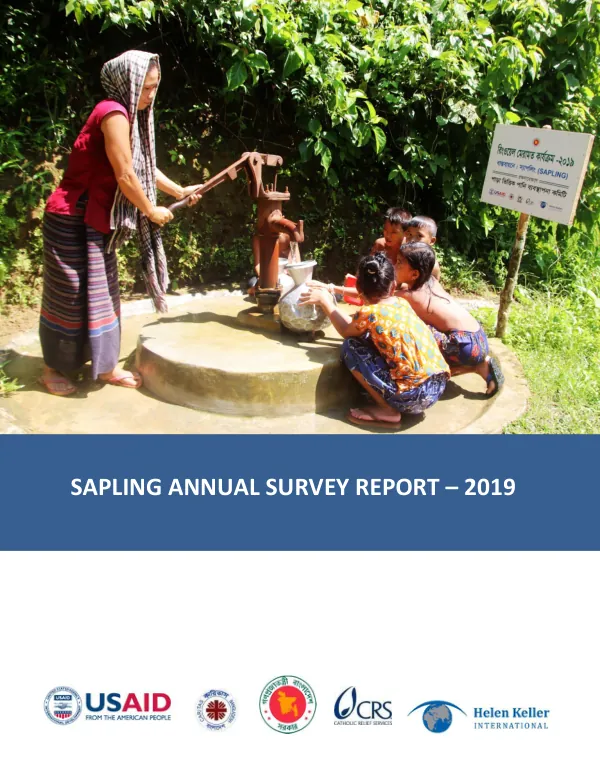
The Sustainable Agriculture and Production Linked to Improved Nutrition Status, Resilience, and Gender Equity (SAPLING) program is a Development Food Security Activity (DFSA) led by Helen Keller International (HKI) in Bangladesh.
2018 · 33 pages
Sign in to readA free account is required to download.
Abstract
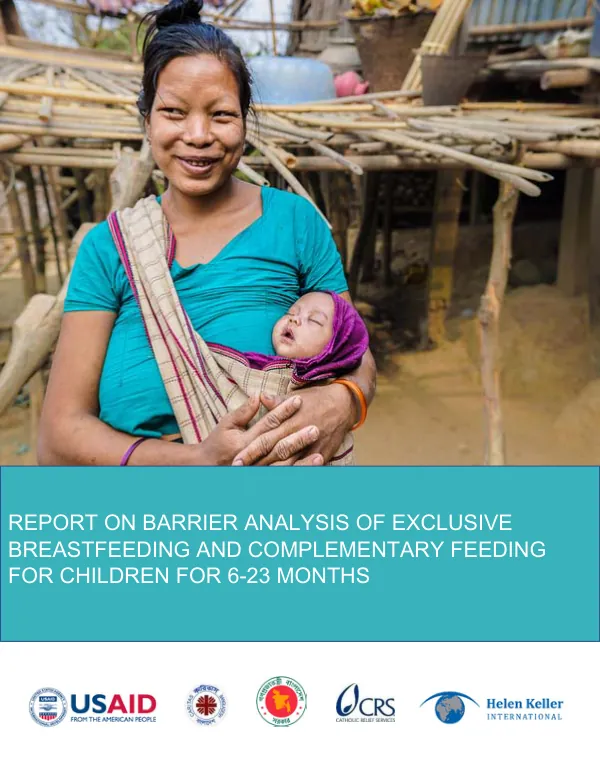
The program aims to improve nutrition status, resilience, and gender equity through sustainable agriculture and production practices. The program is funded by the United States Agency for International Development (USAID) under the terms of the Cooperative Agreement AID-FFP-A-15-00010. The SAPLING program focuses on improving exclusive breastfeeding and complementary feeding practices among children aged 6-23 months. Exclusive breastfeeding is defined as feeding children only breastmilk for the first six months of life, while complementary feeding refers to the introduction of animal-source foods and other nutrient-rich foods to children's diets after six months. The program aims to address the barriers and enablers of these practices through a barrier analysis. The barrier analysis was conducted in the target area of the SAPLING program, which includes the Chittagong Hill Tracts (CHT) and other areas of Bangladesh. The study involved a sample of 1,200 mothers of children aged 0-6 months and 1,200 mothers of children aged 8-24 months. The mothers were surveyed using a barrier analysis questionnaire, which assessed their perceived self-efficacy, perceived positive and negative consequences, perceived social norms, access, cues for action, perceived susceptibility of risk and perceived severity, and perceived divine will. The results of the barrier analysis showed that mothers of children aged 0-6 months who practiced exclusive breastfeeding reported higher levels of perceived self-efficacy, perceived positive consequences, and perceived social norms compared to mothers who did not practice exclusive breastfeeding. However, mothers of children aged 8-24 months who practiced complementary feeding reported higher levels of perceived self-efficacy, perceived positive consequences, and perceived social norms compared to mothers who did not practice complementary feeding. The study also identified several key barriers and enablers of exclusive breastfeeding and complementary feeding practices. For exclusive breastfeeding, the key barriers included lack of access to healthcare services, lack of knowledge about the benefits of exclusive breastfeeding, and lack of support from family and friends. The key enablers included perceived positive consequences of exclusive breastfeeding, perceived social norms, and access to healthcare services. For complementary feeding, the key barriers included lack of access to animal-source foods, lack of knowledge about the benefits of complementary feeding, and lack of support from family and friends. The key enablers included perceived positive consequences of complementary feeding, perceived social norms, and access to animal-source foods. The SAPLING program aims to address these barriers and enablers through a range of interventions, including training for healthcare workers, community mobilization, and provision of animal-source foods and other nutrient-rich foods to vulnerable households. The program also aims to strengthen the capacity of local organizations and government agencies to support exclusive breastfeeding and complementary feeding practices. The results of the barrier analysis will inform the development of the SAPLING program's behavior change strategy, which aims to promote exclusive breastfeeding and complementary feeding practices among children aged 6-23 months in Bangladesh. The program will also contribute to the global effort to reduce malnutrition and improve health outcomes among children and women in developing countries.