WILDLIFE CONSERVATION SOCIETY
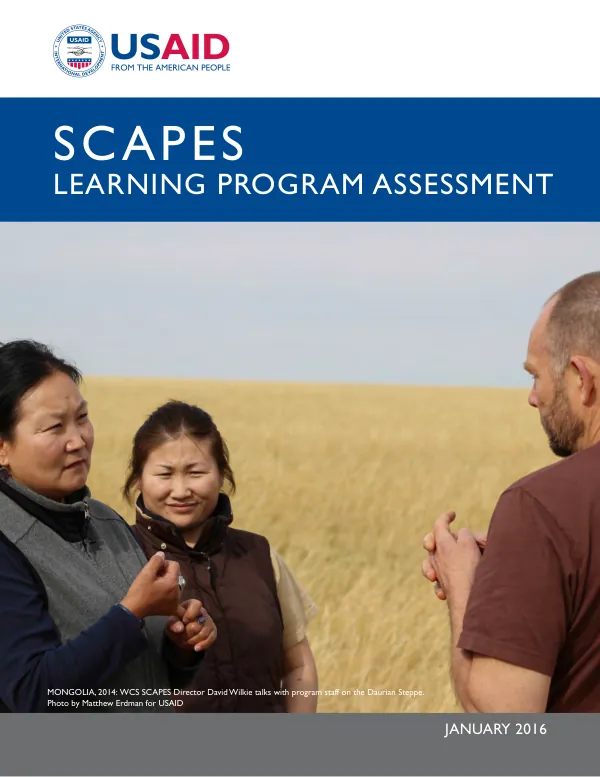
SCAPES LANDSCAPE PROFILE: THE DAURIAN STEPPE LANDSCAPE
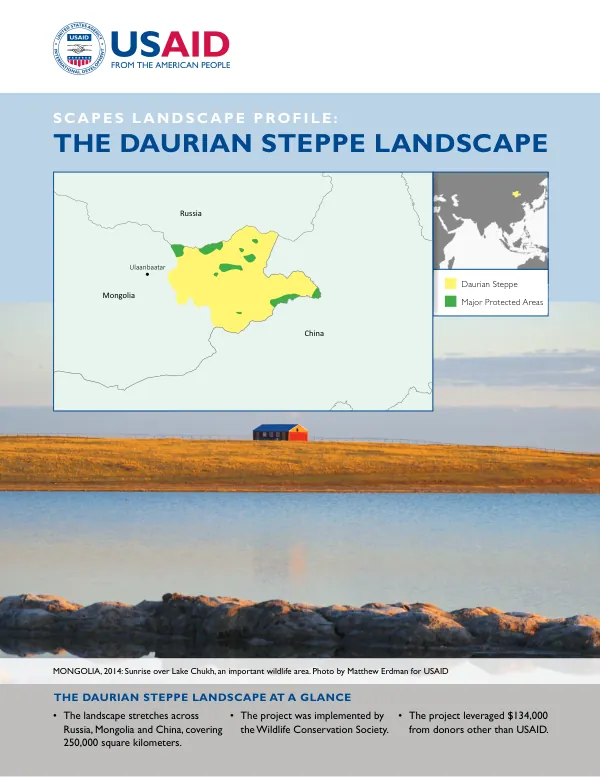
The Daurian Steppe landscape spans across Russia, China, and Mongolia, covering an area of 250,000 square kilometers.
2014 · 4 pages
Sign in to readA free account is required to download.
Abstract
This vast, remote, and sparsely populated region is home to one of the world's last intact temperate grassland ecosystems and supports a diverse array of wildlife, including over 1 million Mongolian gazelle, the largest aggregation of nomadic ungulates on earth. The steppe is also a critical habitat for dozens of endemic mammals and hosts numerous endangered bird species, such as the Siberian crane and the white-naped crane. The Daurian Steppe is a UNESCO World Biosphere Reserve, recognized for its importance as a breeding, molting, and migration stop for various bird species. However, the region faces numerous threats, including unsustainable hunting, poaching, road and rail development, mining, and oil extraction, as well as overgrazing and land clearing for agriculture. These activities have led to a greater susceptibility to foot-and-mouth disease and its potential transmission to wildlife, such as gazelle. Maintaining the integrity of the land and traditional pastoralist livelihoods requires engaged citizens and a constituency that advocates for conservation. However, the Daurian Steppe's complex geography, with 2,000 kilometers of international borders, large protected areas, and international trade routes, poses significant challenges to outreach and communication efforts. In this context, building a transboundary constituency for conservation and development planning is crucial. The Wildlife Conservation Society (WCS) implemented a project in the Daurian Steppe as part of the USAID's Sustainable Conservation Approaches in Priority Ecosystems (SCAPES) project. The project aimed to build a transboundary constituency for conservation and development planning and reinforce a community-based model for wildlife and livestock management. WCS encouraged collaboration among scientists and conservationists across borders through workshops and meetings with partners in the veterinary, agricultural, and wildlife sectors to find common solutions to regional disease outbreaks, such as foot-and-mouth disease. The project also conducted citizen outreach and communication campaigns, highlighting the value of conserving the Mongolian gazelle and the white-naped crane, iconic animals in the grassland and wetland ecosystems, respectively. By the end of the project, 94 percent of people surveyed in Mongolia had heard about the campaign, and 50 percent had seen a television broadcast about wildlife law enforcement activities and patrols. The project helped establish and support 11 local Herder Community Groups to manage the coexistence of wildlife, livestock, and people and to use natural resources in a sustainable way. These community groups allowed communities to secure formal rights over their pasture lands and watering spots, while the project taught them to conduct volunteer ranger patrols and link with government law enforcement activities.