MINISTRY OF EDUCATION
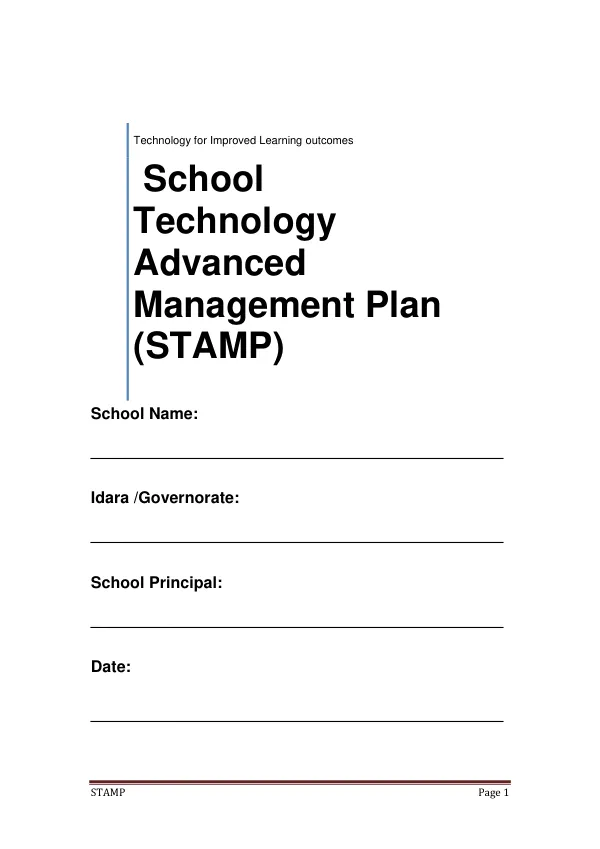
School Technology Advanced Management Plan (STAMP)
The School Technology Advanced Management Plan (STAMP) is an outline for technology integration processes in schools, aligning with the Ministry of Education's strategic plan and the National Education Standards.
2014 · 23 pages
Sign in to readA free account is required to download.
Abstract
The plan aims to enhance and upgrade school reform processes in various aspects, including professional development, teachers and students learning, and community participation. The STAMP targets various stakeholders, including school principals, teachers, students, boards of trustees, parents, local community members, business organizations, nongovernmental organizations, partners, and other stakeholders interested in education technology integration. The plan consists of seven components: Technology Facilities Management, Daily Management of People and Resources, Creation and Management of Community Participation, School IT Support, Maintenance, and Troubleshooting, Professional Development of Teachers, Partnerships, and Financial Planning and Fund Raising. The STAMP implementation is designed to be carried out at the school level by a STAMP committee, which works closely with the school quality team created through the education reform process. The committee is divided into teams, and each team leader directs team members to observe specific measures, including reviewing objectives, analyzing objectives into workable activities, and discussing and approving activities. The Execution Plan is a tool for the STAMP committee to develop a list of activities for each objective. The plan includes a table for specific objectives, activities, responsible persons, timing, contribution of Idara/others, estimated budget/resources, and success indicators. The Technology Facilities Management component involves managing the appropriate usage of technology in the school. The STAMP should organize the development and monitoring of technology facility usage. Suggested tools include a digital resource usage log for classrooms, activity rooms, and libraries. The Plan for Daily Management of People and Resources involves scheduling internal school meetings to monitor and assess technology use, support effective teaching methods, provide constructive feedback, and sustain collaboration and communication between teams. Suggested tools include teacher portfolios and senior teacher portfolios. The teacher portfolio includes samples from activities incorporating effective teaching methods and IT integration, teacher schedules for IT activity rooms and laptop use, samples from students' work, and SCOPE (Classroom Observation Sheet + Top Page) indicating complete information for the teacher and the date of visit, recommendations, and action plans. The senior teacher portfolio includes samples from activities incorporating effective teaching methods and IT integration, teacher schedules for IT activity rooms and laptop use, samples from students' work, samples from other subject teachers' activities, and SCOPE (Classroom Observation Sheet + Top Page) indicating complete information for the teacher and the date of visit, recommendations, and action plans. The STAMP committee should create teams and organize regular meetings to keep technology use on track. The committee should also develop and maintain digital resource usage logs to record how and when digital resources are used. The logs should include information such as the name of the school, date, time of viewing, number of hours, teacher or facilitator, grade, number of viewers, title of digital resource, digital resource tool/location, subject, and specific application. The STAMP plan aims to enhance and upgrade school reform processes in various aspects, including professional development, teachers and students learning, and community participation. The plan involves various stakeholders, including school principals, teachers, students, boards of trustees, parents, local community members, business organizations, nongovernmental organizations, partners, and other stakeholders interested in education technology integration. The plan consists of seven components, and the implementation is designed to be carried out at the school level by a STAMP committee.
Related documents