CATHOLIC RELIEF SERVICES ORGANIZATION
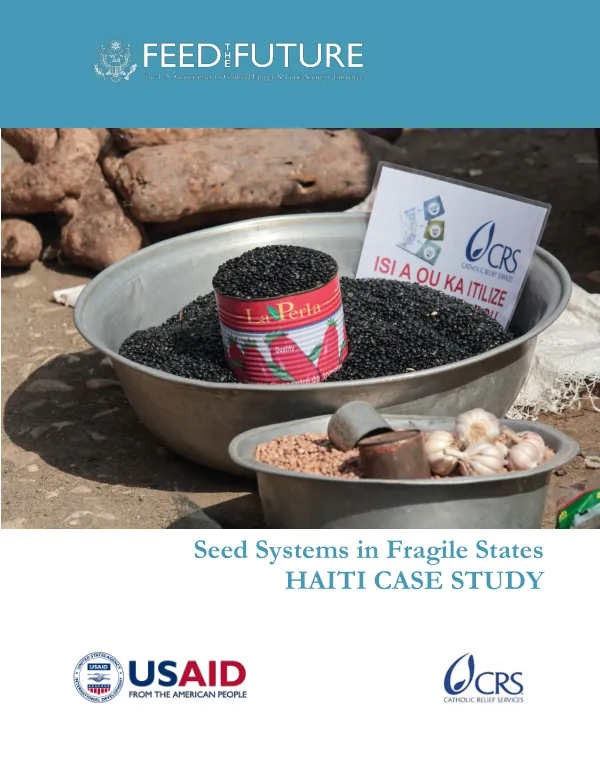
Seed Systems in Fragile States - Haiti Case Study
Seed Systems in Fragile States: Haiti Case Study The agricultural sector in Haiti is characterized by a complex and dynamic seed system, influenced by the country's fragile state context.
2021 · 34 pages
Sign in to readA free account is required to download.
Abstract
Haiti's agricultural sector has historically been shaped by external factors, including colonialism, foreign aid, and natural disasters. The country's geography and climate are conducive to a diverse range of crops, including maize, beans, and sweet potatoes. Agriculture and food security are critical to Haiti's economy and population. However, the sector faces numerous challenges, including soil degradation, limited market access, and inadequate infrastructure. The country's cropping systems are characterized by a mix of subsistence and commercial farming, with many farmers relying on informal seed sources. Agroecologies and livelihood zones vary across the country, with different regions exhibiting unique characteristics and challenges. Historically, the seed sector in Haiti has been shaped by external support, including foreign aid and technical assistance. The country has a long history of seed sector development, with various stakeholders involved in seed production, distribution, and use. Farmers' seed sources are diverse, with many relying on informal traders, community-based seed production, and formal seed companies. However, the use of improved varieties is limited, and emergency seed provisioning is often necessary in response to natural disasters. Community-based seed production plays a crucial role in Haiti's seed system, with many farmers producing and exchanging seeds within their communities. Formal seed sector development is also underway, with various stakeholders involved in seed production, distribution, and regulation. However, the sector faces challenges related to regulatory frameworks, private sector investment, and informal traders. Stakeholder perspectives on the seed system in Haiti highlight the importance of farmer groups, seed companies, agrodealers, and formal and informal traders. National research organizations, international research organizations, public sector and government seed actors, local and international NGOs, and donors are all involved in seed sector development. However, the gender dynamics of the seed sector are not well understood, and the role of female informal traders is particularly important in developing resilient seed systems in fragile states. The Haitian context is constantly evolving, with the country experiencing a presidential assassination, a major earthquake, and a hurricane during the study period. Despite these challenges, the lessons drawn from this case study can inform seed system development in fragile states. A definitive seed law and regulatory framework is necessary to provide assurance for private sector investment, and informal traders must be incorporated into seed sector development. Understanding the gender dynamics of the seed sector is also critical to developing inclusive seed systems. The Fragile States Index provides an annual ranking of 178 countries across 12 indicators, including economic, social, and political factors. Haiti is ranked as one of the most fragile states in the world, with a score of 103.6 out of 120. The country's fragile state context has significant implications for seed system development, including the need for a regulatory framework that supports private sector investment and the incorporation of informal traders into seed sector development. In conclusion, the seed system in Haiti is complex and dynamic, influenced by the country's fragile state context. A definitive seed law and regulatory framework is necessary to support private sector investment, and informal traders must be incorporated into seed sector development. Understanding the gender dynamics of the seed sector is also critical to developing inclusive seed systems. The lessons drawn from this case study can inform seed system development in fragile states, including the need for a regulatory framework that supports private sector investment and the incorporation of informal traders into seed sector development.