CATHOLIC RELIEF SERVICES ORGANIZATION
Seed Systems Landscape Analysis in Timor-Leste
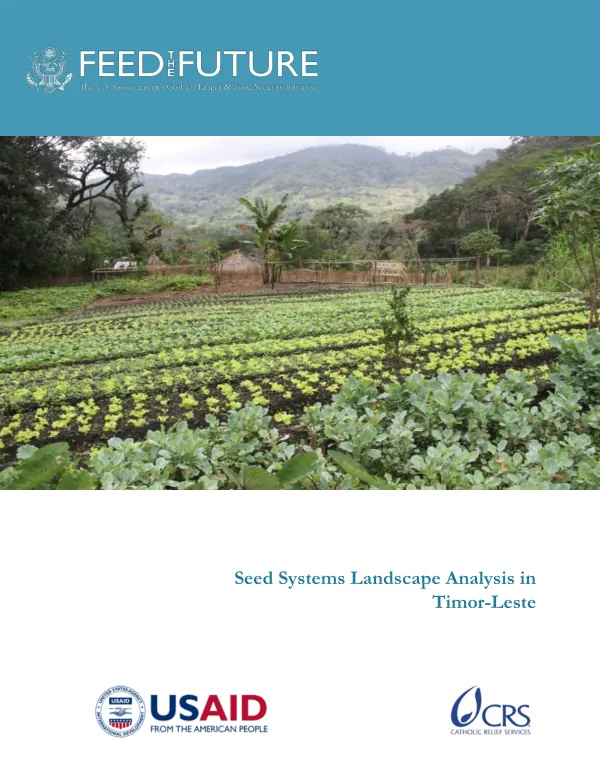
The agricultural sector in Timor-Leste is characterized by a diverse range of crops, with maize, rice, and cassava being the primary staples.
2023 · 64 pages
Sign in to readA free account is required to download.
Abstract
Crop production is influenced by factors such as soil type, climate, and market demand. Seed features considered in planting specific crops include quality, availability, and compatibility with local conditions. The national seed system in Timor-Leste consists of several components, including the National Seed Council, the Agricultural Research Center, and the Ministry of Agriculture and Fisheries. These institutions play a crucial role in regulating the seed market, ensuring seed quality, and promoting the use of improved seed varieties. Seed multiplication actors, such as commercial seed producers and community seed production groups, are also key players in the seed system. Seed quality assurance and quality control are critical components of the national seed system. The National Seed Council is responsible for establishing and enforcing seed quality standards, while the Agricultural Research Center conducts research and development of new seed varieties. Community seed, which is produced and distributed by local communities, is an important component of the seed system, particularly in rural areas where access to commercial seed is limited. Quality declared seed, which meets certain quality standards, is also an important component of the seed system. Seed accreditation, which involves the certification of seed producers and distributors, is another critical aspect of the national seed system. Certified seeds distribution is regulated by the National Seed Council, which ensures that only certified seeds are sold to farmers. Losses in seed storage are a significant challenge in the seed system, with an estimated 20% of seeds being lost during storage. This highlights the need for improved seed storage facilities and practices to minimize losses and ensure the availability of high-quality seeds to farmers. Key seed system actors in Timor-Leste include the National Seed Council, the Agricultural Research Center, commercial seed producers, community seed production groups, and agro-dealers. These actors play a crucial role in regulating the seed market, ensuring seed quality, and promoting the use of improved seed varieties. The government of Timor-Leste provides support to the seed system through various initiatives, including the establishment of the National Seed Council and the provision of funding for seed research and development. However, the government faces several challenges in supporting seed production, including limited resources and capacity constraints. Other actors in the seed system include international non-governmental organizations, such as Catholic Relief Services, which provide technical assistance and support to the national seed system. These organizations play a crucial role in promoting the use of improved seed varieties and improving seed quality. Seed-related challenges in Timor-Leste include seed acquisition, seed usage, and market dynamics. Farmers often face difficulties in accessing high-quality seeds, which can lead to reduced crop yields and lower incomes. The use of low-quality seeds can also lead to the spread of pests and diseases, which can have significant impacts on crop production. Gender roles in the seed system are also an important consideration, with women and youth playing a crucial role in seed production and distribution. Opportunities for women and youth in the field of horticulture include training and capacity building programs, which can help to improve their skills and knowledge in seed production and marketing. The strengths and potential gaps in the seed system of Timor-Leste include agro-dealers, seed certification, and seed key players. Agro-dealers play a crucial role in distributing seeds to farmers, while seed certification ensures that only high-quality seeds are sold to farmers. Seed key players, including commercial seed producers and community seed production groups, are also critical components of the seed system. Business structure and market dynamics in the agricultural sector are also important considerations, with the sector being characterized by a mix of small-scale and large-scale farmers. Drought-related concerns are also a significant challenge in the seed system, with droughts having significant impacts on crop production and seed availability. Other organizations, including the United Nations and international non-governmental organizations, also play a crucial role in supporting the national seed system. These organizations provide technical assistance and support to the national seed system, which can help to improve seed quality and availability. Payment schemes for seed transactions are also an important consideration, with farmers often facing difficulties in accessing credit and other financial services. This can lead to reduced access to high-quality seeds, which can have significant impacts on crop production and farmer incomes.