USAID DEC
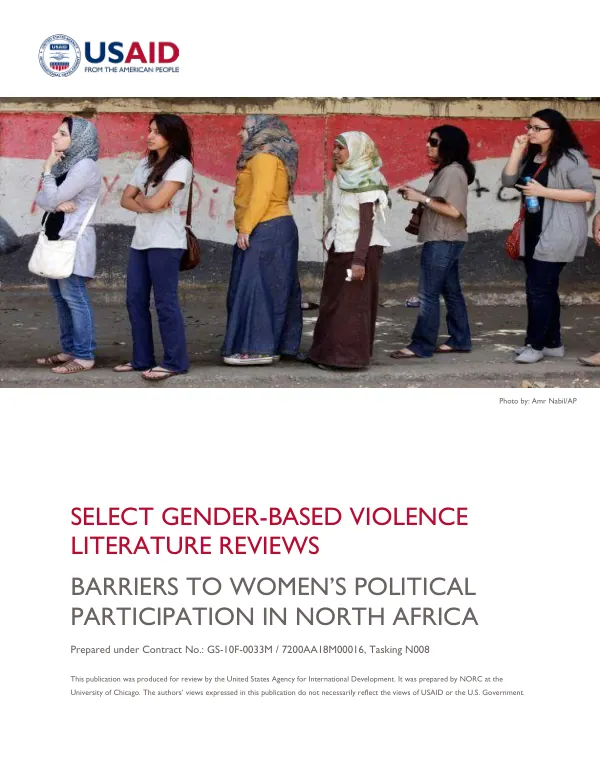
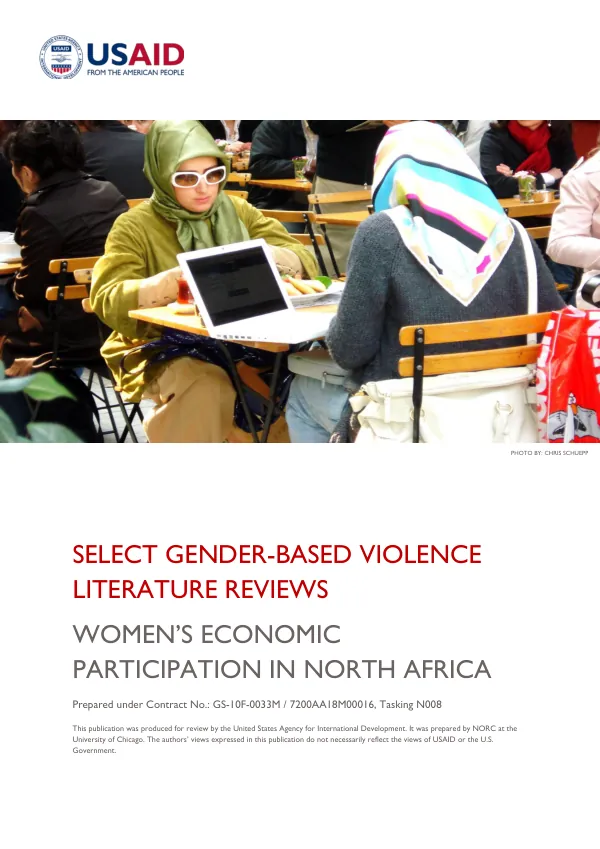
Select Gender-Based Violence Literature Reviews: Women’s Economic Participation in North Africa
Sign inNORC AT THE UNIVERSITY OF CHICAGO
Select Gender-Based Violence Literature Reviews: Women’s Economic Participation in North Africa
Women's economic participation in North Africa and the Middle East is a complex issue, with various barriers hindering women's ability to engage in economic activities.
2020 · 36 pages
Sign in to readA free account is required to download.
Abstract
The region has the lowest female labor-force participation rate in the world, with only about a quarter of women in Libya (26 percent) and Tunisia (24 percent) actively participating in the labor force. Morocco and Algeria have lower participation rates, with 21 percent and 15 percent of women, respectively, engaged in economic activities. Legal frameworks, penal codes, and social norms that uphold gender inequality are significant impediments to women's economic participation. The dominance of public sector employment, which favors men, and limited support for reproductive and child care costs also contribute to the low participation rates. Violence against women is a significant obstacle, with many women facing physical, emotional, and economic abuse. Despite the challenges, some countries in the region have passed positive gender-equity policies, such as Morocco, Tunisia, Algeria, and Libya. However, the lack of enforcement blunts the impact of these policies. Various interventions have been implemented to address women's economic participation, including microfinance programs, business-skills training, and strategies that tackle gender norms and social constraints. Rigorous evaluations of these interventions have yielded mixed results. Microfinance programs, for example, have been found to be ineffective in increasing women's income or empowerment. However, when combined with other interventions, such as business and life-skills training, microfinance programs can be more effective. Business-skills training has been shown to contribute to personal efficacy, good practices, and knowledge among women, although the benefits are short-term and do not lead to business creation or growth. The evidence on economic interventions that address violence against women is also mixed. While some programs have been found to reduce violence, others have reported increases in violence. Engaging men and boys is essential for addressing norms, and media programming can influence discriminatory attitudes among men viewers towards women, girls, and work. To address the barriers to women's economic participation, gender-inclusive interventions that engage men and boys are key. MENA case studies suggest that men's engagement can reduce risks to women who participate in economic empowerment programs. Project interventions resulting in greater economic participation of women were aided by the support of men (husbands, fathers, etc.), who were involved and sensitized to the benefits of women's work and the obstacles women face. Traditional, religious, and community leaders may also be important in shaping norms and influencing community attitudes. In conclusion, women's economic participation in North Africa and the Middle East is a complex issue, with various barriers hindering women's ability to engage in economic activities. While some interventions have been found to be effective, the evidence is mixed, and more research is needed to identify the most effective strategies for promoting women's economic empowerment.
Related documents