USAID DEC
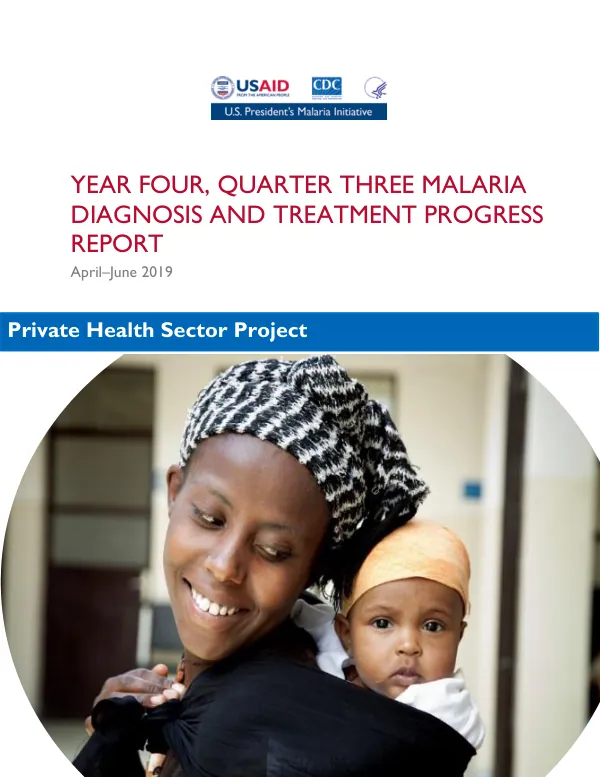
Semi Annual Progress Report: Strengthening Health Outcomes through the Private Sector (SHOPS) Ethiopia
Sign inABT ASSOCIATES
Semi Annual Progress Report: Strengthening Health Outcomes through the Private Sector (SHOPS) Ethiopia
The SHOPS Ethiopia project, funded by USAID/PEPFAR, aims to strengthen health outcomes through the private sector.
2016 · 37 pages
Sign in to readA free account is required to download.
Abstract
The project operates in 39 health facilities across six regions in Ethiopia, providing technical assistance to support the scale-up of PMTCT Option B+. The project's focus is on ensuring that pregnant women visiting these facilities know their HIV status during ANC visits and/or labor and delivery. Technical assistance provided by the project includes quarterly supportive supervision, training, mentoring, sample transport, facilitation of commodity supply by the public sector, and supply of recording and reporting materials. The project collaborated with regional health bureaus and private health facilities to achieve this goal. A total of 9,288 pregnant women visited project-supported facilities for PMTCT services, with 89% (8,248 out of 9,288) knowing their HIV status. This includes 8,205 women who were tested during their current pregnancy and 43 who were known HIV positives at entry. The project's performance against the target is 71% (9,288 total pregnant women out of 13,095 targeted). The number of pregnant women who were tested for HIV and received their results in Q2 (83%) is lower than Q1 (89%). This decrease may be attributed to various factors, including the fact that 56 facilities were supposed to provide PMTCT services but did not meet the target. The SHOPS Ethiopia project also supports other program areas, including adult care and support, adult treatment, TB/HIV services, voluntary HIV counseling and testing, pediatrics treatment, pediatric care and support, laboratory infrastructure, strategic information, and health systems strengthening. These program areas are crucial in addressing the HIV/AIDS epidemic in Ethiopia and improving health outcomes. The project's accomplishments and successes during the reporting period are significant, with a focus on strengthening the private sector's role in providing HIV/AIDS services. The project's collaboration with regional health bureaus and private health facilities has been instrumental in achieving this goal. However, challenges and constraints, such as the need for more facilities to meet the target, must be addressed to ensure the project's continued success. The project's technical assistance has been provided through various means, including short-term technical assistance and travel and visits. The project has also supported the production of publications and reports, including a report on the characteristics of clients seeking HIV counseling and testing and general health services from private health facilities. The project's accomplishments and successes during the reporting period demonstrate its commitment to strengthening health outcomes through the private sector in Ethiopia. The project's performance against the target for PMTCT services is 71%, with 89% of pregnant women knowing their HIV status. The project's collaboration with regional health bureaus and private health facilities has been instrumental in achieving this goal. However, challenges and constraints, such as the need for more facilities to meet the target, must be addressed to ensure the project's continued success. The project's accomplishments and successes during the reporting period are significant, with a focus on strengthening the private sector's role in providing HIV/AIDS services. The project's collaboration with regional health bureaus and private health facilities has been instrumental in achieving this goal. The project's technical assistance has been provided through various means, including short-term technical assistance and travel and visits.