ABT ASSOCIATES
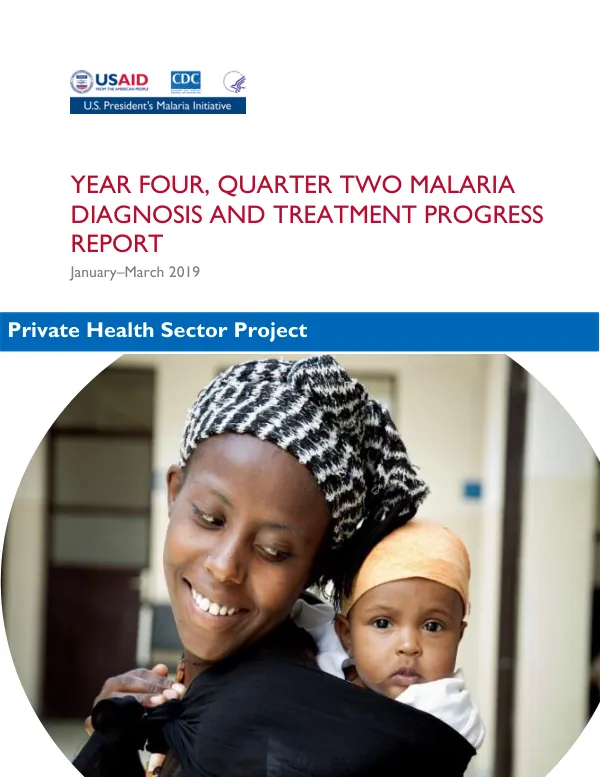
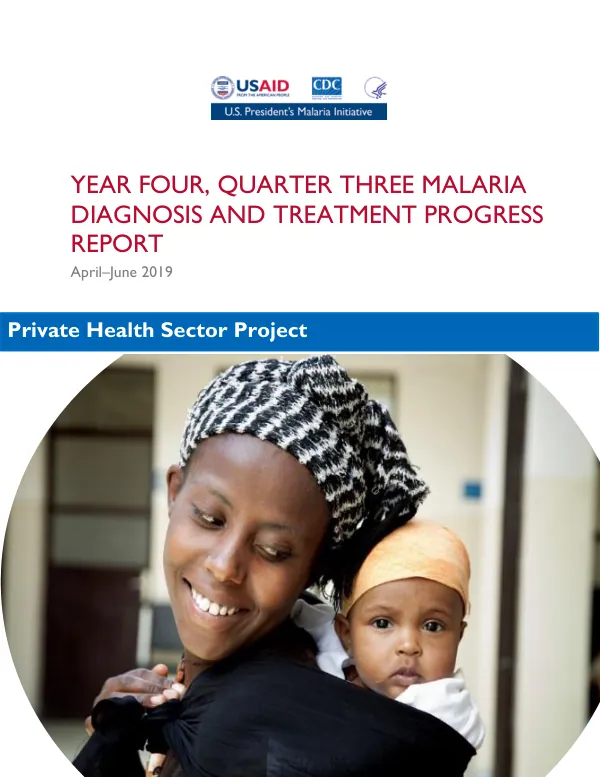
Year Four, Quarter Three Malaria Diagnosis and Treatment Progress Report
The Private Health Sector Project (PHSP) is a technical assistance project to support the Government of Ethiopia in improving malaria diagnosis and treatment services.
2019 · 36 pages
Sign in to readA free account is required to download.
Abstract
The project is managed by Abt Associates Inc. and funded by the United States Agency for International Development (USAID). In year four, the project is supporting 158 private facilities, including 136 private-for-profit and 22 workplace health facilities, across eight regions in Ethiopia. The project's malaria component has several objectives, including improving an enabling environment for private health sector engagement, increasing access to malaria case management, and strengthening the private health care system. To achieve these objectives, the project provides technical support to private health facilities, including phone-based mentoring and supportive supervision, laboratory quality assurance, and access to pharmaceutical supplies. In the third quarter of year four, the project continued to provide technical support to private health facilities, with a focus on improving malaria diagnosis and treatment services. The project reported that from October 2018 to March 2019, 170,352 malaria-expected cases were properly screened, and 327,546 cases were diagnosed to have malaria, with 99.9% of the cases treated and reported to the respective woreda or town health offices. The project also reported that in the third quarter of year four, 136 private-for-profit and 22 workplace health facilities received technical support, including phone-based mentoring and supportive supervision, laboratory quality assurance, and access to pharmaceutical supplies. The project's efforts have resulted in improved malaria diagnosis and treatment services, with a significant increase in the number of cases treated and reported. The project's success is evident in the trends in malaria diagnosis and treatment at PHSP-supported facilities, which show a steady increase in the number of cases treated and reported. The project's efforts have also led to improved access to malaria case management services, with a significant increase in the number of cases diagnosed and treated. The project's impact is also evident in the regional distributions of PHSP-supported facilities, which show a significant presence in the regions of Afar, Amhara, Beneshangul Gumuz, Dire Dawa, Gambella, Oromia, SNNPR, and Tigray. The project's efforts have resulted in improved malaria diagnosis and treatment services across these regions, with a significant increase in the number of cases treated and reported. Overall, the Private Health Sector Project's efforts to improve malaria diagnosis and treatment services in Ethiopia have resulted in significant improvements in the number of cases treated and reported, with a steady increase in the number of cases diagnosed and treated. The project's success is a testament to the effectiveness of the project's approach and the commitment of the project team to improving malaria diagnosis and treatment services in Ethiopia.