MERCY CORPS INTERNATIONAL
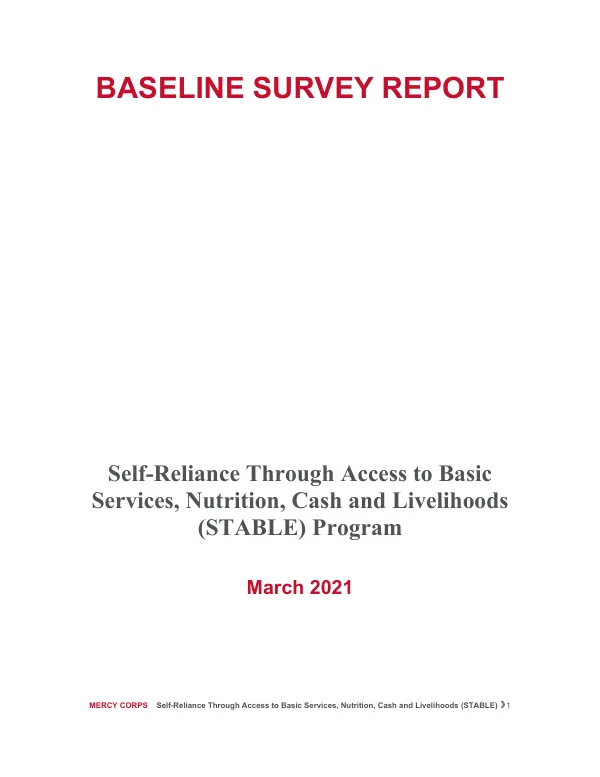
Semi-Annual Report: Somali Oromia Assistance and Recovery (SOAR) Program
The Somali Oromia Assistance and Recovery (SOAR) program is a 12-month initiative funded by the United States Agency for International Development (USAID) through the Office of Foreign Disaster Assistance (OFDA).
2019 · 7 pages
Sign in to readA free account is required to download.
Abstract
The program commenced on July 20, 2019, and aims to support conflict- and drought-affected communities in the Somali-Oromia border region. The program's primary objective is to address the immediate water, sanitation, and hygiene (WASH) and nutrition requirements of the target communities, while also restoring their capacity to meet food security needs and navigate future shocks and stresses. The program has three specific objectives: improved health and wellbeing of target communities through adequate WASH infrastructure and practices; households engaged in lucrative, market-driven, and climate-resilient agricultural livelihood opportunities; and treatment of acute malnutrition contributing to the health of children under five (CU5). To achieve these objectives, the program has identified three sectors: Water Supply, Hygiene, and Sanitation (Sector 1); Agriculture and Food Security (Sector 2); and Nutrition (Sector 3). During the reporting period, Mercy Corps conducted rapid need assessments to verify the existence of humanitarian gaps identified during proposal development. The assessment findings were largely the same as those identified during proposal development, with communities' needs on alternative livelihood options, WASH, nutrition, and health services being their top priority list. Local authorities emphasized the need to consider returnees and urgent support from the program, particularly on agriculture-related activities that are seasonal. The program teams have made thorough explanations about the program content, including activity implementation modalities, program duration, expectations, and roles and responsibilities of Mercy Corps and stakeholders. The discussions resulted in the signing of a Memorandum of Understanding (program agreement) by the Somali Region Disaster Prevention and Preparedness Bureau, which is currently under review by the Oromia regional government. In the Somali region, signed copies of the project agreement were provided to the respective zones and woredas for their close follow-up and support during activity implementation. The security situation is largely improving across the borders of the Oromia and Somali regions, but violence in Guji Zone of Oromia and fluidity of IDP returnees in the eastern cluster delayed implementation of planned activities, particularly those which are highly seasonal. In Sector 1: WASH, Mercy Corps engaged Woreda-level water office experts and community to identify water wells that will be rehabilitated. Six hand pumps were identified for rehabilitation in Liben and Gumi-Eldallo Woredas, and Mercy Corps will start rehabilitation of these water points in the next quarter after conducting thorough tests on the yield and productivity of the wells. In Sector 2: Agriculture and Food Security, Mercy Corps has planned the provision of improved seed varieties (teff, wheat, and haricot beans) to 120 program participants from Liban and Gumi-Eldallo Woredas. The selection committee will use jointly agreed criteria, including households who have farming experience and farm land, women-headed households, poor and severely affected households, household heads with disability, and households having large numbers of dependent family members. In Sector 3: Nutrition, the nutrition component of the program is intended to reduce suffering associated with acute malnutrition among the most vulnerable groups of IDPs and host communities who do not have access to basic health and nutrition services. Nutrition programming began in September to meet the urgent nutrition needs in Liben and Gumi-Eldalo woredas. The nutrition component aims to provide Community-based Management of Acute Malnutrition (CMAM) services at outreach sites through mobile teams and government health facilities through strengthening the capacity of health facilities by training health workers and HEWS and providing ongoing technical and logistic support for health facilities.