DAI
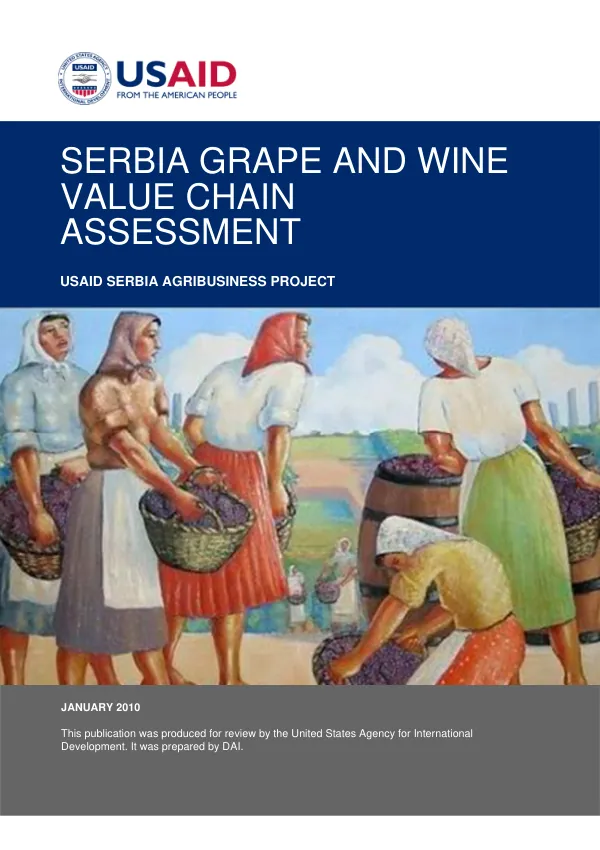
Serbia Grape and Wine Value Chain Assessment
The agricultural sector in Serbia plays a significant role in the country's economy, with grapes and wine being major contributors.
2010 · 45 pages
Sign in to readA free account is required to download.
Abstract
The grape and wine value chain assessment, conducted in January 2010, aimed to identify systemic constraints and upgrading opportunities for the sector. The study focused on wine grapes and table grapes, examining production and trade trends, end-markets, and the value chain. Wine grape production in Serbia has been declining over the years, with a trend of decreasing yields and production volumes. According to data from 1980 to 2008, wine grape production averaged around 150,000 metric tons per year. The country's wine exports have also been on the decline, with a significant portion of the wine being imported from other countries. In 2008, Serbia imported 1,300 metric tons of wine, while exporting only 200 metric tons. The wine grape value chain in Serbia consists of several stages, including grape production, wine production, and wine trade. The study identified several systemic constraints affecting the sector, including limited access to finance, inadequate infrastructure, and a lack of business development services. Upgrading opportunities were also identified, including the development of good agricultural practices, the implementation of Hazard Analysis on Critical Control Points (HACCP), and the establishment of a quality management system. Table grape production in Serbia has been increasing over the years, with a trend of growing yields and production volumes. According to data from 2006 to 2008, table grape imports averaged around 10,000 metric tons per year. The country's table grape exports have also been on the rise, with a significant portion of the grapes being exported to neighboring countries. In 2008, Serbia exported 1,500 metric tons of table grapes. The table grape value chain in Serbia consists of several stages, including grape production, grape trade, and grape consumption. The study identified several systemic constraints affecting the sector, including limited access to finance, inadequate infrastructure, and a lack of business development services. Upgrading opportunities were also identified, including the development of good agricultural practices, the implementation of HACCP, and the establishment of a quality management system. The study recommends several strategies for improving competitiveness and growth in the grape and wine sector, including the development of a grape value chain development plan, the establishment of a quality management system, and the implementation of good agricultural practices. The plan aims to improve the sector's productivity, efficiency, and competitiveness, while also increasing its contribution to the country's economy.