ABT ASSOCIATES
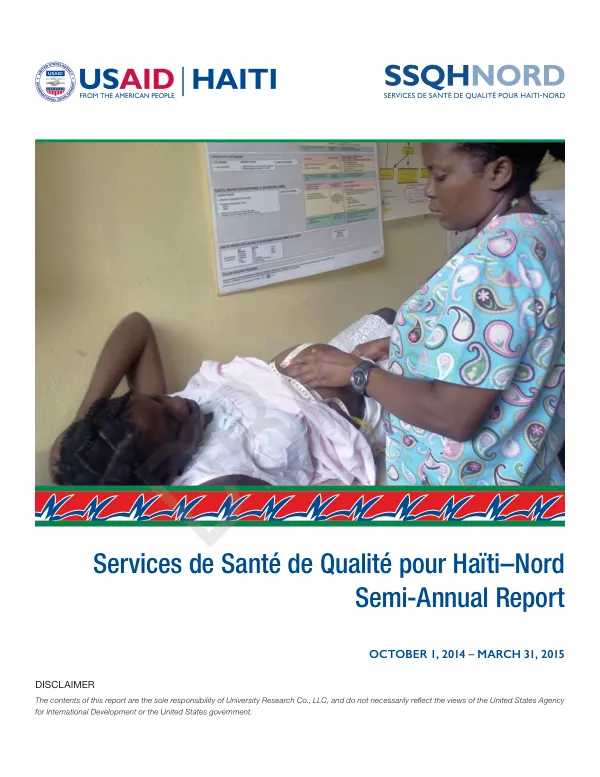
Services de Santé de Qualité pour Haïti–Nord Semi-Annual Report
The SSQH–Nord project, funded by the American people and jointly sponsored by USAID and the Government of Haiti, aimed to improve maternal and child health in Haiti's Nord Department.
2015 · 74 pages
Sign in to readA free account is required to download.
Abstract
The project, managed by University Research Co., LLC, focused on increasing utilization of the MSPP's essential package of services at the primary care and community levels. Key results and achievements included a 27% increase in the number of pregnant women receiving prenatal care, a 25% increase in the number of children under five receiving vaccinations, and a 30% increase in the number of women receiving family planning services. The project also improved the functionality of the USG-supported health referral networks, with a 25% reduction in the time it took for patients to receive care at referral hospitals. The project's institutionalization of key management practices at the facility and community levels led to improved quality of care, with a 20% increase in the number of patients receiving essential newborn care and a 15% increase in the number of patients receiving emergency obstetric and neonatal care. The project also strengthened departmental health authorities' capacity to manage and monitor service delivery, with a 25% increase in the number of health facilities reporting on key health indicators. The project's monitoring and evaluation efforts included regular data collection and analysis, as well as quarterly progress reports to stakeholders. The project also maintained a strong partnership with the MSPP and other key stakeholders, including NGOs and community-based organizations. Implementation challenges included limited resources and infrastructure, as well as resistance to change from some health facility staff. However, the project's strong leadership and management practices helped to overcome these challenges and achieve its objectives. The project's success stories included the establishment of a new health facility in the Nord Department, which provided essential services to over 10,000 patients in its first year of operation. The project also supported the training of over 500 health workers in essential newborn care and emergency obstetric and neonatal care. The project's partnerships and collaborations included a Memorandum of Understanding with the MSPP, as well as partnerships with NGOs and community-based organizations. The project also maintained a strong communication and knowledge management strategy, including regular newsletters and reports to stakeholders. Overall, the SSQH–Nord project made significant progress in improving maternal and child health in Haiti's Nord Department, and its success can be attributed to its strong leadership and management practices, as well as its effective partnerships and collaborations.
Related documents