OFDA
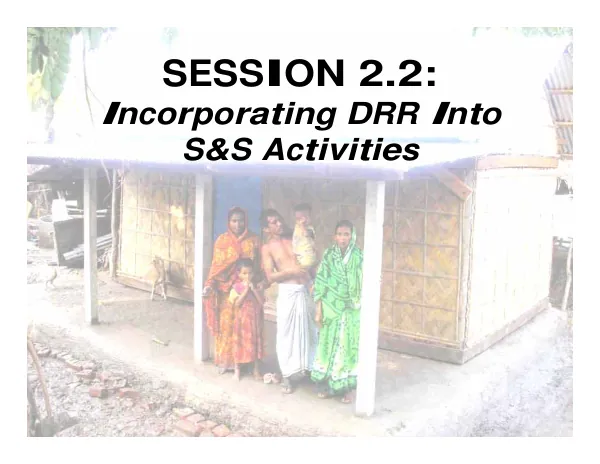
Session 2.2 - Incorporating Disaster Risk Reduction (DRR)
The United States Agency for International Development's Office of U.S.
2009 · 43 pages
Sign in to readA free account is required to download.
Abstract
Foreign Disaster Assistance (OFDA) has a mandate to save lives, reduce suffering, and reduce the economic impact of disasters. This mandate is rooted in the agency's mission to support disaster risk reduction (DRR) efforts. DRR is a critical component of OFDA's work, as it enables the agency to prevent or mitigate the effects of disasters, ultimately reducing the need for relief efforts. The concept of DRR is not new, and it is reflected in various proverbs and sayings, such as "A stitch in time saves nine" and "An ounce of prevention is worth a pound of cure." These phrases highlight the importance of taking proactive measures to prevent or mitigate the effects of disasters. By engaging in DRR efforts, OFDA can fulfill its mandate and support the well-being of affected communities. One of the primary reasons for engaging in DRR is to support OFDA's mandate and prevent the negative consequences of disasters. If DRR efforts are not implemented, the agency's actions may inadvertently reduce lives, increase suffering, and exacerbate the economic impacts of disasters. In addition to supporting OFDA's mandate, DRR efforts can also reduce relief costs and promote more effective and efficient disaster response. OFDA engages in DRR efforts in various ways, including incorporating DRR thinking into relief projects, developing stand-alone DRR projects, and developing DRR programs (project packages). These efforts are critical to preventing or mitigating the effects of disasters and reducing the need for relief efforts. By taking a proactive approach to DRR, OFDA can support the well-being of affected communities and fulfill its mandate. OFDA's DRR efforts are not limited to specific timeframes, such as before, during, or after a disaster. Instead, the agency engages in DRR efforts all the time, recognizing that disasters can occur at any moment. By taking a proactive and sustained approach to DRR, OFDA can support the well-being of affected communities and fulfill its mandate to save lives, reduce suffering, and reduce the economic impact of disasters.