USAID DEC
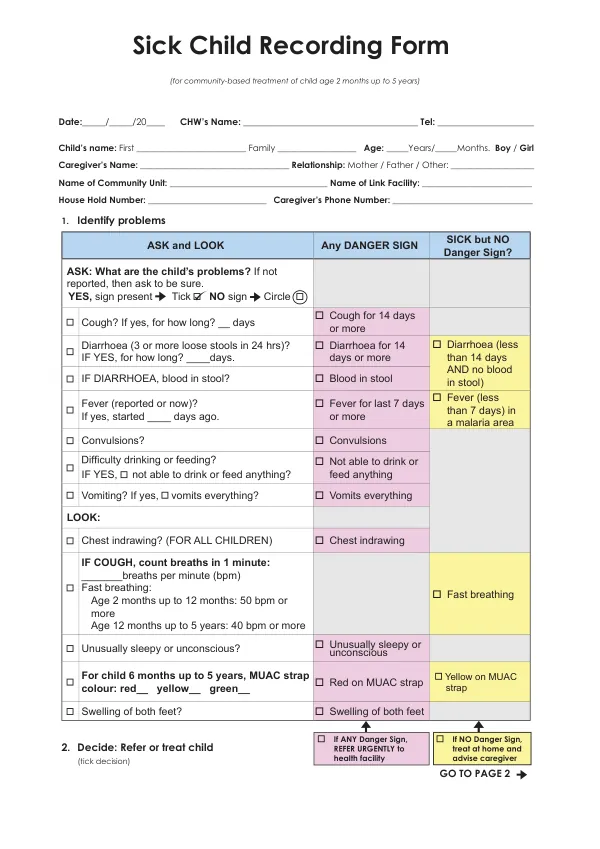
Sick Child Recording Form
The Sick Child Recording Form is a tool used for community-based treatment of children aged 2 months to 5 years.
2 pages
Sign in to readA free account is required to download.
Abstract
The form is designed to identify problems, decide on treatment, and provide guidance on home care and follow-up. The form begins by asking caregivers to identify any problems their child may be experiencing, including cough, diarrhea, fever, convulsions, and vomiting. The caregiver is also asked to report any danger signs, such as chest indrawing, fast breathing, or swelling of both feet. If any danger signs are present, the caregiver is advised to refer the child to a health facility urgently. If no danger signs are present, the caregiver is treated at home and advised on home care. The form provides guidance on treating common childhood illnesses, including diarrhea, fever, and respiratory infections. For children with diarrhea, the caregiver is advised to give oral rehydration solution (ORS) and zinc supplements. For children with fever, the caregiver is advised to give paracetamol and refer the child to a health facility if the fever persists. The form also includes a section on checking vaccines, deworming, and vitamin A status. The caregiver is advised to ensure that the child has received all necessary vaccinations, deworming treatments, and vitamin A supplements. In addition, the form includes a section on follow-up, which advises caregivers to return to the health facility if the child does not improve or if any danger signs are present. The form also includes a section on deworming, which advises caregivers to give mebendazole or albendazole to children aged 1 year and above every six months. The Sick Child Recording Form is an essential tool for community health workers and caregivers to provide effective treatment and care for children with common childhood illnesses. By following the guidance provided in the form, caregivers can help prevent complications and ensure that children receive the care they need to recover quickly and safely. The form is designed to be used in conjunction with other health services, including vaccination programs, deworming campaigns, and supplementary feeding programs. By working together with health facilities and other stakeholders, community health workers and caregivers can provide comprehensive care and support to children and their families. The form is also designed to be used in a variety of settings, including rural and urban areas, and in different cultural and linguistic contexts. By adapting the form to local needs and circumstances, community health workers and caregivers can ensure that children receive the care they need to thrive. Overall, the Sick Child Recording Form is a valuable tool for improving the health and well-being of children in communities around the world. By providing guidance on treatment, home care, and follow-up, the form helps caregivers and community health workers to provide effective care and support to children with common childhood illnesses.