USAID DEC
Sick Child Recording Form
The Sick Child Recording Form is a community-based treatment protocol for children aged 2 months to 5 years.
2 pages
Sign in to readA free account is required to download.
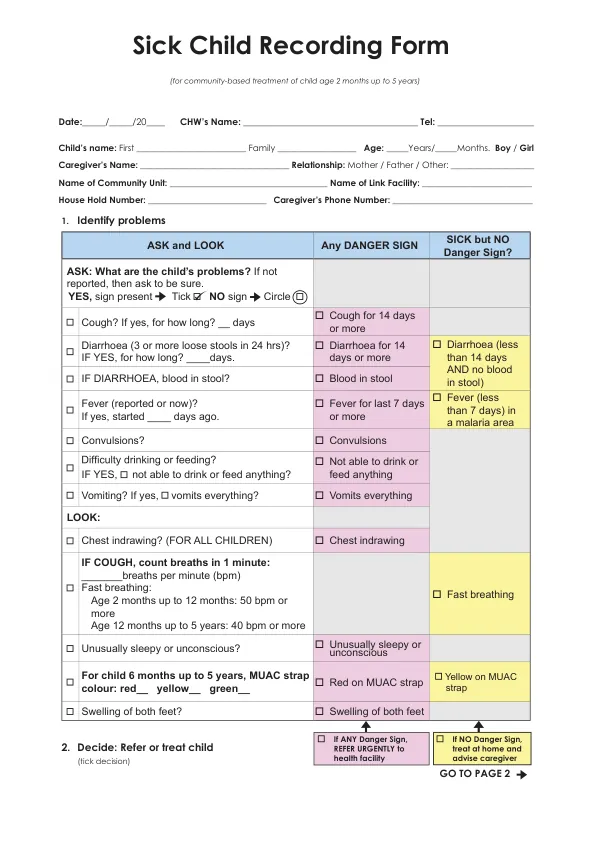
Abstract
The form is designed to identify problems, decide on treatment, and provide guidance on home care and follow-up. The form begins by identifying the child's problems through a series of questions and observations. The caregiver is asked to report any symptoms, such as cough, diarrhea, fever, convulsions, or vomiting. The child's vital signs, including breathing rate and chest indrawing, are also assessed. Based on the child's symptoms and vital signs, the caregiver is advised to either treat the child at home or refer them to a health facility. If the child has a danger sign, such as convulsions or severe vomiting, they are referred urgently to a health facility. The form provides guidance on treating common childhood illnesses, including diarrhea, fever, and respiratory infections. For children with diarrhea, the caregiver is advised to give oral rehydration solution (ORS) and zinc supplements. For children with fever, the caregiver is advised to give paracetamol every six hours for three days. The form also includes a section on vaccinations, deworming, and vitamin A status. The caregiver is advised to check the child's vaccination status and provide guidance on when and where to receive the next dose. Deworming medication is recommended for children aged 1 year and above, and vitamin A supplements are recommended for children aged 6 months to 5 years. In addition to treatment guidance, the form includes a section on follow-up care. The caregiver is advised to return the child to the health facility for follow-up care if the child is not improving or if they have a danger sign. The form also includes a section on deworming medication, which is recommended for children aged 1 year and above. The Sick Child Recording Form is an essential tool for community health workers (CHWs) to provide effective and timely treatment for children with common illnesses. By following the guidance provided in the form, CHWs can help reduce morbidity and mortality rates among children in their communities.