USAID DEC
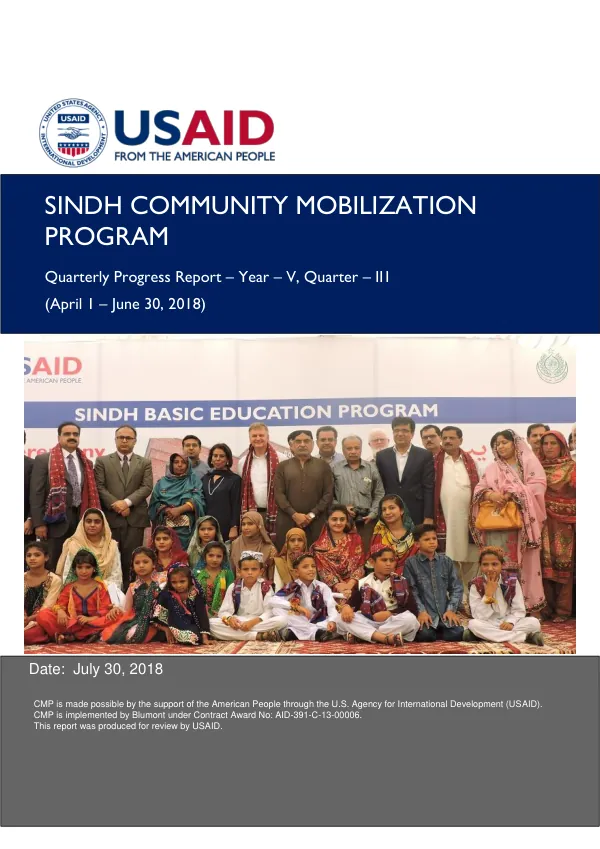
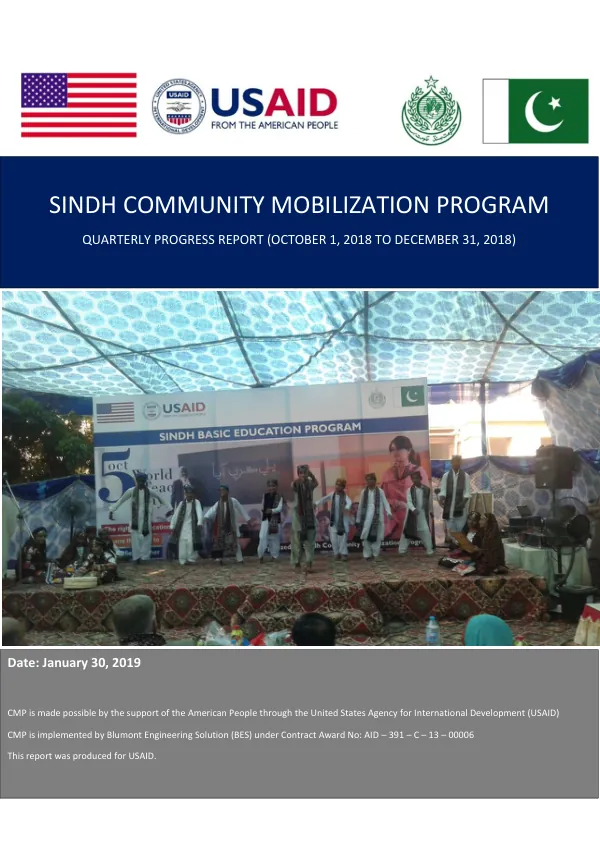
Sindh Community Mobilization Program Quarterly Progress Report (October 1, 2018 to December 31, 2018)
Sign inUSAID DEC
Sindh Community Mobilization Program Quarterly Progress Report (October 1, 2018 to December 31, 2018)
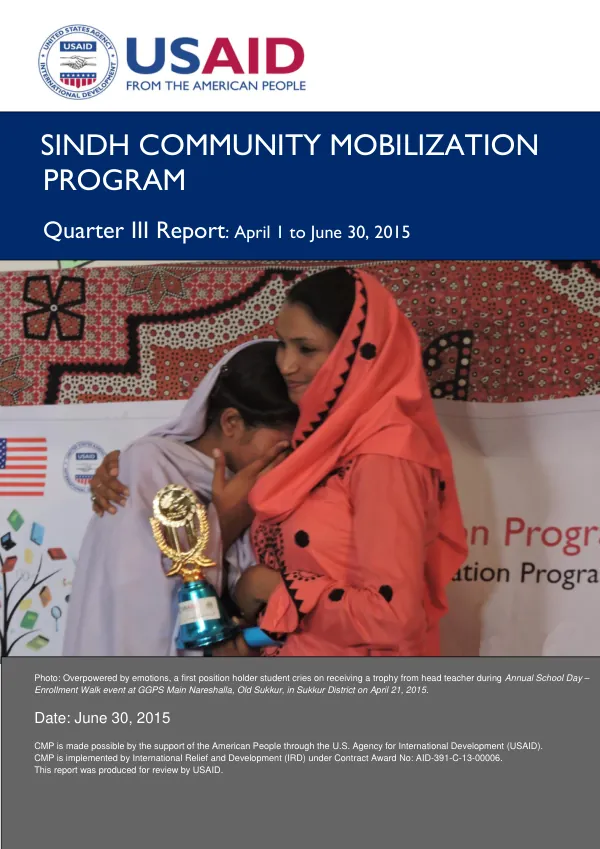
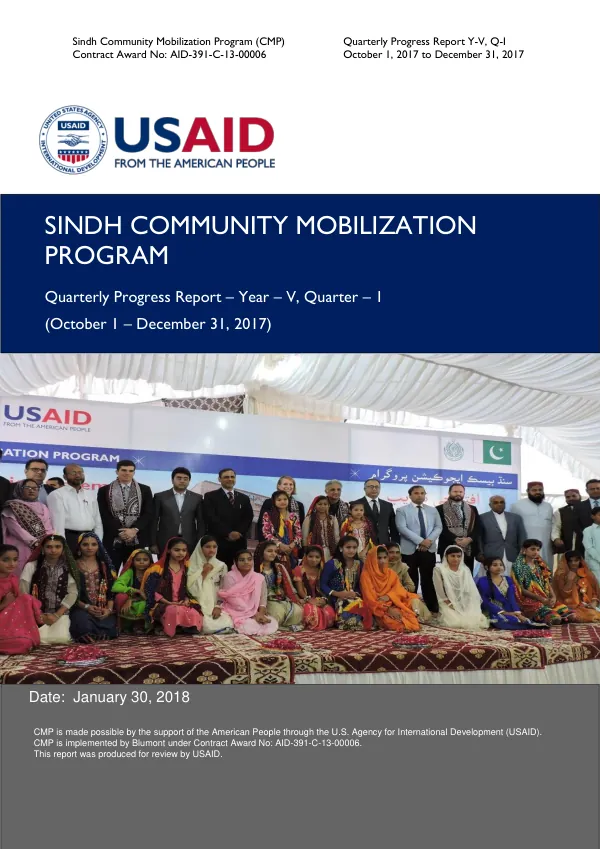
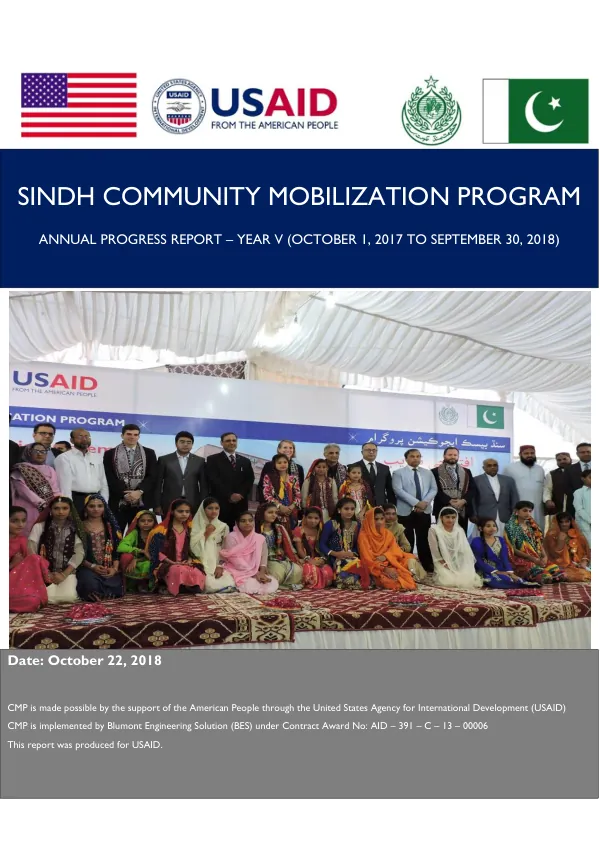
The Sindh Community Mobilization Program (CMP) is a five-year initiative implemented by Blumont Engineering Solutions (BES) and its partners, Health and Nutrition Development Society (HANDS) and Indus Resource Centre (IRC), in collaboration with the Government of Sindh (GOS) and the United States Agency for International Development (USAID).
2019 · 64 pages
Sign in to readA free account is required to download.
Abstract
The program aims to improve education in Sindh by increasing and sustaining students' enrollment in primary, elementary, and secondary grades in seven districts in the northern part of Sindh province and five towns of Karachi. The program is comprised of four key components: increasing communities' involvement in the GOS reform of merging, consolidating, and upgrading schools; improving community and district administrations' coordination for increased girls' enrollment; improving child nutrition in selected communities and government schools through research that informs innovation and good practice; and piloting the launch of Education Management Organizations (EMOs). Additionally, CMP has three cross-cutting themes: gender mainstreaming, water and sanitation (WATSAN), and disaster risk reduction (DRR). CMP's key objectives are to facilitate coordination among the community and other stakeholders in aspects related to construction, merging, consolidation, and upgrading of SBEP schools; empower communities around 409 schools; and increase students' enrollment, particularly girls' enrollment, and retention in 409 selected schools through strengthened linkages of communities and district education department and meaningful community involvement in day-to-day school management and local decision making. During the first quarter of Year VI (October 1, 2018 to December 31, 2018), CMP made significant progress in achieving its objectives. Component I, Increase Communities' Involvement in GOS Reform of Consolidation, Merging, and Upgrading Schools, saw the establishment of School Management Committees (SMCs) in 106 construction schools and 303 neighboring schools. Component II, Improve Community and District Administration Coordination for Increased Girls Enrollment, resulted in the development of a Girls' Enrollment Strategy and the establishment of a Girls' Enrollment Task Force. Component III, Improve Child Nutrition in Selected Communities and Government Schools through Research that Informs Innovation and Good Practices, conducted a baseline survey on child nutrition in 20 schools and developed a nutrition strategy for the program. Component IV, Launch of Education Management Organizations (EMOs), piloted the launch of EMOs in 10 schools, which resulted in improved school management and increased community involvement. CMP also made progress in its cross-cutting themes. Gender mainstreaming activities were conducted in all 409 schools, and WATSAN facilities were improved in 20 schools. Disaster risk reduction activities were conducted in 15 schools, and small grants were provided to 10 neighboring schools to address their needs and priorities in school improvement plans (SIPs). Overall, CMP's progress during the first quarter of Year VI demonstrates its commitment to improving education in Sindh and achieving its key objectives. The program's inclusive community activities are designed to make these educational improvements sustainable by increasing communities' support for their local schools and advocacy for better educational provisions. The program's achievements during the first quarter of Year VI include: * Establishment of SMCs in 106 construction schools and 303 neighboring schools * Development of a Girls' Enrollment Strategy and establishment of a Girls' Enrollment Task Force * Conduct of a baseline survey on child nutrition in 20 schools and development of a nutrition strategy * Pilot launch of EMOs in 10 schools, resulting in improved school management and increased community involvement * Conduct of gender mainstreaming activities in all 409 schools * Improvement of WATSAN facilities in 20 schools * Conduct of disaster risk reduction activities in 15 schools * Provision of small grants to 10 neighboring schools to address their needs and priorities in SIPs These achievements demonstrate CMP's commitment to improving education in Sindh and achieving its key objectives. The program's inclusive community activities are designed to make these educational improvements sustainable by increasing communities' support for their local schools and advocacy for better educational provisions.