USAID DEC
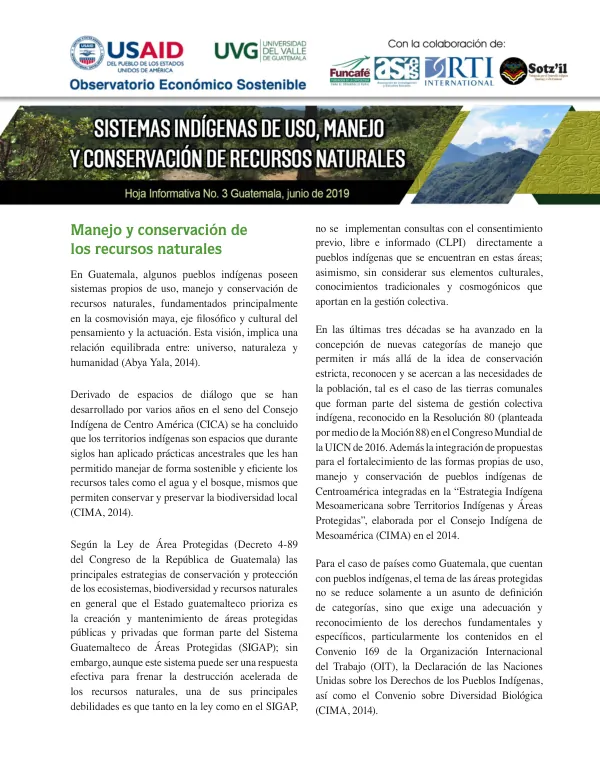
Sistemas Indígenas de Uso, Manejo y Conservación de Recursos Naturales
The indigenous systems of use, management, and conservation of natural resources in Guatemala are rooted in the Maya cosmovision, which emphasizes a balanced relationship between the universe, nature, and humanity.
2019 · 4 pages
Sign in to readA free account is required to download.
Abstract
This perspective is reflected in the concept of Abya Yala, which has been developed by the Consejo Indígena de Centro América (CICA) and the Consejo Indígena de Mesoamérica (CIMA). According to this concept, the territories of indigenous peoples have been managed sustainably and efficiently for centuries, allowing them to conserve and preserve local biodiversity. The Ley de Área Protegidas (Decreto 4-89 del Congreso de la República de Guatemala) prioritizes the creation and maintenance of protected areas, including public and private areas that form part of the Sistema Guatemalteco de Áreas Protegidas (SIGAP). However, this system has been criticized for not implementing consultations with indigenous peoples in a timely and effective manner, nor considering their cultural, traditional, and cosmological knowledge in the management of these areas. In recent decades, new categories of management have been conceived that go beyond the idea of strict conservation, recognizing and addressing the needs of local populations. The tierras comunales, or communal lands, are a key example of this approach. These lands are recognized as a system of collective management and use by indigenous peoples, and are protected by national and international law. The Ley del Registro de Información Catastral (RIC) defines tierras comunales as lands in the possession or tenure of indigenous or campesino communities, with or without legal personality. The Convenio 169 sobre Pueblos Indígenas y Tribales en Países Independientes de la OIT (ratificado by the State of Guatemala through Decreto 9-96) recognizes and safeguards the rights of property and possession of indigenous peoples over their traditional lands. The Declaración de las Naciones Unidas sobre los Derechos de los Pueblos Indígenas (approved on September 13, 2007) also recognizes the rights of indigenous peoples to maintain and strengthen their spiritual relationship with their lands, territories, and resources. According to a diagnosis conducted as part of the Estrategia Nacional para el Manejo y Conservación de Recursos Naturales en Tierras Comunales, there are 1,307 cases of communal lands covering a total area of 11,577.124 hectares in Guatemala, which corresponds to 12% of the country's surface area. In the context of recognizing indigenous systems of use, management, and conservation, the Unión Internacional para la Conservación de la Naturaleza (UICN) has agreed to recognize the importance of indigenous peoples in the management and conservation of natural resources, and has proposed new categories of areas of collective management and use that take into account the rights and knowledge of indigenous peoples. These new categories include areas of traditional management, areas of productive management, use of traditional collective resources, territories or areas conserved by indigenous peoples, and areas of sustainable use of natural resources. The State of Guatemala should respect and recognize the tierras comunales as a system of protected areas, and should implement procedures to address the reivindications of land made by indigenous peoples.
Related documents