USAID DEC
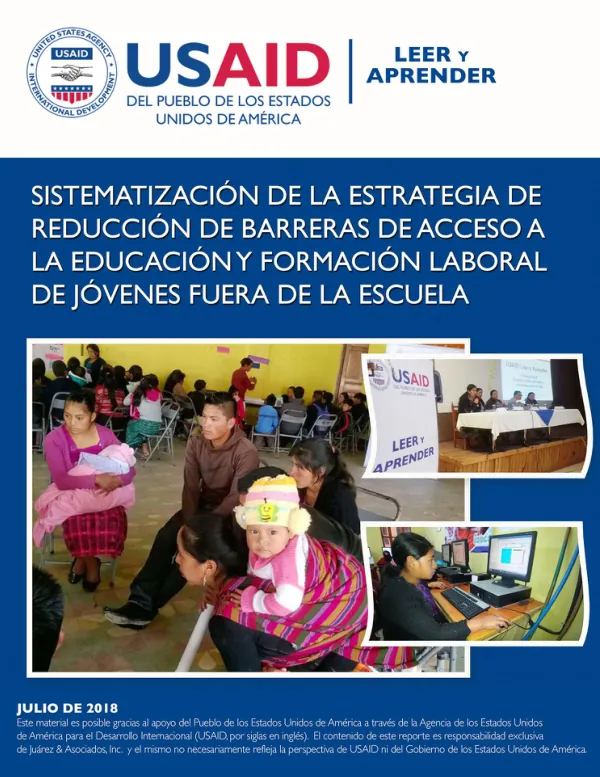
Sistematización de la estrategia de reducción de barreras de acceso a la educación y formación laboral de jóvenes fuera de la escuela
Sign inJUÁREZ Y ASOCIADOS, INC.
Sistematización de la estrategia de reducción de barreras de acceso a la educación y formación laboral de jóvenes fuera de la escuela
In Guatemala, the USAID Leer y Aprender project aims to reduce barriers to education and vocational training for out-of-school youth in the Western Highlands.
2018 · 98 pages
Sign in to readA free account is required to download.
Abstract
The project's purpose is to contribute to the economic self-sufficiency, civic participation, and educational attainment of youth aged 15-24 who have not completed basic education. To achieve this, various actions have been implemented in the 12 municipalities where the project is being implemented. In the context of the USAID Leer y Aprender project, the Western Highlands of Guatemala face significant challenges in terms of education and vocational training for out-of-school youth. The region's youth are often excluded from education and employment opportunities due to various barriers, including lack of access to education, limited job opportunities, and cultural and social norms that discourage girls from pursuing education and employment. The project's strategy for reducing barriers to education and vocational training involves several key components, including the provision of vocational training and education, the creation of job opportunities, and the promotion of civic participation and leadership among youth. The project has also established partnerships with local organizations and government agencies to support the implementation of these initiatives. Implementation of the project's strategy has been underway in 12 municipalities in the Western Highlands, with a focus on building partnerships with local organizations and government agencies, planning and coordinating activities, and providing training and support to youth. The project has also established a network of partners and stakeholders to support the implementation of the strategy and to ensure that the needs of the youth are met. The project's impact has been significant, with over 2,500 farmers receiving training in sustainable agriculture techniques and demonstration plots showing yield improvements of 60%. The project's success has also been reflected in the increased participation of youth in civic activities and the improvement of educational attainment among project participants. The project has also contributed to the economic self-sufficiency of youth, with many participants reporting increased income and improved living standards. Overall, the USAID Leer y Aprender project has made significant contributions to the education and vocational training of out-of-school youth in the Western Highlands of Guatemala, and has helped to address the barriers that have excluded these youth from education and employment opportunities.
Related documents