USAID
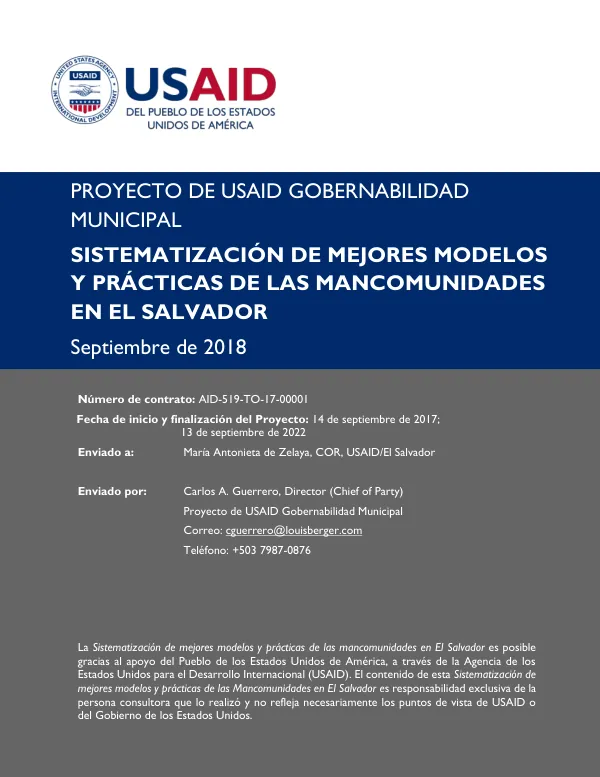
Sistematización de mejores modelos y prácticas de las mancomunidades en El Salvador
The agricultural development initiative in El Salvador began in 2017 with funding from USAID's Gobernabilidad Municipal project.
2018 · 61 pages
Sign in to readA free account is required to download.
Abstract
The initiative aimed to improve the efficiency and effectiveness of municipal associations in providing public services. The project focused on five key areas: the Autónoma Microrregión Los Izalcos, the Asociación de Municipios Los Nonualcos, the Asociación de Municipios Micro Región El Bálsamo, the Asociación Intermunicipal del Norte del departamento de La Unión, and the Asociación de Municipios Cayaguanca. Initial assessments conducted in these areas identified key challenges, including limited resources, inadequate infrastructure, and a lack of technical capacity. To address these challenges, the project implemented a range of interventions, including the installation of OPLAGEST (Oficina de Planificación y Gestión del Territorio) systems, the development of community-based initiatives, and the provision of technical assistance. One of the key innovations of the project was the establishment of a network of municipal associations, which enabled the sharing of best practices and the development of new approaches to service delivery. The project also supported the development of new technologies, including the use of Geographic Information Systems (GIS) and other digital tools. The project's methodology involved a combination of research, analysis, and participatory approaches. The research component involved the collection and analysis of data on the performance of municipal associations, while the analysis component involved the identification of key trends and patterns. The participatory component involved the engagement of stakeholders, including municipal officials, community leaders, and other key actors. The project's findings highlighted the importance of collaboration and coordination among municipal associations, as well as the need for technical assistance and capacity-building. The project also identified the potential for municipal associations to play a key role in promoting economic development and improving the quality of life for citizens. The project's conclusions emphasized the need for continued support for municipal associations, as well as the importance of building on the successes of the project. The project also highlighted the need for further research and analysis on the role of municipal associations in promoting economic development and improving the quality of life for citizens. The project's implementation details involved the establishment of a project team, which worked closely with municipal associations and other stakeholders to implement the project's interventions. The project team also developed a range of tools and resources, including training manuals, technical guides, and other materials. The project's geographic focus was on El Salvador, with a particular emphasis on the five key areas mentioned earlier. The project's context was shaped by a range of factors, including the country's economic and social challenges, as well as the need for improved governance and service delivery. The project's timeframes were from 2017 to 2022, with a range of milestones and deadlines established throughout the project. The project's recommendations emphasized the need for continued support for municipal associations, as well as the importance of building on the successes of the project. The project's key findings and conclusions were presented in a range of formats, including reports, briefs, and other materials. The project's lessons learned emphasized the importance of collaboration and coordination among municipal associations, as well as the need for technical assistance and capacity-building.
Related documents