THE LOUIS BERGER GROUP, INC.
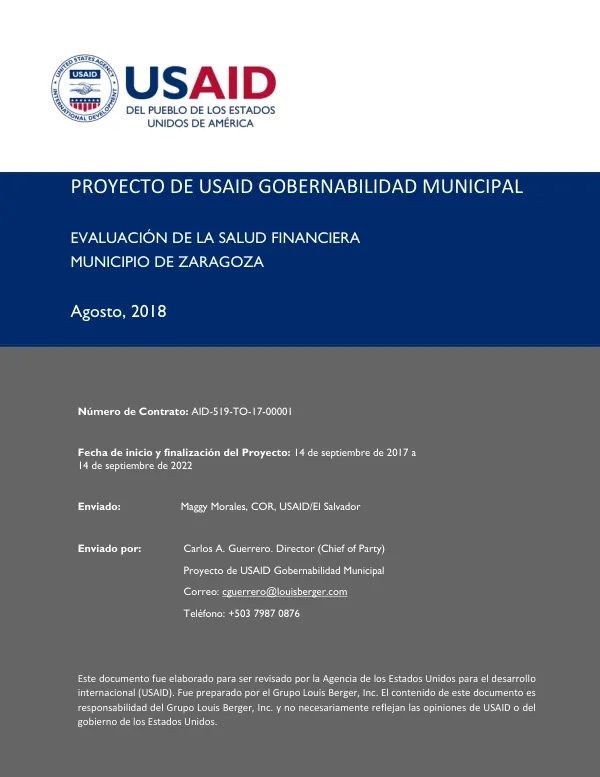
Evaluación de la salud financiera del municipio de Zaragoza
The municipality of Zaragoza, located in the department of La Libertad, is situated 20 kilometers from the capital city.
2018 · 40 pages
Sign in to readA free account is required to download.
Abstract
The municipality has a total area of 22.71 square kilometers and is divided into 3 barrios, 4 cantones, and 14 caseríos. As of the latest available data, the population of Zaragoza is 22,525, with 10,684 (47.43%) males and 11,841 (52.57%) females. The majority of the population, 18,035 (80%), resides in the urban area, while 4,490 (20%) live in the rural area. The municipality has a total of 6,463 households, with 5,277 located in urban areas and 1,186 in rural areas. According to the available data, 73.9% of households have access to potable water, 93.2% have access to lighting, 61% have a waste collection service, 67.6% have a sewage system, 4.2% have internet access, and 49.5% have a telephone service. Additionally, 39.42% of households are headed by women. The economic sector in Zaragoza is primarily driven by the industry, agriculture, commerce, and services sectors. According to the 2005 Economic Census, there were 543 establishments in the municipality, with 330 (60.8%) in the commerce sector, 71 (13%) in the services sector, and 137 (25.2%) in the industry sector. These three sectors accounted for 99% of the establishments and employed 92% of the workforce. The municipality does not have any records or mechanisms in place to address the needs of returned population. The municipal administration is headed by the secretary municipal, who is responsible for managing the municipality. The institution is composed of 22 units and 128 employees, with 21 positions of direction and leadership. The municipal organization is currently working on a new proposal for an organizational chart that will be presented to the municipal council in the near future. The municipal administration is responsible for managing the municipality's finances, which includes the collection of taxes and fees. The municipal council is responsible for making decisions regarding the municipality's budget and financial management. The municipality's financial performance is evaluated using 19 indicators, including the current account balance, the fiscal surplus or deficit, public debt, and the execution of the budget. The municipal administration is also responsible for providing public services, including water and sewage services, waste collection, and street lighting. The municipality has a total of 5,309 households, with 4,313 located in urban areas and 996 in rural areas. The majority of households, 73.9%, have access to potable water, 93.2% have access to lighting, and 61% have a waste collection service. The municipal administration is working to improve the municipality's financial management and revenue collection. The municipality has a total of 22,525 inhabitants, with 10,684 males and 11,841 females. The majority of the population, 18,035 (80%), resides in the urban area, while 4,490 (20%) live in the rural area. The municipality's financial performance is evaluated using 19 indicators, including the current account balance, the fiscal surplus or deficit, public debt, and the execution of the budget. The municipal administration is working to improve the municipality's financial management and revenue collection, and to provide better public services to the inhabitants. The municipality's financial situation is characterized by a current account deficit, which is financed by the issuance of municipal bonds. The municipality's public debt is relatively high, with a total debt of $X million. The municipality's financial performance is also affected by the lack of a clear and transparent budgeting process. The municipal administration is working to improve the municipality's financial management and revenue collection, and to provide better public services to the inhabitants. The municipality's financial situation is expected to improve in the near future, thanks to the implementation of a new budgeting process and the increase in revenue collection. The municipality
Related documents