USAID DEC
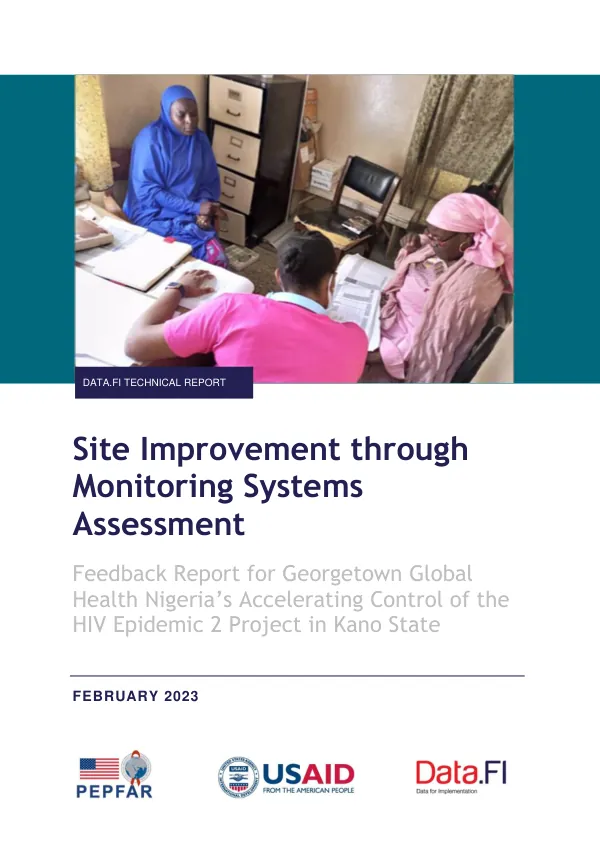
Site Improvement through Monitoring Systems Assessment: Feedback Report for Georgetown Global Health Nigeria’s Accelerating Control of the HIV Epidemic 2 Project in Kano State
Sign inPALLADIUM INTERNATIONAL, LLC
Site Improvement through Monitoring Systems Assessment: Feedback Report for Georgetown Global Health Nigeria’s Accelerating Control of the HIV Epidemic 2 Project in Kano State
The SIMS assessment team visited four sites in Kano State, Nigeria, from December 12 to 15, 2022, to conduct comprehensive SIMS assessments.
2023 · 26 pages
Sign in to readA free account is required to download.
Abstract
The assessments aimed to review whether processes for the provision of HIV services adhered to U.S. President's Emergency Plan for AIDS Relief (PEPFAR) standards. The assessment results provided information to support strengthening structures and processes for quality service delivery. The new SIMS 4.2 tool was deployed during the assessments. The SIMS team assessed all relevant minimum program requirements and other relevant supportive core essential elements (CEEs). The strengths and weaknesses observed at the sites were highlighted. Copies of the dashboards containing a summary of the assessment findings were provided to the sites and the implementing partner's (IP) representatives. The sites' teams and IP staff were engaged on the importance of addressing all identified gaps within the stipulated timelines. A comparative analysis of the FY22 and FY23 comprehensive SIMS assessments was done to identify whether there had been improvements or whether gaps persisted in the quality of services over time. The results showed that there were still gaps, especially with waste segregation, HIV testing services (HTS) for sexual and biological contacts of HIV-positive index clients, and annual training or evidence of annual training for service providers involved in HIV interventions. The assessment team observed that the availability of non-expired condoms that were easily accessible to clients, free antiretroviral therapy (ART) and other HIV-related services, the availability of current HIV-related standard operating procedures (SOPs) at the laboratory and other service delivery points, the availability of post-violence care services, and adequate documentation of community-based linkages and retention support services were generally available across the sites. However, the assessment team identified several areas for improvement. These included the need for better waste segregation practices, improved HIV testing services for sexual and biological contacts of HIV-positive index clients, and annual training or evidence of annual training for service providers involved in HIV interventions. The assessment team also noted that the sites had made some progress in addressing these gaps, but more work was needed to ensure that all sites were meeting the required standards. The SIMS assessment tool used during the assessment consisted of 16 sets, each focusing on a specific area of HIV service delivery. The sets included general site assessments, commodity management, data quality, infection prevention and control, care and treatment for general and key populations, prevention of mother-to-child transmission, HIV-exposed infants, voluntary medical male circumcision, adolescent girls and young women, gender-based violence, orphans and vulnerable children, HIV testing services, tuberculosis treatment service points, methadone or buprenorphine medication-assisted treatment, and laboratory services. Overall, the SIMS assessment team's findings highlighted the need for continued improvement in the quality of HIV services at the sites assessed. The assessment team recommended that the sites prioritize addressing the identified gaps and work towards meeting the required standards for HIV service delivery.
Related documents