USAID DEC
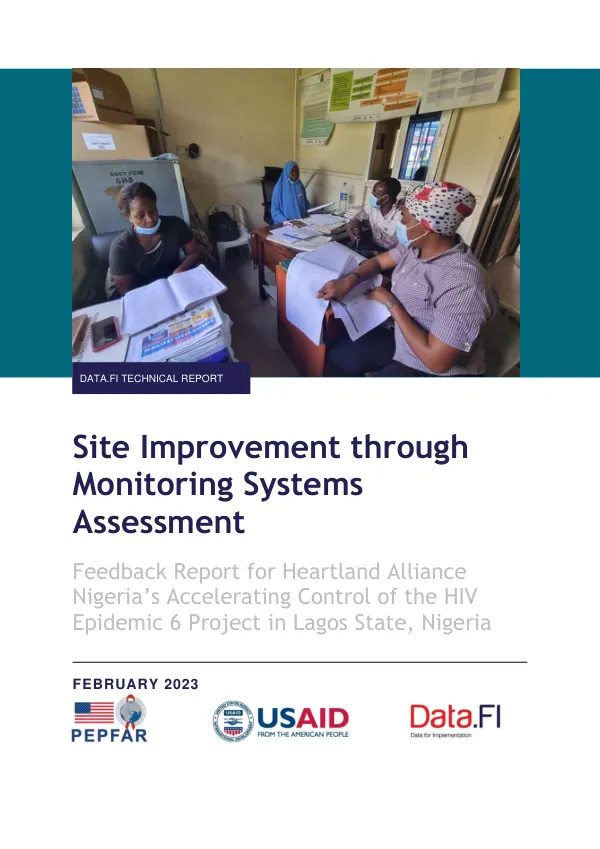
Site Improvement through Monitoring Systems Assessment: Feedback Report for Heartland Alliance Nigeria’s Key Population Community HIV Services Action and Response 1 Project in Lagos State, Nigeria
Sign inPALLADIUM INTERNATIONAL, LLC
Site Improvement through Monitoring Systems Assessment: Feedback Report for Heartland Alliance Nigeria’s Key Population Community HIV Services Action and Response 1 Project in Lagos State, Nigeria
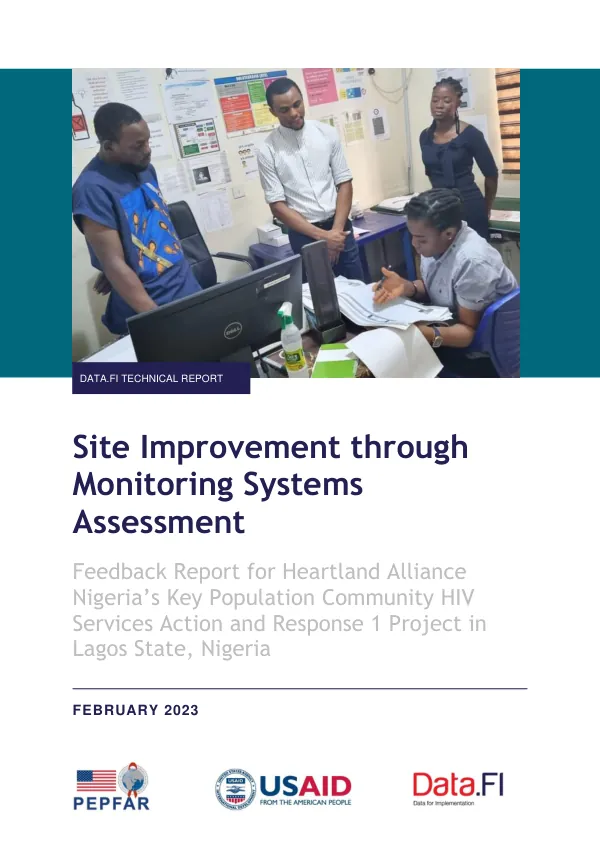
The Site Improvement through Monitoring Systems Assessment was conducted at Agege One Stop Shop (OSS) in Lagos State, Nigeria, on November 29, 2022.
2023 · 12 pages
Sign in to readA free account is required to download.
Abstract
The assessment aimed to review whether processes for the provision of HIV services adhered to U.S. President's Emergency Plan for AIDS Relief (PEPFAR) standards. The assessment results provided information to support strengthening structures and processes for quality service delivery. The SIMS team assessed all required and relevant supportive core essential elements (CEEs) at the site. The strengths and weaknesses observed at the site were highlighted, and copies of the dashboards containing the summary of the assessment findings were provided to the site and the implementing partner's (IP) representatives. The site's teams and IP staff were engaged in the importance of addressing all identified gaps within the stipulated timelines. A comparative analysis of the FY22 and FY23 comprehensive SIMS assessments was conducted to identify whether there had been improvements or whether gaps persisted in the quality of services over time. The result showed that there were still gaps in certain areas, such as Sets 1B, 3A, 7, and 10, which revealed some level of underperformance when compared with FY22 assessment results. During the FY23 comprehensive assessment, the new SIMS 4.2 tool was deployed, which has a total of 10 new KP-related CEEs added. A complete set (Set 1D with 4 CEEs) was added, Sets 1B and 1C have one CEE added, whereas Sets 1A and 7 each have two CEEs added. The following are the strengths and weaknesses identified during the FY23 comprehensive assessment. The strengths observed at the site included good supply chain management of HIV commodities, proper waste management, availability of staff training records on patient rights and protection from stigma and discrimination, availability of documented evidence for supervising and monitoring adverse events, following index case testing services, availability of job descriptions for staff involved in the delivery of HIV services, availability of a child safeguarding policy, facility-level data consistent with the Data for Accountability, Transparency, and Impact Monitoring (DATIM) report, and all HIV-related services provided for free. However, compliance with national testing algorithms, laboratory biosafety training, and HIV testing services (HTS) for biological contacts of HIV index clients required remediation. Feedback was provided to the HAN KP CARE 1 management team after the assessment, and the IP was encouraged to work with the site staff to develop a remedial action plan for all CEEs that scored yellow or red to improve the quality of services in the program areas. The SIMS 4.2 tool has improved the assessment process by adding new KP-related CEEs, which will help to strengthen the quality of services in the program areas. The assessment results will be used to support the development of a remedial action plan to address the identified gaps and improve the quality of services at the site.
Related documents