USAID. BUR. FOR LATIN AMERICA AND THE CARIBBEAN. REGIONAL DEVELOPMENT OFC. CARIBBEAN
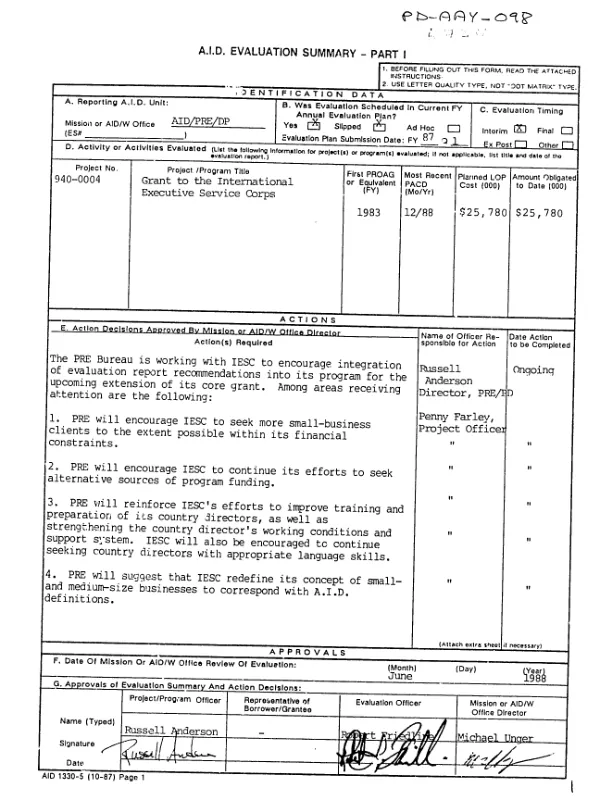
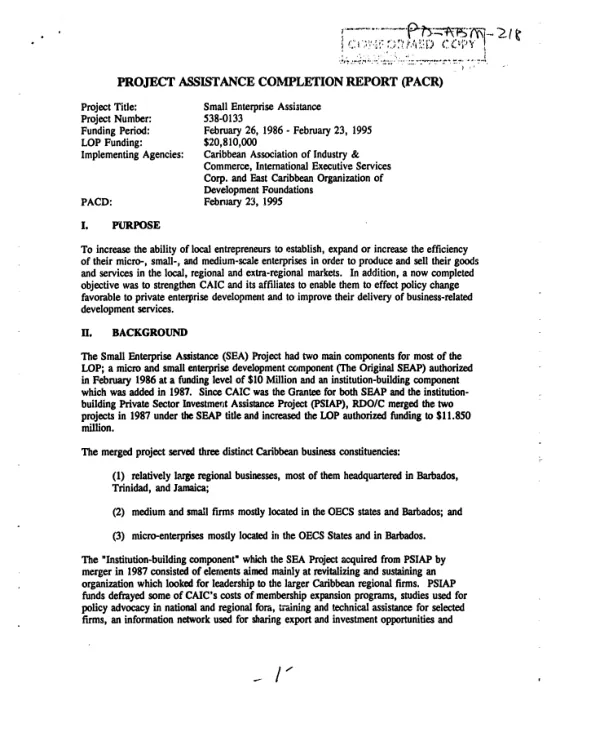
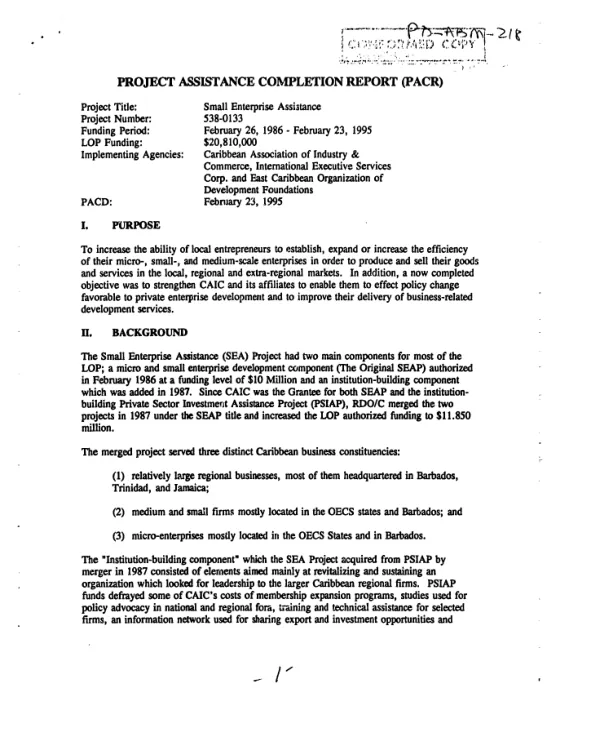
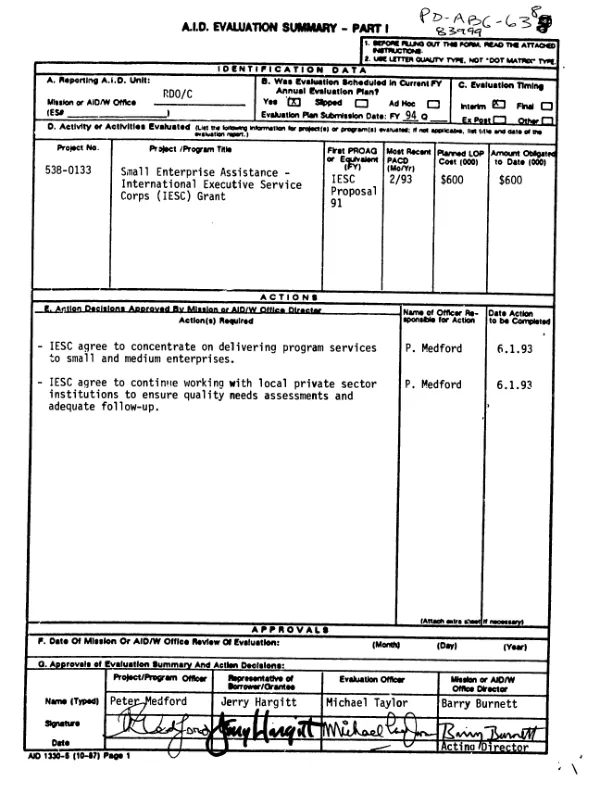
Small enterprise assistance - International Executive Service Corps (IESC) grant
Summarizes interim evaluation of a grant to the International Executive Service Corps (IESC) to provide TA to small, medium, and microenterprises in the Eastern Caribbean.
1970
Sign in to readA free account is required to download.
Abstract
The evaluation covered the period 3/91-8/92. Results have been mixed. Medium-scale enterprises have benefitted most from the program due to a reasonably good match between their needs and the skills of IESC"s Volunteer Executives (VEs) and due to the good communications skills and enthusiasm of the VEs. Impacts on productivity and profitability have been moderate for small companies; micro clients were less certain about impact, although some have introduced new products and adopted new techniques. It seems that a number of VEs on microenterprise assignments, had, after 20-30 years, lost touch with the hands-on aspects of their work. Effectiveness at the microenterprise level also was reduced by the lack of clearly articulated needs assessments. In general, however, most VE assignments were too short to draw strong correlations between assistance and client performance. Medium-scale clients were satisfied with the duration of the interventions, but almost all small and micro clients claimed that VEs should have spent more time with them, a sentiment with which some VEs agreed. IESC"s piggy-back strategy allowed the program to deliver, at generally reasonable costs, a total of 56 regular projects -- a commendable rate, although short of target. This shortfall is due to a limited market size, an excess supply of firm-level programs, less than adequate organization of its special programs, and because the targets were overly optimistic to begin with. While regular projects were reasonably priced, services of the ABLE (American Business Linkage Enterprise) program were inexpensive and produced good value for the money. The special programs -- especially training -- were heavily subsidized and were not cost-effective; alternative systems for delivering similar services should have been found. IESC"s marketing of VE projects and its adherence to the project"s beneficiary selection criteria have been satisfactory, and its client identification and selection process well suited to the Eastern Caribbean. The following lessons were learned. (1) Firm-level programs should be carefully matched with their intended beneficiaries. (2) Clients receive the type of assistance they need only if their needs have been adequately assessed. (3) It is important to monitor the extent to which clients adopt and implement TA recommendations. The Mission found the evaluation worthwhile, but IESC felt its conclusions were not based on an analysis of the entire program.
Related documents