USAID
SMART Goals for HIV and STI Prevention
Setting SMART goals is a crucial step in achieving success and making informed choices about one's actions and decisions.
7 pages
Sign in to readA free account is required to download.
Abstract
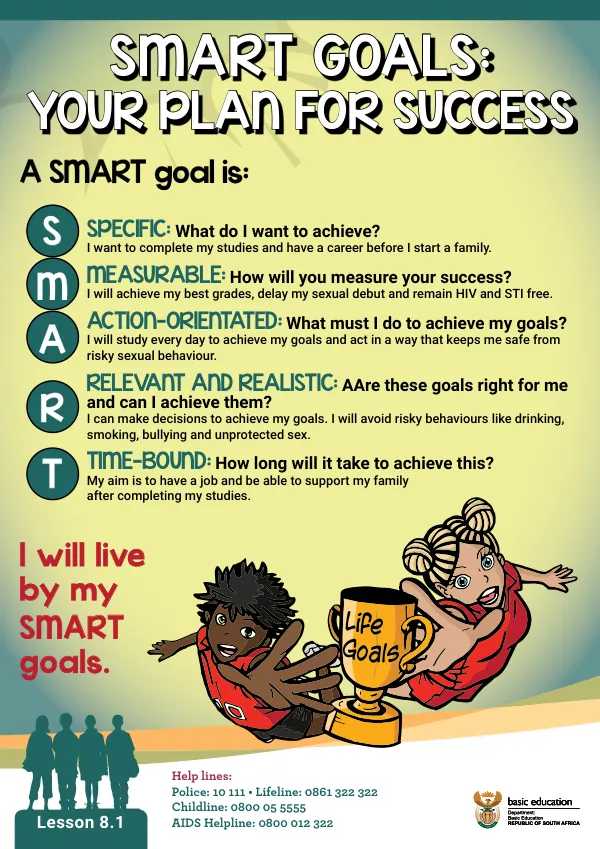
A SMART goal is specific, measurable, achievable, relevant, and time-bound. To create a SMART goal, one must define what they want to achieve, measure their success, take action to achieve their goals, and establish a realistic timeline. The SMART goal framework emphasizes the importance of being specific and clear about one's objectives. This involves identifying what one wants to achieve and setting a specific target. For example, a person may set a goal to complete their studies and have a career before starting a family. This goal is specific and clearly defines what the person wants to achieve. Measurability is another key component of a SMART goal. This involves establishing criteria to measure success and track progress. In the example above, the person may measure their success by achieving their best grades, delaying their sexual debut, and remaining HIV and STI-free. Achievability is also essential in setting SMART goals. This involves assessing whether the goal is realistic and attainable based on one's resources and capabilities. The person in the example may assess whether they have the necessary skills and resources to achieve their goal. Relevance and realism are also critical components of a SMART goal. This involves evaluating whether the goal aligns with one's values and priorities and whether it is realistic to achieve. The person in the example may evaluate whether their goal aligns with their values and priorities and whether it is realistic to achieve. Time-bound is the final component of a SMART goal. This involves establishing a specific deadline or timeframe for achieving the goal. In the example above, the person may set a goal to complete their studies and have a career before starting a family, which implies a specific timeframe. The ACE technique is another tool for setting limits and sticking to them. ACE stands for Know your personal limits ahead of time, Watch for signs or situations that might challenge your limits, and Have a plan to help you stick to your limits. This technique emphasizes the importance of being aware of one's limits, being mindful of situations that may challenge those limits, and having a plan in place to stick to those limits. Abstinence is the 100% safest way to prevent unplanned pregnancy, HIV, and other STIs. However, if one chooses to have sex, using both hormonal contraception and a condom every time is the next safest choice. Staying faithful to one partner at a time and talking openly with one's partner about safe sexual behaviors and avoiding risks are also essential in preventing HIV and other STIs. Stigma is different from dislike and discrimination. Stigma is an attitude that makes a person feel bad or "shamefully different" based on societal expectations. People living with HIV often experience stigma because people judge or fear them. Stigma hurts both the victim and perpetrator because of a lack of knowledge and understanding. Stigma prevents people from disclosing their HIV status and contributes to the spread of HIV. Being assertive and communicating effectively is crucial in setting boundaries and making informed choices. The SOUND technique is a useful tool for communicating assertively. This involves stepping back, offering an alternative, using assertive body language, saying "NO" and repeating it if necessary, and describing how being pressured is making one feel.
Related documents