COUNTER PART INTERNATIONAL
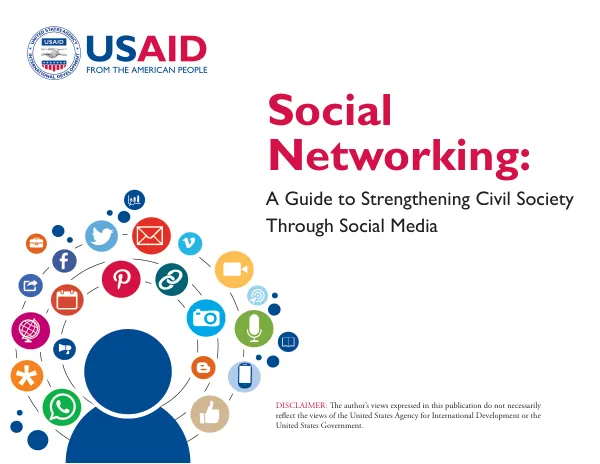
Social Networking: A Guide to Strengthening Civil Society Through Social Media
Social media has become a dynamic online medium that has changed the way civil society organizations work.
2014 · 84 pages
Sign in to readA free account is required to download.
Abstract
Similar to traditional media, social media offers opportunities to collect and share news, communicate with audiences, and advocate for change. However, unlike traditional media, social media allows for this to happen on the Web in real-time through highly interactive global or regional social networks. The most popular social media platforms include Facebook, YouTube, Twitter, Google+, LinkedIn, Instagram, and Pinterest. New platforms emerge daily, and staying abreast of these developments is critical to social media success. Sharing quality content is also important. Content should be honest and genuine to help build trust, and engaging to organically grow an audience. Posting simply out of obligation is not a good strategy. Posting interesting, compelling, and thought-provoking content is the key to success. Social media is popular among a diverse array of citizens, government agencies, non-governmental organizations (NGOs), and businesses around the world. It serves as a means for individuals to make new friends, for government agencies to interact with their constituencies, for NGOs to organize grassroots movements, and for businesses to promote their brands. There are nearly 1.75 billion social media users worldwide. Geography can play a large role in determining what platforms people use, based on what they have access to in their given location. There are a wide range of social media platforms, from social networking sites designed to link people with common interests through an online community to sites designed purely for photo and video sharing. These platforms are constantly evolving and new platforms are emerging daily. A basic breakdown of the main types of social media platforms includes social networking sites, microblogging sites, photo and video sharing sites, and blogging sites. Social networking sites allow users to create a profile and cultivate a social network of friends and followers. With over one billion active users, Facebook is the most popular social networking site globally, but there are also many other sites that cater to regional or personal interests. The prohibitive cost of broadband services impacts access to social media in developing countries. High broadband service costs encourage greater dependence on smartphones, which can lead to less engagement on social media if the sites are not optimized for mobile. Social media is a powerful tool for civil society organizations to promote democracy, human rights, and governance. It can be used to support greater citizen participation and transparent political processes, and to strengthen mutual accountability among civil society organizations, government institutions, and citizens. To effectively use social media, civil society organizations need to develop a social media policy that outlines their goals, objectives, and guidelines for social media use. They also need to link social media to programmatic goals and use social media in programming to engage with their constituents and promote their work. Measuring the impact of social media is also crucial, and organizations can use quantitative and qualitative analysis to assess the effectiveness of their social media efforts. In conclusion, social media has become an essential tool for civil society organizations to promote their work and engage with their constituents. By understanding the different types of social media platforms, developing a social media policy, and using social media in programming, civil society organizations can effectively use social media to promote democracy, human rights, and governance.