OPEN UNIVERSITY
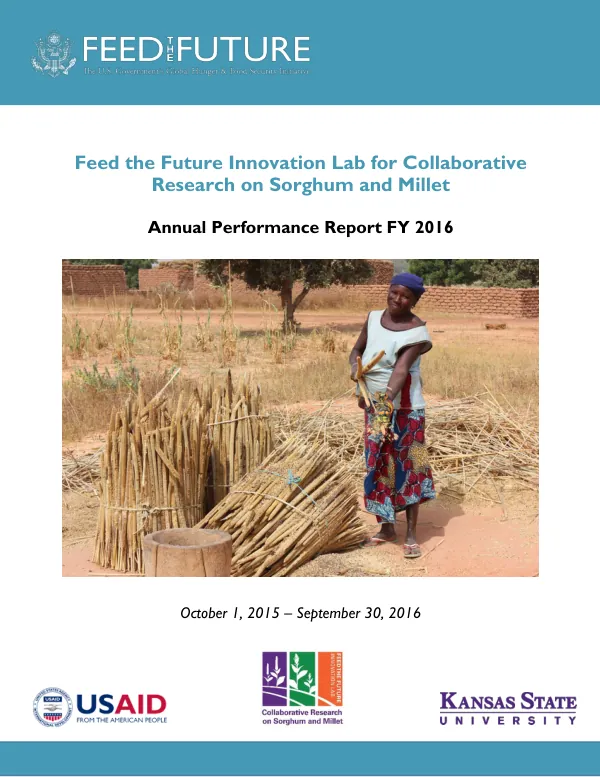
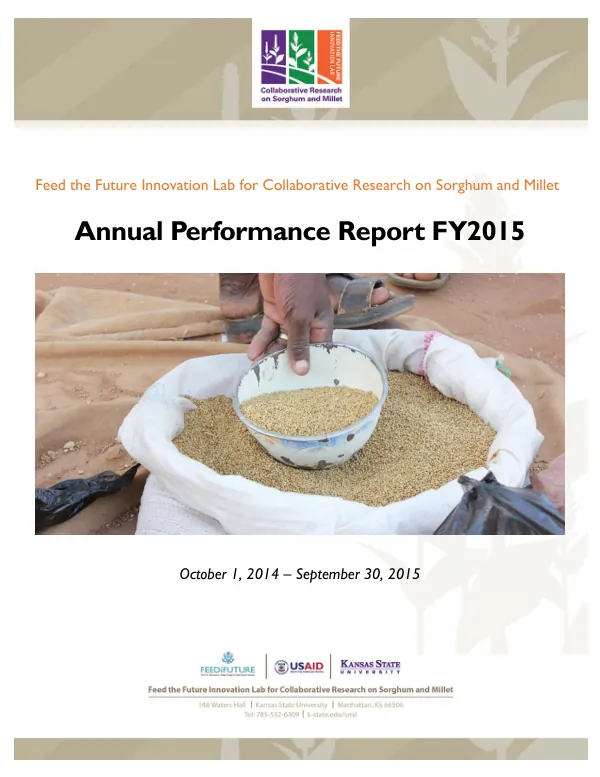
Sorghum and Millet Innovation Lab Annual Performance Report – FY 2015
The Feed the Future Innovation Lab for Collaborative Research on Sorghum and Millet completed its second full year of activities in FY 2015.
2015 · 69 pages
Sign in to readA free account is required to download.
Abstract
The program's second season of field experimentation was underway, with a focus on characterizing biotic, abiotic, and grain quality traits of over 2,100 varieties of Ethiopian sorghum in one of the most ambitious multi-locational trials in Ethiopian sorghum breeding. In West Africa, collaborators across the West African Sahel assembled a smaller panel representative of the diversity of sorghum, ranging from Senegal to Niger and including materials from Senegal, Niger, Togo, Mali, and Nigeria. A new project was initiated on breeding pearl millet varieties for dual food and feed purposes, with a special emphasis on improving forage quality. This project was led by a consortium of West African pearl millet breeders and directed out of the Burkina Faso national program. The project was complemented with collaboration from a newly-hired pearl millet breeder at Kansas State University, who continued to build upon the university's global reputation in modern pearl millet breeding. Pearl millet management projects focusing on the control of the Millet Head Miner through IPM and improved stand establishment through the use of seed balls were also undertaken. Stimulating demand for sorghum and millet through value-added food product development accelerated in West Africa and Ethiopia. In Ethiopia, novel parents with improved food quality attributes were being tested for adaptation and application for food processing needs such as injera against existing varieties found in-country. Several sensory evaluation procedures were developed to systematically evaluate food quality hedonic attributes and the impact of food processing technologies on quality. In West Africa, the program continued to build upon INTSORMIL investments and expand collaborative activities with industry and other research and development programs. Long- and short-term training accelerated, with twenty-three individuals registered for advanced degrees surpassing 2015 targets. Forty-seven short-term trainings took place, impacting over 3,000 trainees. Fourteen technologies or technology components were advanced this year. The program contributed to the development of the Ethiopian agricultural policy and the Agricultural Growth Program II. Fifty-nine percent of the research and training budget was allocated to national programs, or students from national programs, and 34% to U.S. institutions.