INTERNATIONAL ALERT
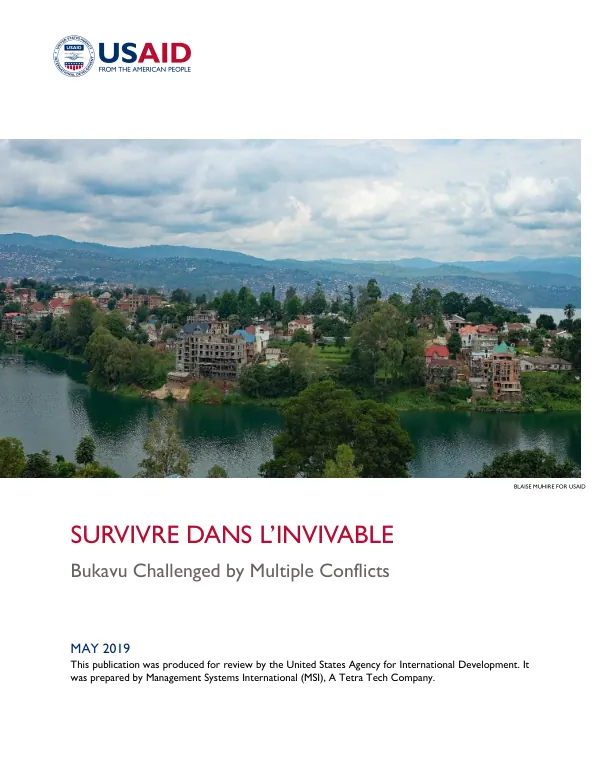
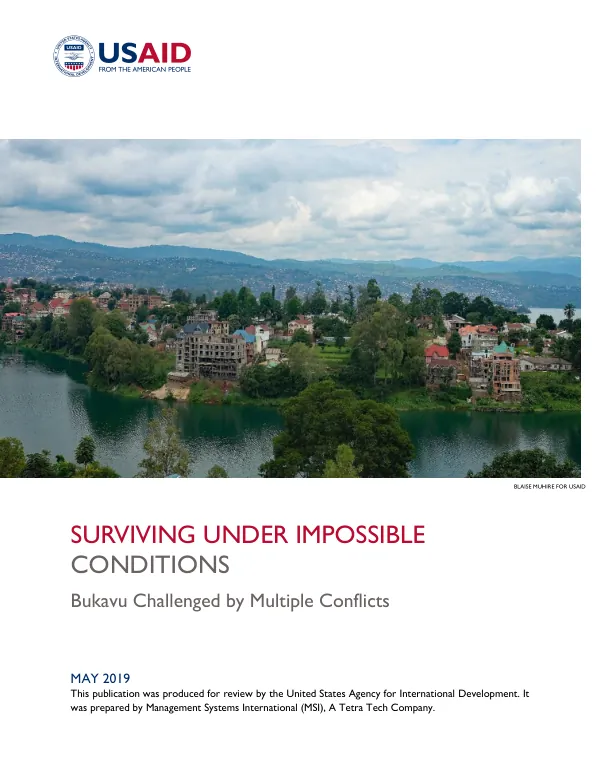
Surviving Under Impossible Conditions: Bukavu Challenged by Multiple Conflicts
The Solutions for Peace and Recovery (SPR-Amani kwa Maendeleo) project is a USAID-funded initiative implemented by a consortium of organizations, including Management Systems International (MSI), International Alert, and the International Rescue Committee (IRC).
2019 · 32 pages
Sign in to readA free account is required to download.
Abstract
The project aims to strengthen and increase social cohesion in the eastern Democratic Republic of Congo by implementing solutions sourced from participatory analysis and research into conflicts, and through the inclusion and empowerment of women and other marginalized groups in seven territories. The project has undertaken to produce quality participatory analyses for USAID on the most pressing conflicts experienced by communities in the eastern part of the Democratic Republic of Congo. For the city of Bukavu, this study synthesizes the results of analysis carried out on ten conflicts, including those in the communes of Ibanda and Bagira. Data was collected and analyzed using a participatory approach that included stakeholders at all possible levels, taking into account gender and marginalized groups. The analysis presented in this report takes a balanced view that seeks to place these conflicts within an entire system of broken governance in Bukavu. The study shows that beyond the ten conflicts included in this research, Bukavu's current problems are the result of two main drivers. The first of these is poor governance, characterized by the state's weak authority and its inability to meet the population's basic needs. The second driver is Bukavu's housing process, which has been significantly impacted by repeated armed conflict and rural flight, with no socio-economic integration plan in place consistent with city planning. The combination of these two drivers continues to have a widespread impact on all areas of life, and in doing so generates multiple conflict situations. The report highlights the need for a comprehensive approach that addresses the root causes of these conflicts, including poor governance and the lack of socio-economic integration. This approach should involve the inclusion and empowerment of women and other marginalized groups, as well as the establishment of sustainable structures for peace and development. The report also emphasizes the importance of participatory action research in identifying and prioritizing conflicts, and in establishing peace-building pathways. This approach has been used in the communes of Ibanda and Bagira, where Local Peace and Development Committees (CLPDs) have been set up to facilitate conflict analysis and create sustainable structures for peace and development. The study concludes that the conflicts in Bukavu are complex and multifaceted, and that a comprehensive approach is needed to address their root causes. This approach should involve the government, civil society, and the international community working together to address the issues of poor governance and socio-economic integration. The report provides a number of recommendations for addressing these conflicts, including the establishment of a comprehensive peace-building framework, the strengthening of local governance structures, and the promotion of inclusive and sustainable development. The report highlights the need for a long-term commitment to addressing the conflicts in Bukavu, and for a comprehensive approach that addresses the root causes of these conflicts. This approach should involve the inclusion and empowerment of women and other marginalized groups, as well as the establishment of sustainable structures for peace and development. The report provides a number of recommendations for addressing these conflicts, including the establishment of a comprehensive peace-building framework, the strengthening of local governance structures, and the promotion of inclusive and sustainable development. The report concludes by emphasizing the need for a comprehensive approach to addressing the conflicts in Bukavu, and for a long-term commitment to addressing the root causes of these conflicts. This approach should involve the government, civil society, and the international community working together to address the issues of poor governance and socio-economic integration.
Related documents