INTERNATIONAL ORGANIZATION FOR MIGRATION
SOUTH SUDAN COMPLEX EMERGENCY
The complex emergency in South Sudan began in 2005 following the signing of the Comprehensive Peace Agreement between the Government of Sudan and the southern-based Sudan People's Liberation Movement.
2012 · 6 pages
Sign in to readA free account is required to download.
Abstract
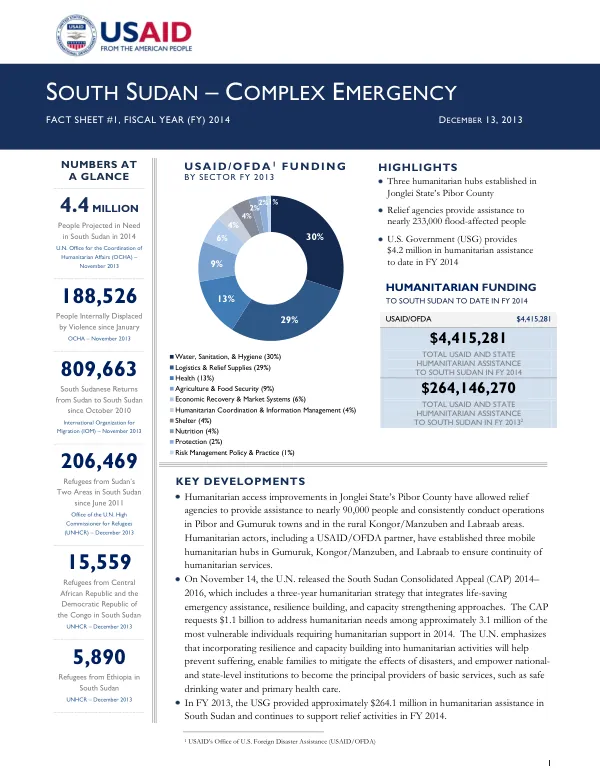
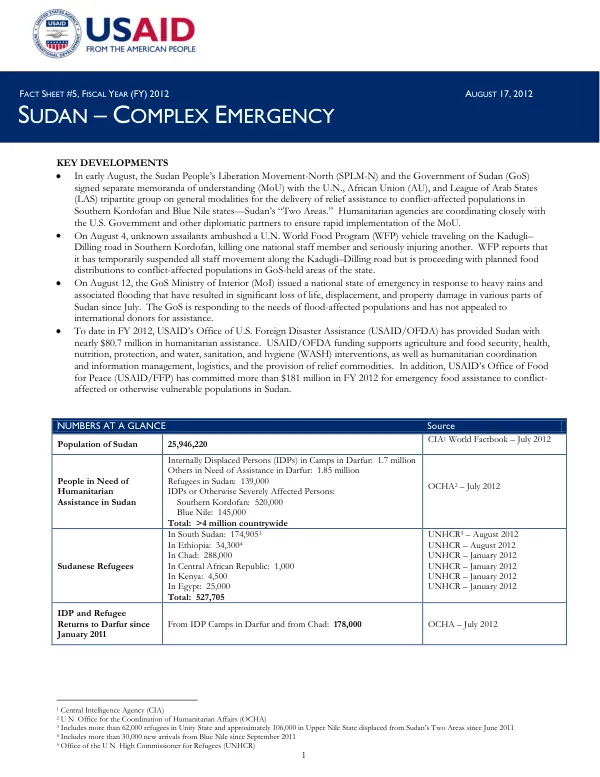
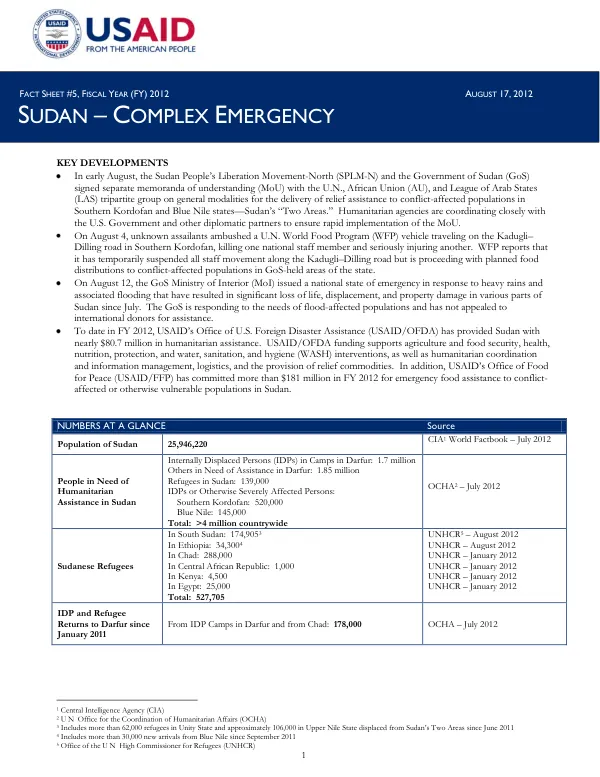
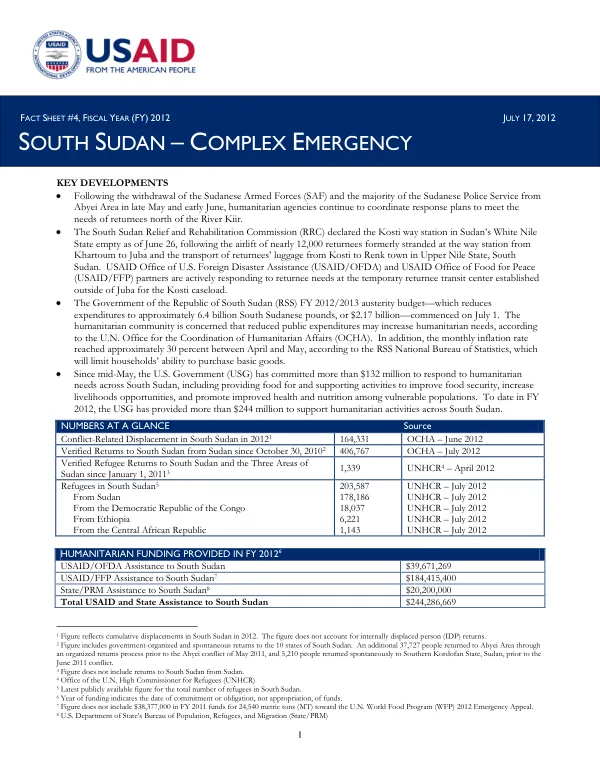
The agreement officially ended more than two decades of north-south conflict within Sudan, which resulted in an estimated 2 million deaths and 4.5 million displaced people. Between 2005 and 2011, over 2 million internally displaced persons (IDPs) and 331,000 refugees returned to their communities in present-day South Sudan and the Three Areas of Abyei, Southern Kordofan, and Blue Nile. The Republic of South Sudan (RSS) declared independence on July 9, 2011, following a January 9, 2011, referendum on self-determination stipulated in the CPA. Upon independence, the United States Agency for International Development (USAID) designated a new mission in Juba, the capital of South Sudan. On October 6, 2011, U.S. Chargé d'Affaires, a.i., Christopher J. Datta re-declared a disaster in South Sudan due to the ongoing complex emergency caused by population displacement and returnee inflows from Sudan, continued armed conflict, and perennial environmental shocks. Insecurity, landmines, and transportation and communication challenges due to limited infrastructure restrict humanitarian activities across South Sudan, hindering the delivery of critical assistance to populations in need. Several outstanding CPA issues, including border demarcation and the status of South Sudanese nationals residing in Sudan, continue to create tensions between Sudan and South Sudan. The RSS ceased oil production in South Sudan in late January 2012 after negotiations stalled between Sudan and South Sudan regarding the terms and conditions related to the export of South Sudanese oil through Sudan. The conflict between the Sudanese Armed Forces (SAF) and the Sudan People's Liberation Movement-North that began in Sudan's Southern Kordofan and Blue Nile states in June 2011 and September 2011, respectively, continues to cause refugee influxes into South Sudan. The May 2011 Abyei Area conflict between the SAF and the Sudan People's Liberation Army displaced approximately 114,000 people, the majority of whom continue to reside in Agok town and Warrap State, South Sudan. Humanitarian agencies continue to coordinate response plans to meet the needs of returnees north of the River Kiir in Abyei Area. The South Sudan Relief and Rehabilitation Commission (RRC) declared the Kosti way station in Sudan's White Nile State empty as of June 26, following the airlift of nearly 12,000 returnees formerly stranded at the way station from Khartoum to Juba and the transport of returnees' luggage from Kosti to Renk town in Upper Nile State, South Sudan. USAID Office of U.S. Foreign Disaster Assistance (USAID/OFDA) and USAID Office of Food for Peace (USAID/FFP) partners are actively responding to returnee needs at the temporary returnee transit center established outside of Juba for the Kosti caseload. The Government of the Republic of South Sudan (RSS) FY 2012/2013 austerity budget, which reduces expenditures to approximately 6.4 billion South Sudanese pounds, or $2.17 billion, commenced on July 1. The humanitarian community is concerned that reduced public expenditures may increase humanitarian needs, according to the U.N. Office for the Coordination of Humanitarian Affairs (OCHA). The monthly inflation rate reached approximately 30 percent between April and May, according to the RSS National Bureau of Statistics, which will limit households' ability to purchase basic goods. The U.S. Government (USG) has committed more than $132 million to respond to humanitarian needs across South Sudan, including providing food for and supporting activities to improve food security, increase livelihoods opportunities, and promote improved health and nutrition among vulnerable populations. To date in FY 2012, the USG has provided more than $244 million to support humanitarian activities across South Sudan.