GOVERNMENT OF KENYA
Food Assistance to Refugees in Kenya
The Office of Food for Peace, in collaboration with the UN World Food Program, provides critical food assistance to refugees in Kenya.
2016 · 1 pages
Sign in to readA free account is required to download.
Abstract
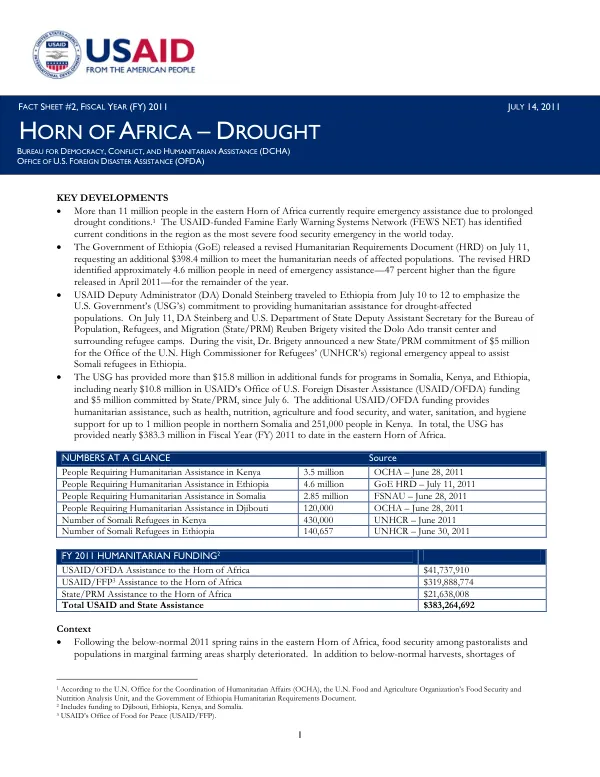
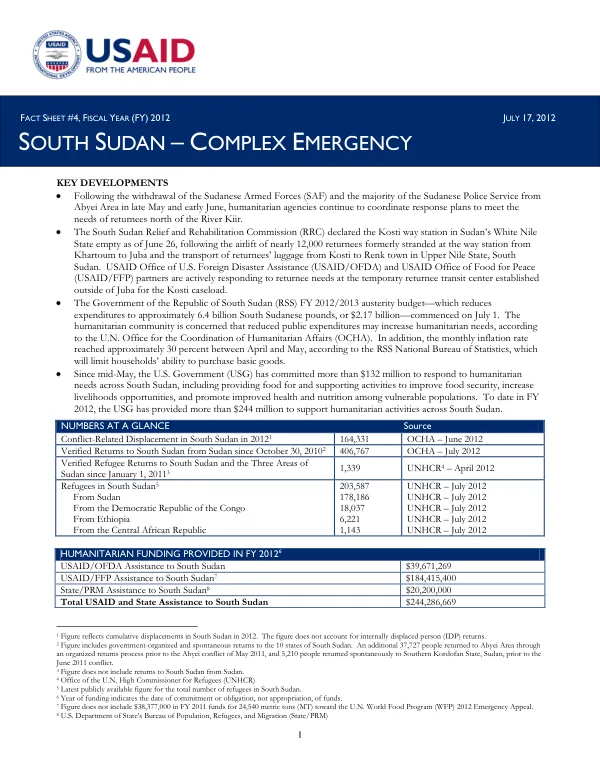
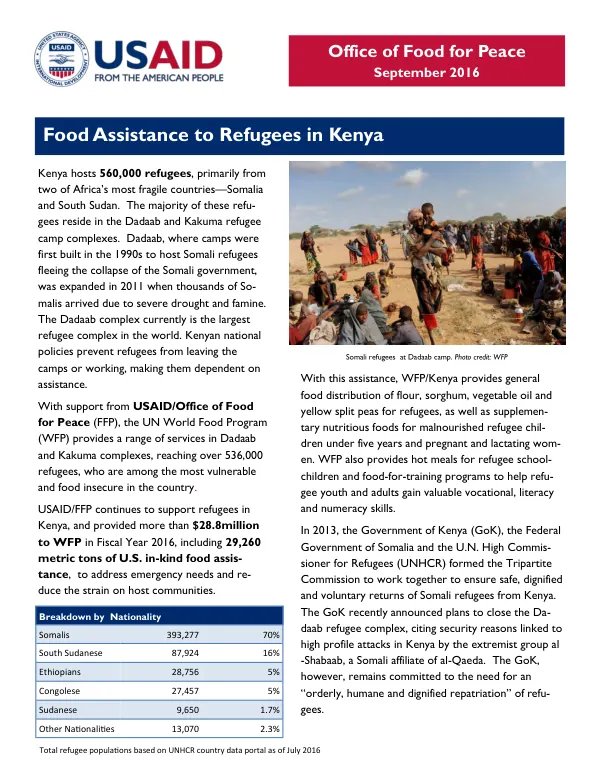
The country hosts 560,000 refugees, primarily from Somalia and South Sudan, with the majority residing in the Dadaab and Kakuma refugee camp complexes. Dadaab, the largest refugee complex in the world, was established in the 1990s to accommodate Somali refugees fleeing the collapse of their government. The complex was expanded in 2011 due to severe drought and famine in Somalia. Kenyan national policies restrict refugees from leaving the camps or working, making them dependent on assistance. With support from USAID/Office of Food for Peace, the UN World Food Program provides a range of services in Dadaab and Kakuma, reaching over 536,000 refugees. The program includes general food distribution, supplementary nutritious foods for malnourished children and pregnant women, and food-for-training programs to help refugee youth and adults gain vocational, literacy, and numeracy skills. In 2013, the Government of Kenya, the Federal Government of Somalia, and the UN High Commissioner for Refugees formed the Tripartite Commission to facilitate the safe, dignified, and voluntary return of Somali refugees from Kenya. The Government of Kenya has announced plans to close the Dadaab refugee complex, citing security concerns linked to extremist group al-Shabaab. However, the government remains committed to an orderly, humane, and dignified repatriation of refugees. The refugee population in Kenya is predominantly Somali, with 393,277 individuals, accounting for 70% of the total. South Sudanese refugees make up 16% of the population, followed by Ethiopians, Congolese, Sudanese, and other nationalities. The UN World Food Program, with support from USAID/Office of Food for Peace, continues to provide critical food assistance to these vulnerable populations. The Office of Food for Peace has provided significant funding to support refugees in Kenya, with over $28.8 million allocated in Fiscal Year 2016. This assistance includes 29,260 metric tons of U.S. in-kind food assistance to address emergency needs and reduce the strain on host communities. The program's efforts aim to improve the food security and well-being of refugees in Kenya, while also supporting the government's plans for an orderly repatriation of refugees.