AFGHAN MINISTRY OF RURAL REHABILITATION AND DEVELOPMENT
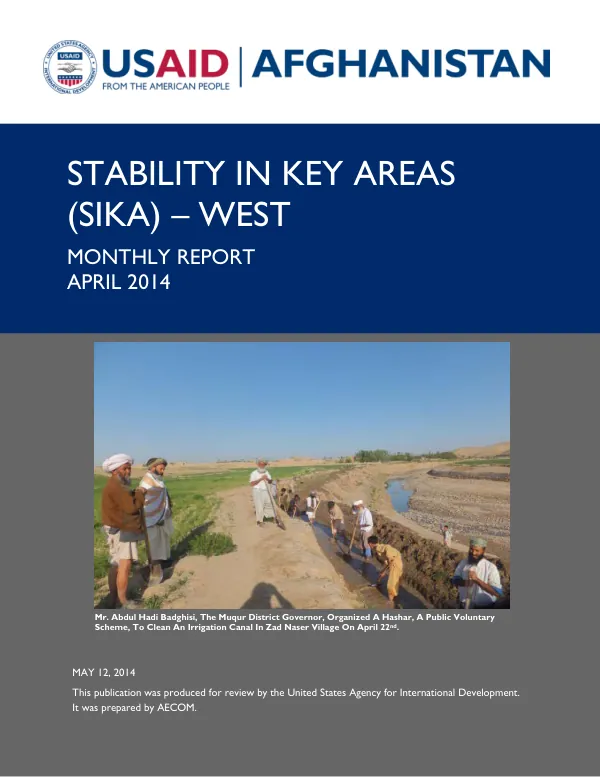
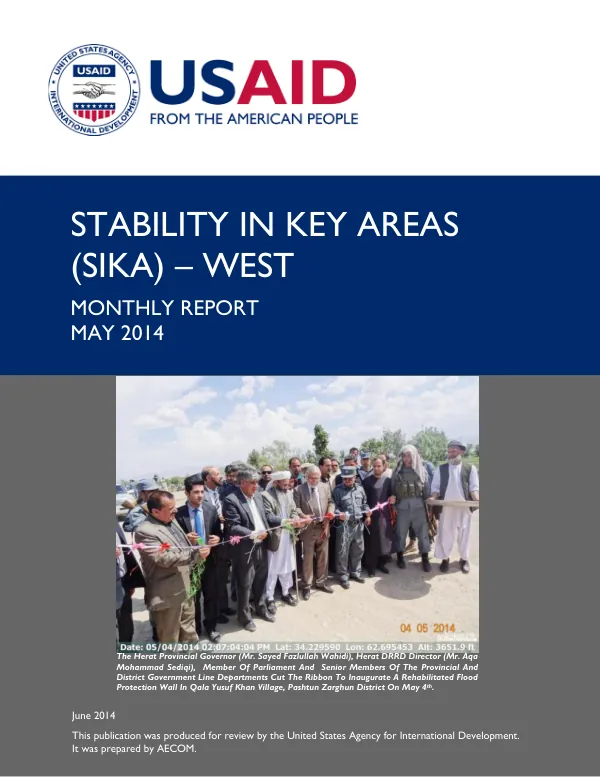
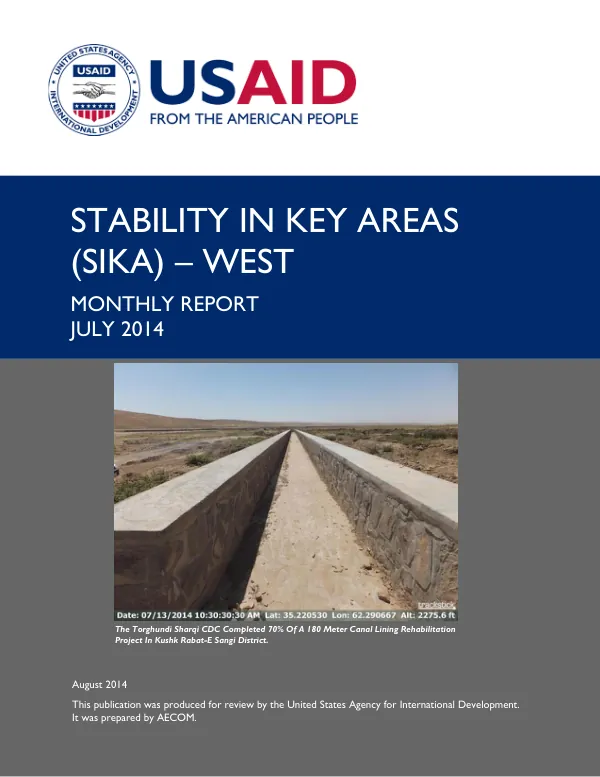
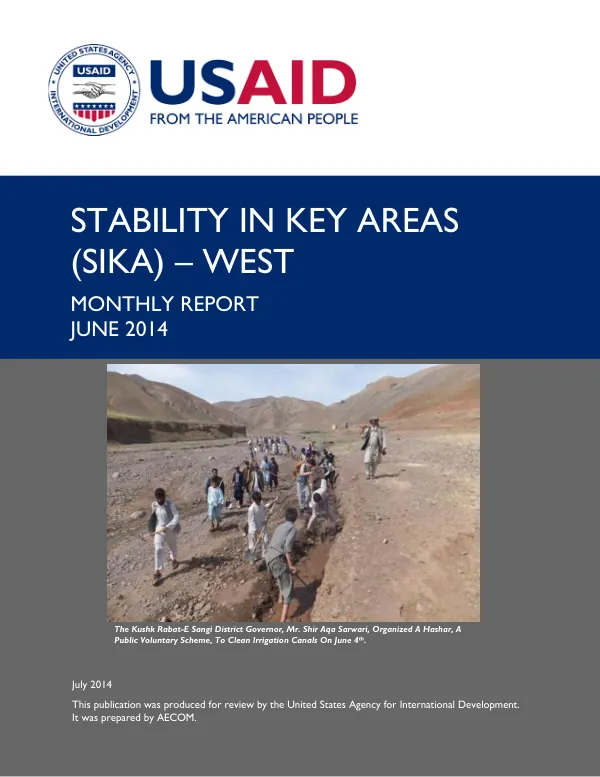
Stability In Key Areas (SIKA) – West / Monthly Report – June 2014
The Stability in Key Areas (SIKA) – West program is a USAID-funded initiative aimed at increasing stability within targeted regions in western Afghanistan.
2014 · 21 pages
Sign in to readA free account is required to download.
Abstract
The program is led by the Ministry of Rural Rehabilitation and Development (MRRD) and the Independent Directorate of Local Governance (IDLG), in partnership with USAID. The program's area of operation includes the provinces of Farah, Herat, Badghis, and Ghor, covering a total of 17 districts. During the month of June 2014, the program's stabilization programming activities focused on district-level stabilization committees, known as Komite Sobate Woleswali. A total of 14 meetings were held in various districts, bringing together district government officials, community development council members, district social workers, tribal leaders, and district residents. These meetings aimed to identify and discuss major problems affecting the districts, such as unemployment, tribal conflicts, illiteracy, and lack of trust between residents and government. The Komite Sobate Woleswali meetings provided an opportunity for participants to prioritize solutions to these problems, which may be addressed through available government resources or grant-funded activities. Some of the solutions discussed included the rehabilitation of culverts, roads, and schools, the establishment of tribal conflict resolution committees, and the provision of basic educational facilities. In addition to the Komite Sobate Woleswali meetings, discussions were conducted on June 3, 5, and 7 to review the stabilization programming indicators and assess the project's impact. These discussions aimed to evaluate the effectiveness of the program's activities and identify areas for improvement. The program's stabilization programming activities are led by the MRRD and IDLG partners, who play a key role in both district and provincial programming. The program's success is measured through the implementation of stabilization programming indicators, which aim to increase stability within the targeted regions. The SIKA-West program's geographic focus is on the provinces of Farah, Herat, Badghis, and Ghor, which are considered critical areas for stability in western Afghanistan. The program's implementation details are outlined in the program's contract, which was awarded to AECOM International Development on January 29, 2012. The program's timeframes are outlined in the contract, which specifies the duration of the program as 36 months, commencing from January 29, 2012. The program's recommendations are based on the lessons learned from the program's activities, which aim to improve the stability within the targeted regions. The program's monitoring and evaluation activities are conducted regularly to assess the program's progress and identify areas for improvement. The program's deliverables are outlined in the contract, which specifies the expected outcomes and outputs of the program. The program's community development programming activities focus on improving the livelihoods of the local population through the provision of basic services, such as education, healthcare, and infrastructure development. The program's governance programming activities aim to strengthen the capacity of local government institutions to deliver services to the local population. The program's gender mainstreaming unit plays a key role in ensuring that the program's activities are inclusive and responsive to the needs of women and girls. The program's provincial and district overview provides a detailed breakdown of the program's activities in each of the targeted districts. The program's lessons learned highlight the importance of community engagement and participation in the program's activities. The program's monitoring and evaluation activities have identified areas for improvement, which are being addressed through the program's implementation. The program's deliverables are outlined in the contract, which specifies the expected outcomes and outputs of the program. The program's recommendations are based on the lessons learned from the program's activities, which aim to improve the stability within the targeted regions.