USAID DEC
Stakeholder Coordination Plan for County Health Systems Strengthening
The Stakeholder Coordination Plan is a comprehensive framework for managing and coordinating health information systems (HIS) stakeholders in a county setting.
2014 · 3 pages
Sign in to readA free account is required to download.
Abstract
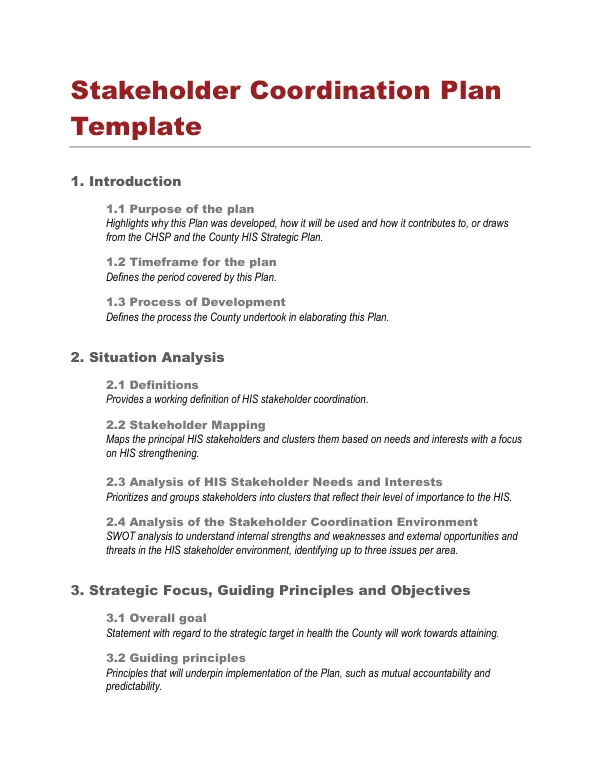
The plan aims to strengthen HIS by fostering collaboration, mutual accountability, and predictability among stakeholders. The plan covers a period from 2020 to 2025, with the primary objective of improving health outcomes through effective stakeholder coordination. The development process involved a thorough analysis of the HIS stakeholder environment, including a SWOT analysis to identify internal strengths and weaknesses, as well as external opportunities and threats. The plan identifies three key stakeholder clusters: high-priority stakeholders, medium-priority stakeholders, and low-priority stakeholders. High-priority stakeholders include healthcare providers, policymakers, and community leaders, who are critical to the success of the HIS. Medium-priority stakeholders include researchers, donors, and private sector entities, who can provide valuable support and resources. Low-priority stakeholders include individuals and organizations with limited involvement in the HIS. The plan outlines a strategic framework for stakeholder coordination, which includes tailored strategies, activities, and mechanisms for coordination. The framework prioritizes stakeholder engagement, capacity building, and resource mobilization to support the implementation of the plan. Implementation arrangements for the plan include the establishment of management and coordinating structures, HIS coordinating mechanisms, and performance monitoring and evaluation processes. The plan also outlines resource requirements and financing, including human and financial implications, and estimates the additional capacities needed to implement the stakeholder coordination strategy. The plan's guiding principles include mutual accountability, predictability, and transparency, which will underpin the implementation of the plan. The overall goal of the plan is to improve health outcomes in the county by strengthening the HIS and fostering effective stakeholder coordination. The plan's strategic framework is outlined in Table 1, which indicates priority, tailored strategies, activities, and mechanisms for coordination. The table highlights the importance of stakeholder engagement, capacity building, and resource mobilization in achieving the plan's objectives. The plan's performance monitoring and evaluation process will involve regular assessments of progress against indicators and targets, including monthly, quarterly, annual, mid-term, and end-term evaluations. The plan's resource requirements and financing will be estimated and mobilized to support the implementation of the plan. Overall, the Stakeholder Coordination Plan provides a comprehensive framework for managing and coordinating HIS stakeholders in a county setting, with the primary objective of improving health outcomes through effective stakeholder coordination.
Related documents