USAID DEC
Standards Guidance for Electric Two- and Three-Wheelers and Charging Infrastructure in Pakistan
Sign inDEPARTMENT OF ENERGY
Standards Guidance for Electric Two- and Three-Wheelers and Charging Infrastructure in Pakistan
The document is a standards guidance for electric two- and three-wheelers and charging infrastructure in Pakistan.
2024 · 41 pages
Sign in to readA free account is required to download.
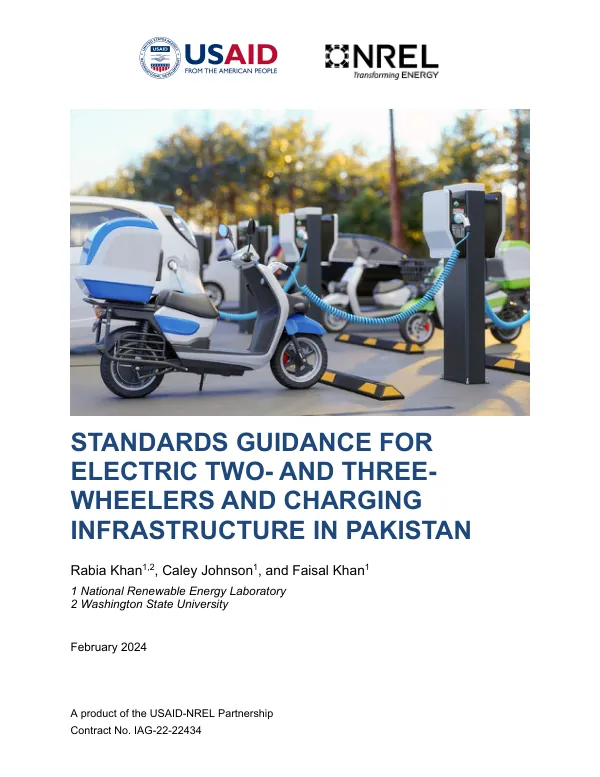
Abstract
It is a product of the USAID-NREL Partnership and was published in February 2024. The document aims to provide a comprehensive framework for the development and implementation of standards for electric two- and three-wheelers and charging infrastructure in Pakistan. The document begins by discussing the importance of standards for electric two- and three-wheelers and charging infrastructure. It highlights the need for a coordinated approach to develop and implement standards that are aligned with international best practices. The document also emphasizes the importance of involving stakeholders from various sectors, including government, industry, and civil society, in the development and implementation of standards. The document then provides an overview of the classification of two- and three-wheelers, including electric rickshaws, electric mopeds and motorcycles, and e-bikes. It also discusses the importance of electrical safety standards, including the use of Global Technical Regulation No. 20, and vehicle performance measurements, including common vehicle test conditions and environmental durability tests. The document also discusses the importance of batteries, including certification of small batteries, testing for shipping batteries, and battery second use or repurposing. It also highlights the need for standards related to protection, including international standards for electrically propelled road batteries and UN 38.3 standards for battery shipping. In addition, the document discusses the importance of charging infrastructure, including electric vehicle charging stations, battery swap systems, and battery swap systems. It also highlights the need for standards related to EV labeling, including EV labeling, high voltage labeling, and battery recycling labeling. The document concludes by emphasizing the importance of emerging technologies, including emerging technologies for electric two- and three-wheelers and charging infrastructure. It also highlights the need for a coordinated approach to develop and implement standards that are aligned with international best practices. The document provides a comprehensive framework for the development and implementation of standards for electric two- and three-wheelers and charging infrastructure in Pakistan. It highlights the importance of involving stakeholders from various sectors, including government, industry, and civil society, in the development and implementation of standards. The document also provides a list of acronyms and a list of figures and tables, including a graphical representation of the global EV committee structure, a schematic of an e-rickshaw, and a Malaysian EV standard. The document is a valuable resource for policymakers, industry stakeholders, and industry stakeholders in Pakistan who are interested in developing and implementing standards for electric two- and three-wheelers and charging infrastructure. It provides a comprehensive framework for the development and implementation of standards that are aligned with international best practices. The document concludes by emphasizing the importance of standards for electric two- and three-wheelers and charging infrastructure in Pakistan. It highlights the need for a coordinated approach to develop and implement standards that are aligned with international best practices. The document also highlights the importance of involving stakeholders from various sectors, including government, industry, and civil society, in the development and implementation of standards. It emphasizes the need for a coordinated approach to develop and implement standards that are aligned with international best practices.
Related documents
Documents in this collection
 2021
2021USAID DEC
Quality Assurance and Quality Control Manual for Khyber Pakhtunkhwa Reconstruction Program
Open record 2021
2021USAID DEC