FAMILY HEALTH INTERNATIONAL
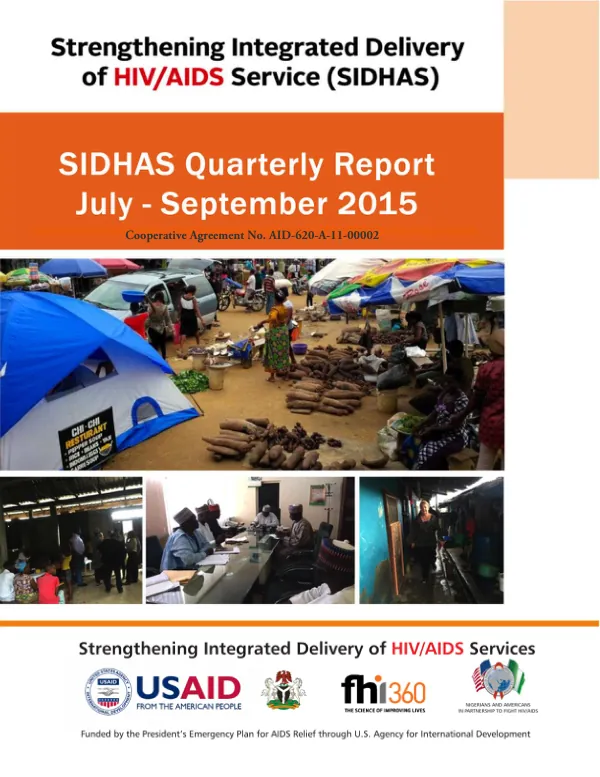
Strengthening Integrated Delivery of HIV/AIDS Services (SIDHAS) Activity Summary
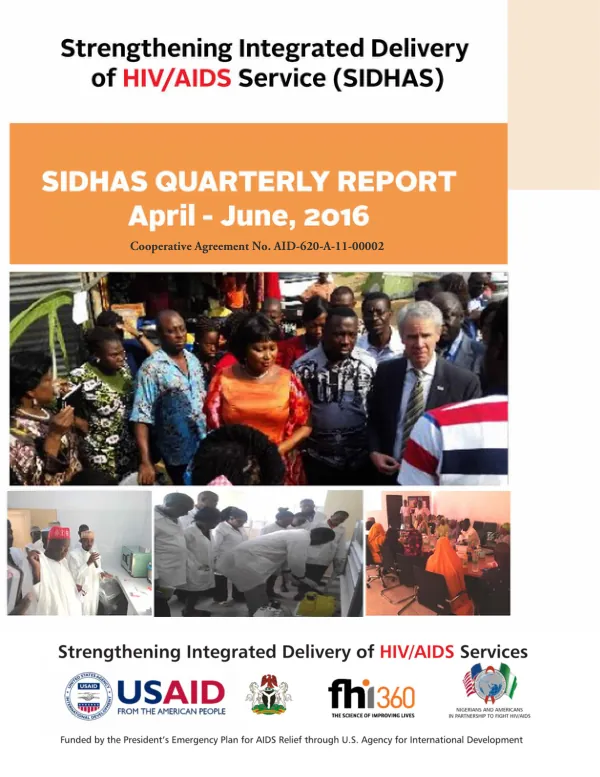
The SIDHAS project, implemented by Family Health International (FHI 360), aims to strengthen the integrated delivery of HIV/AIDS services in Nigeria.
2016 · 52 pages
Sign in to readA free account is required to download.
Abstract
The project's objective is to sustain cross-sectional integration of HIV/AIDS and TB services by building Nigerian capacity to deliver sustainable, high-quality, comprehensive prevention, treatment, care, and related services. This will be achieved through three key result areas: increased access to high-quality HIV/AIDS and TB prevention, treatment, care, and related services; improved cross-sectional integration of HIV/AIDS and TB services; and improved stewardship by Nigerian institutions for the delivery of high-quality comprehensive HIV/AIDS and TB services. The project's life span is from September 12, 2011, to September 11, 2018. The SIDHAS project is aligned with USAID's Assistance Objective 3 (AO 3), which aims for a sustained, effective Nigerian-led HIV/AIDS and TB response. The project's implementation is divided into four phases, with the current phase, Phase 4, focusing on the continued integration of HIV/AIDS and TB services. The SIDHAS project has made significant progress in achieving its objectives. In the quarter covered by this report, FHI 360 received USAID approval for a two-year extension of the project, extending its implementation period to September 11, 2018. This extension will enable the project to continue its efforts to strengthen the integrated delivery of HIV/AIDS services in Nigeria. The SIDHAS project has achieved notable results in various areas, including increased access to HIV/AIDS and TB services, improved cross-sectional integration of services, and enhanced stewardship by Nigerian institutions. The project has also made significant progress in implementing its interventions, including the provision of HIV testing services, antiretroviral therapy, and TB treatment. The project's success has been attributed to its strong partnerships with various stakeholders, including the Government of Nigeria, local governments, and civil society organizations. The SIDHAS project has also made significant contributions to the development of policies and guidelines related to HIV/AIDS and TB services in Nigeria. The project has worked closely with the National AIDS Control Agency (NACA) and the Federal Ministry of Health to develop and implement policies and guidelines that promote the integration of HIV/AIDS and TB services. In addition to its technical achievements, the SIDHAS project has also made significant contributions to the capacity building of Nigerian institutions and stakeholders. The project has provided training and technical assistance to healthcare workers, policymakers, and other stakeholders to enhance their capacity to deliver high-quality HIV/AIDS and TB services. The SIDHAS project has also made significant progress in its efforts to improve the quality of HIV/AIDS and TB services in Nigeria. The project has implemented various quality improvement initiatives, including the Quality Mentoring and Accountability Program (QMAP), which aims to improve the quality of HIV/AIDS and TB services through mentoring and accountability. Overall, the SIDHAS project has made significant progress in achieving its objectives and has contributed significantly to the development of policies and guidelines related to HIV/AIDS and TB services in Nigeria. The project's success has been attributed to its strong partnerships with various stakeholders, including the Government of Nigeria, local governments, and civil society organizations.