USAID DEC
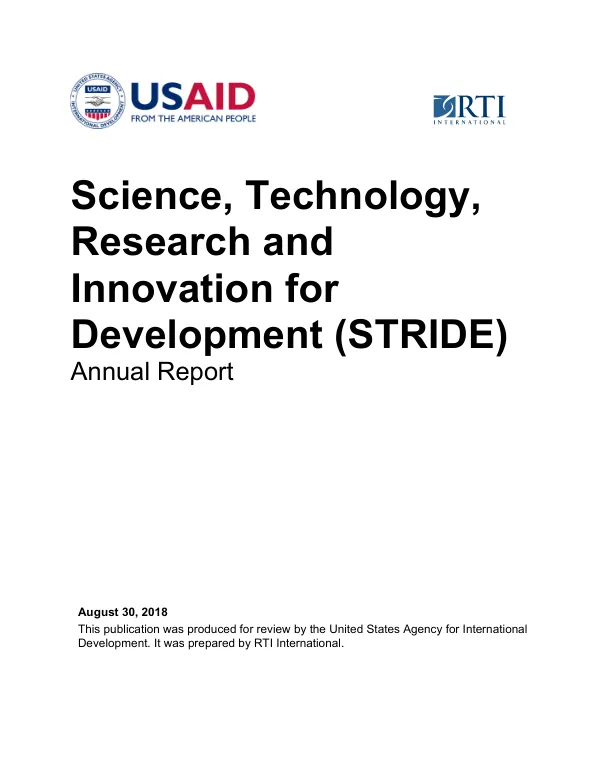
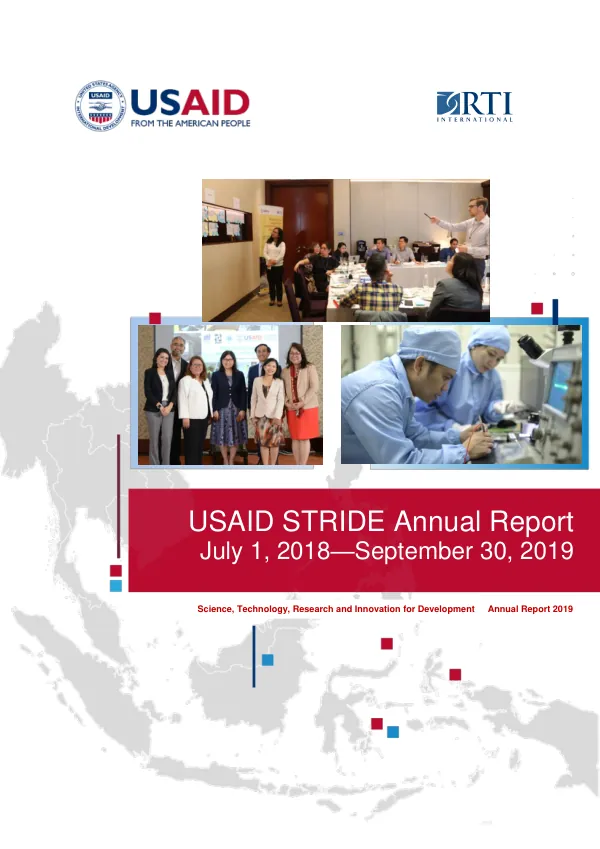
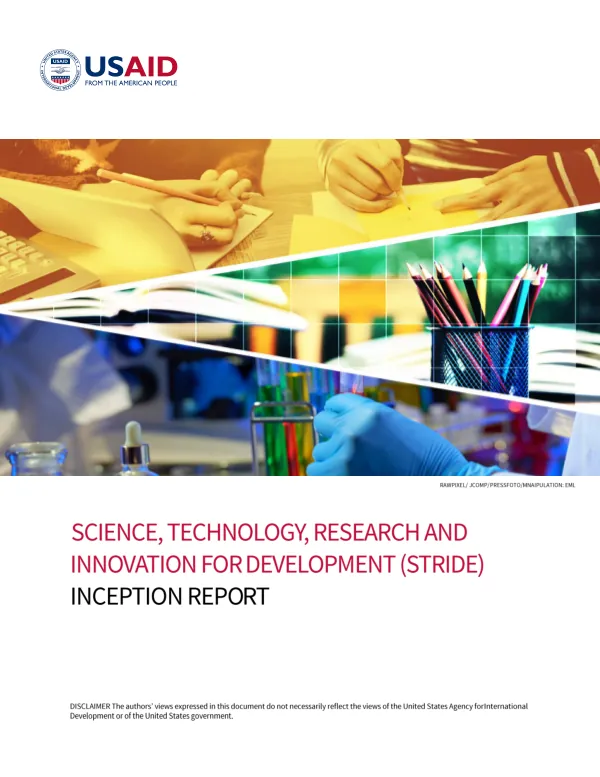
Strengthening Science, Technology, Research, and Innovation Capacity in the Philippines
Sign inUSAID
Strengthening Science, Technology, Research, and Innovation Capacity in the Philippines
The Philippines faces significant challenges in innovation-driven development, including a lack of scientists and technologists, insufficient investment in science and technology human resource development, research and development, and physical infrastructure.
2021 · 67 pages
Sign in to readA free account is required to download.
Abstract
As a result, the country experiences low industrial and agricultural productivity, inefficiency, and a meager output of knowledge products such as scientific publications, patents, and innovations. Long-standing legal, financial, and administrative rules and practices also hinder research, development, and innovation, placing a burden on the science and technology sector. A disconnect exists between higher education institutions (HEIs) as producers of research and the private sector as consumers of this research. A 2012 World Bank report highlights that HEIs in the region contribute very little to technology adaptation and upgrading in firms, and that firms often engage in industry links. To address these challenges, the Science, Technology, Research, and Innovation Development (STRIDE) program was established to strengthen the science, technology, research, and innovation capacity of the Philippines to attain inclusive growth. From 2013 to 2017, STRIDE formed partnerships between universities and industry to enhance the Philippines' capacity for innovation-led economic growth. In 2017, the Philippines recognized the importance of innovation in driving self-sustaining economic growth and placed it as a key component of national development plans. In consonance with the Philippine Development Plan 2017-2022, which aims to advance the country towards inclusive and sustainable economic growth and development through science, technology, and innovations, USAID/PH extended STRIDE's period of performance for three additional years in 2018. STRIDE's design sought to address the challenges confronting higher education in the Philippines, specifically in the fields of science, technology, research, and innovation. Its overall objective is to strengthen STI capacity in Philippine higher education with a focus on disciplines that contribute to high-growth economic sectors, such as electronics, chemical industries, alternative energy, translational medicine, agri-business, and information and communication technologies. STRIDE supports the broad goals of improving the STI ecosystem to make the economy more innovative and competitive and take advantage of the convergence of priorities of both USAID and the Philippine government. In the medium to long-term, USAID's strategic investments in higher education will strengthen research systems, institutions, and human capacity to boost the regional competitiveness of the STI ecosystem. This will be achieved through the establishment of robust international linkages to facilitate the transfer of technology and expertise, especially with leading U.S. universities. Additionally, STRIDE aims to build and sustain vibrant collaboration with the private sector, institutionalizing such collaboration to ensure the relevance and quality of university research, training, and teaching, and to enable the joint pursuit of valuable applied research.