DAI GLOBAL, LLC
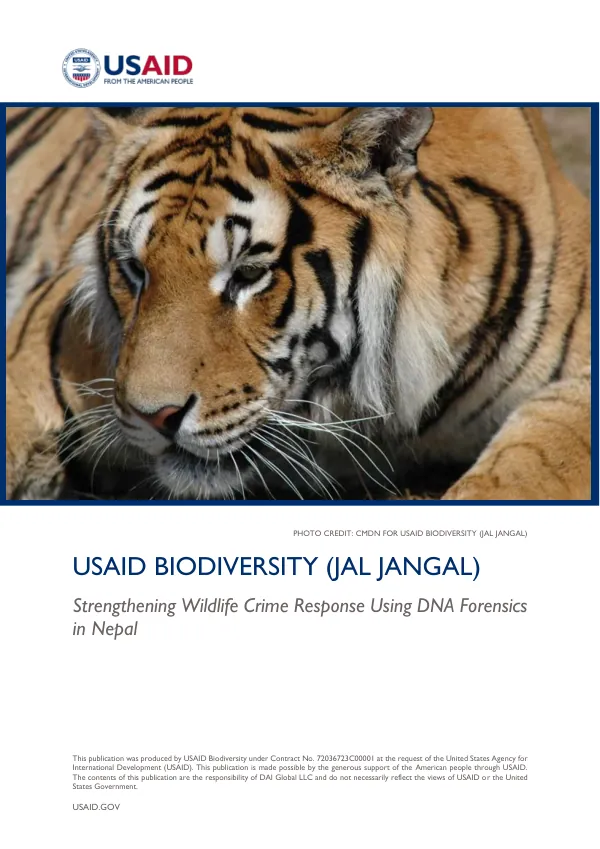
Strengthening Wildlife Crime Response Using DNA Forensics in Nepal
Wildlife crime is a growing concern in Nepal, with protected species facing constant threats from poachers and traffickers.
2023 · 31 pages
Sign in to readA free account is required to download.
Abstract
The country has made significant strides in protecting its wildlife and natural resources in the past 50 years, with almost 23 percent of its land area designated as protected areas and buffer zones. These areas span from the lowland Tarai to the high mountains, collectively covering approximately 23.39 percent of the country's total land. The conservation efforts have yielded remarkable progress, evidenced by the increased populations of critically endangered species such as tigers, rhinos, elephants, and wild buffalo. Nepal's conservation initiatives have been successful due to the collaborative efforts of various stakeholders, including the governmental sectors such as the Department of National Parks and Wildlife Conservation (DNPWC), the Nepal Police, the Nepal Army, park authorities/rangers, as well as local communities and partner agencies including Wildlife Conservation Nepal (WCN), the Worldwide Fund for Nature (WWF). However, despite these efforts, wildlife crime remains a significant threat to the country's rich biodiversity and jeopardizes the survival of several endangered species. Illicit wildlife trafficking is valued at between $7.8 billion and $10 billion per year, making it the world's fourth-largest illegal market, following narcotics, human trafficking, and counterfeit goods. Wildlife trafficking networks are believed to operate through well-organized criminal syndicates, with the involvement of local poachers, smugglers, and traders. The networks are mainly driven by high demand for wildlife products, particularly in Southeast and East Asia, where they are considered as luxury commodities or for use in traditional medicines. The USAID Biodiversity (Jal Jangal) project aims to strengthen wildlife crime response in Nepal using DNA forensics. The project involves a systematic assessment of the existing needs and gaps, as well as stakeholder mapping and engagement to design three workshops targeting first line responders, forensic laboratory staff, and judiciary legal professionals involved in wildlife crime investigation. The project has identified recurring challenges and areas needing improvement in wildlife crime response structures, and has collaborated with experts and organizations with expertise in wildlife crime prevention to provide valuable insights. The project has successfully created a systematic design of a series of workshops, featuring detailed curricula tailored to address Nepal's specific wildlife crime response needs. Each training category has clear objectives and well-defined outcomes. However, challenges faced in the initial phase, especially in dealing with complex regulatory hurdles, have led to delays in holding the workshops. As the project moves into Year 2, the groundwork laid in Year 1 will streamline efforts, enabling the project to conduct the workshops successfully and advance its efforts in designing comprehensive databases for the endangered species of Nepal. The Department of National Parks and Wildlife Conservation (DNPWC) plays a crucial role in conserving ecosystems and biodiversity within Nepal's borders, contributing significantly to in-situ conservation efforts across the nation. The DNPWC has developed a comprehensive network of protected areas, including 12 national parks, one wildlife reserve, one hunting reserve, six conservation areas, and 13 buffer zones. These areas have yielded remarkable progress, evidenced by the increased populations of critically endangered species such as tigers, rhinos, elephants, and wild buffalo. The Nepal Police, the Nepal Army, park authorities/rangers, and local communities have also played a vital role in Nepal's conservation initiatives. The collaborative efforts of these stakeholders have contributed significantly to the success of Nepal's conservation initiatives. However, despite these efforts, wildlife crime remains a significant threat to the country's rich biodiversity and jeopardizes the survival of several endangered species.