U.N. HIGH COMMISSIONER FOR REFUGEES
Sudan – Complex Emergency Fact Sheet #3, Fiscal Year (FY) 2012
Conflict in Sudan's Southern Kordofan and Blue Nile states continued in February and March, resulting in new displacements.
2012 · 7 pages
Sign in to readA free account is required to download.
Abstract
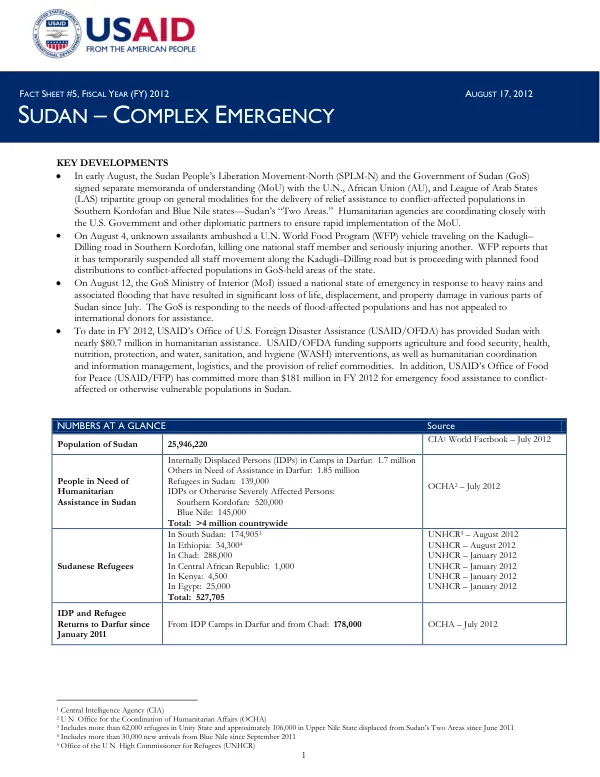
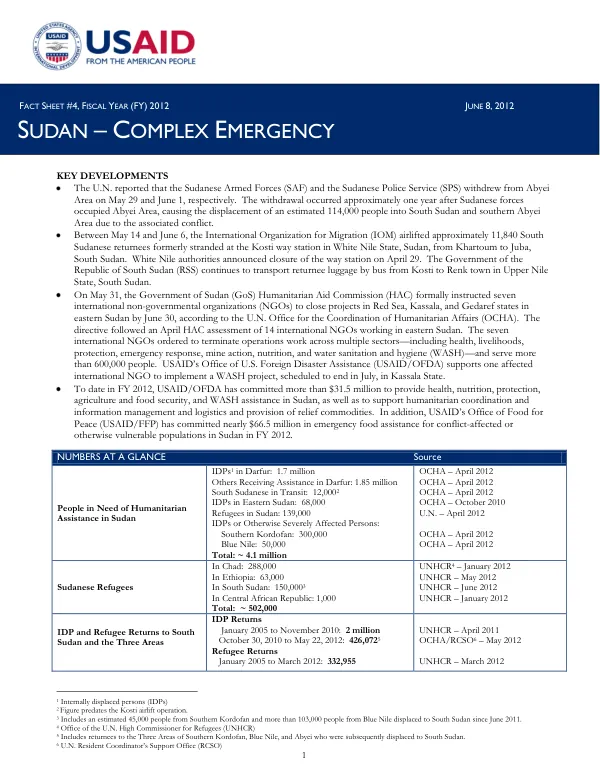
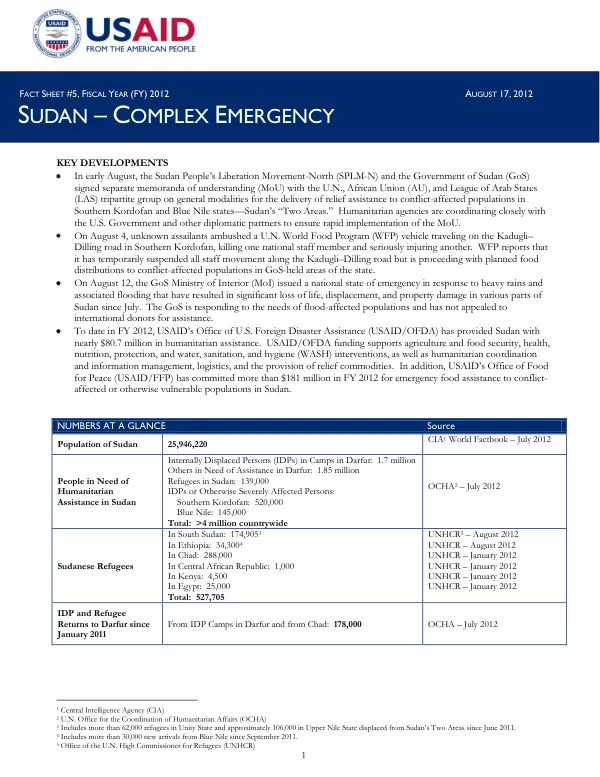
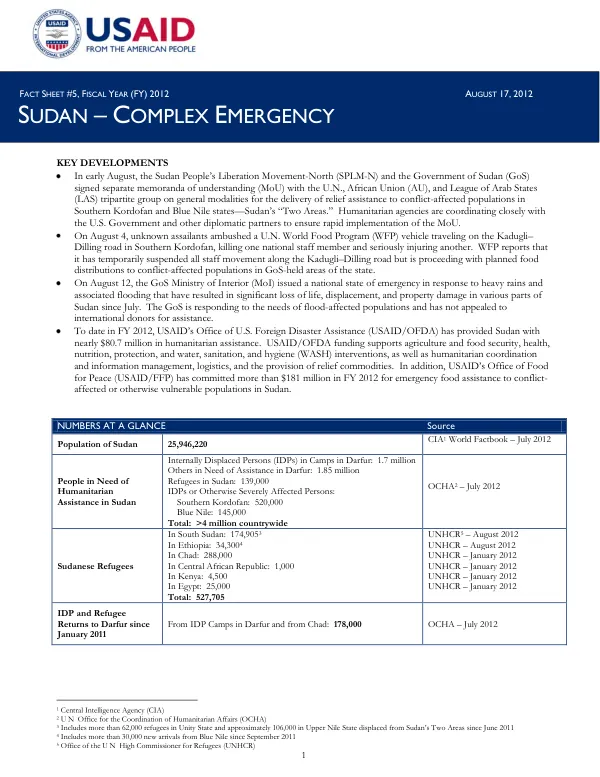
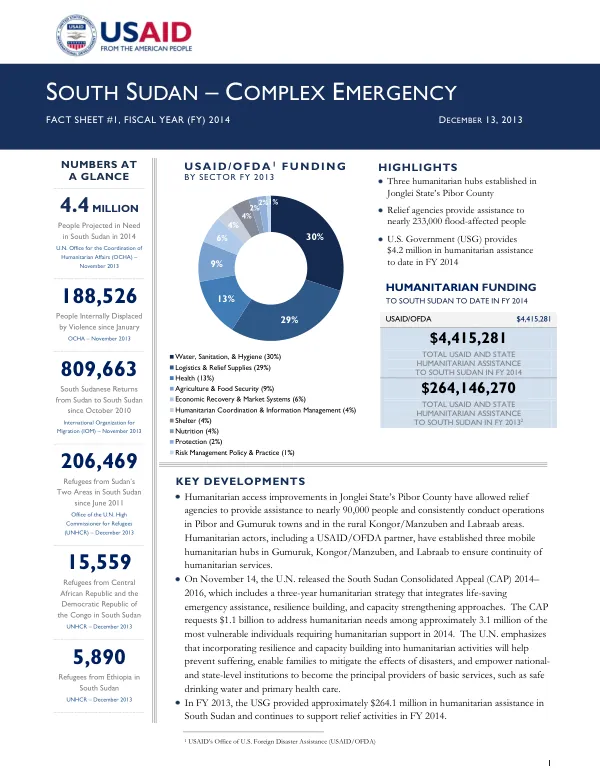
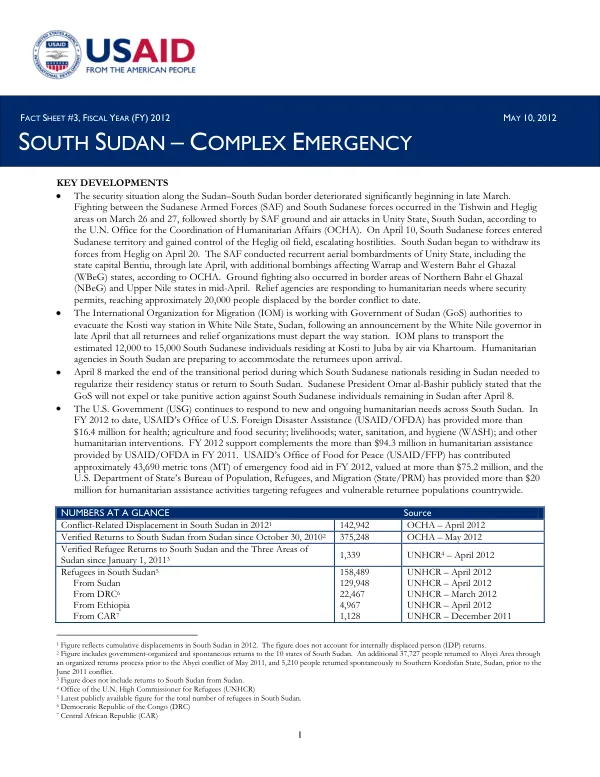
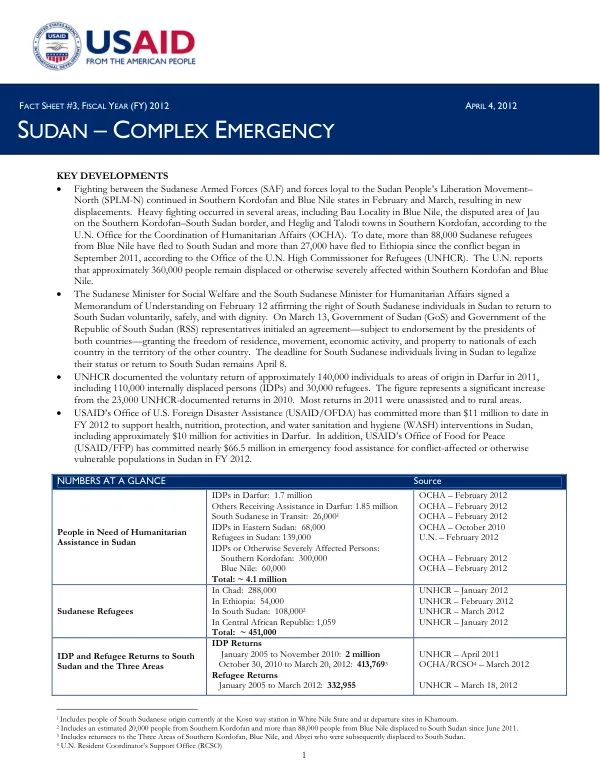
Heavy fighting occurred in several areas, including Bau Locality in Blue Nile, the disputed area of Jau on the Southern Kordofan-South Sudan border, and Heglig and Talodi towns in Southern Kordofan, according to the U.N. Office for the Coordination of Humanitarian Affairs (OCHA). To date, more than 88,000 Sudanese refugees from Blue Nile have fled to South Sudan and more than 27,000 have fled to Ethiopia since the conflict began in September 2011, according to the Office of the U.N. High Commissioner for Refugees (UNHCR). Approximately 360,000 people remain displaced or otherwise severely affected within Southern Kordofan and Blue Nile. The Sudanese Minister for Social Welfare and the South Sudanese Minister for Humanitarian Affairs signed a Memorandum of Understanding on February 12 affirming the right of South Sudanese individuals in Sudan to return to South Sudan voluntarily, safely, and with dignity. On March 13, Government of Sudan (GoS) and Government of the Republic of South Sudan (RSS) representatives initialed an agreement granting the freedom of residence, movement, economic activity, and property to nationals of each country in the territory of the other country. The deadline for South Sudanese individuals living in Sudan to legalize their status or return to South Sudan remains April 8. UNHCR documented the voluntary return of approximately 140,000 individuals to areas of origin in Darfur in 2011, including 110,000 internally displaced persons (IDPs) and 30,000 refugees. The figure represents a significant increase from the 23,000 UNHCR-documented returns in 2010. Most returns in 2011 were unassisted and to rural areas. USAID's Office of U.S. Foreign Disaster Assistance (USAID/OFDA) has committed more than $11 million to date in FY 2012 to support health, nutrition, protection, and water sanitation and hygiene (WASH) interventions in Sudan, including approximately $10 million for activities in Darfur. In addition, USAID's Office of Food for Peace (USAID/FFP) has committed nearly $66.5 million in emergency food assistance for conflict-affected or otherwise vulnerable populations in Sudan in FY 2012. The complex emergency in Sudan continues to affect more than 4.7 million people, including up to 2.7 million IDPs, of whom an estimated 1.7 million remain in camps, according to U.N. agencies. Conflict continues among the Sudanese Armed Forces (SAF), armed opposition groups, militias, and ethnic groups. Insecurity, access restrictions, and bureaucratic impediments limit the ability of relief agencies to respond to humanitarian and recovery needs. The Doha Document for Peace in Darfur (DDPD), signed on July 14, 2011, is a framework for establishing a comprehensive peace process in Darfur. To date, the Liberation and Justice Movement (LJM) is the only armed opposition group that has signed the DDPD.
Related documents