USAID DEC
Supply-side dimensions and dynamics of integrating HIV testing and counselling into routine antenatal care: a facility assessment from Morogoro Region, Tanzania
Sign inJOHNS HOPKINS UNIVERSITY BLOOMBERG SCHOOL OF PUBLIC HEALTH/INFO PROJECT
Supply-side dimensions and dynamics of integrating HIV testing and counselling into routine antenatal care: a facility assessment from Morogoro Region, Tanzania
The integration of HIV testing and counselling into routine antenatal care is a critical process addressing the disproportionate burden of HIV among mothers and children in sub-Saharan Africa.
2015 · 15 pages
Sign in to readA free account is required to download.
Abstract
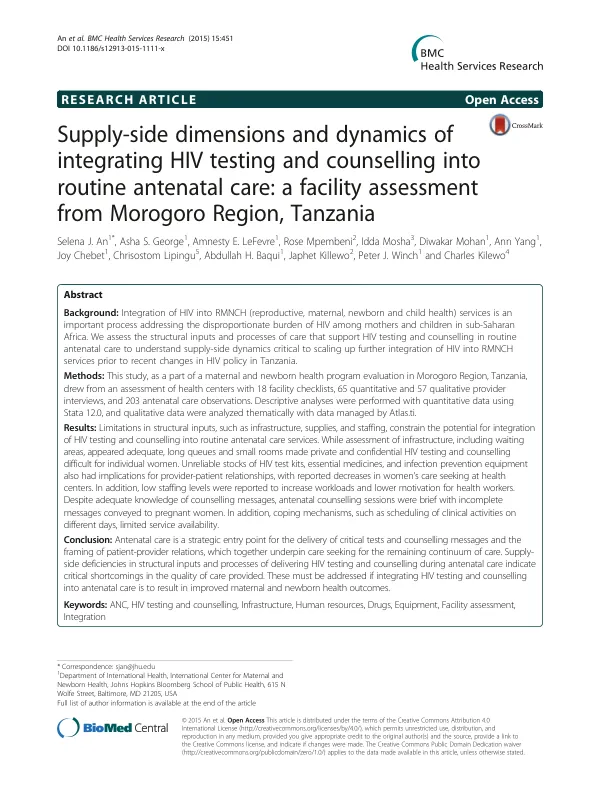
In Tanzania, the integration of HIV into reproductive, maternal, newborn and child health (RMNCH) services is an important process, particularly in the context of evolving HIV policies. The country has moved towards integrating HIV testing and counselling into routine antenatal care services, with the goal of maximizing coverage of pregnant women in prevention of mother-to-child transmission (PMTCT) interventions. The integration of HIV testing and counselling into routine antenatal care in Tanzania began in 2007, with the adoption of provider-initiated testing and counselling strategy. However, subsequent HIV-related care for HIV-infected pregnant women remained in separate care and treatment centers (CTCs). In 2013, Tanzania moved to Option B+, where lifelong treatment is given to all HIV-infected pregnant and lactating mothers, regardless of CD4 count and WHO clinical disease stage. These services are fully integrated into the RCH services package. Antenatal care serves as a critical platform into which HIV testing and counselling were integrated in 2007 in Tanzania. Antenatal care is potentially a universal platform for pregnant women, as 96% of women received at least one antenatal care visit from a skilled provider during pregnancy in mainland Tanzania in 2010. However, only 15% of women made their first antenatal care visit during the first trimester, and only 43% completed the four visits recommended by the focused antenatal care (FANC) guidelines. The supply-side dimensions and dynamics of integrated HIV testing and counselling during routine antenatal care in Morogoro Region, Tanzania, were assessed in this study. The study focused on the structural elements, the context in which health care is provided, health care processes that support care seeking and provision, and health outcomes. The study identified critical structural inputs, including infrastructure, laboratories, drugs, medical supplies and technologies, and availability of human resources. The study found that limitations in structural inputs, such as infrastructure, supplies, and staffing, constrain the potential for integration of HIV testing and counselling into routine antenatal care services. While assessment of infrastructure, including waiting areas, appeared adequate, long queues and small rooms made private and confidential HIV testing and counselling difficult for individual women. Unreliable stocks of HIV test kits, essential medicines, and infection prevention equipment also had implications for provider-patient relationships, with reported decreases in women's care seeking at health centers. The study also found that low staffing levels were reported to increase workloads and lower motivation for health workers. Despite adequate knowledge of counselling messages, antenatal counselling sessions were brief with incomplete messages conveyed to pregnant women. In addition, coping mechanisms, such as scheduling of clinical activities on different days, limited service availability. The study concluded that antenatal care is a strategic entry point for the delivery of critical tests and counselling messages and the framing of patient-provider relations, which together underpin care seeking for the remaining continuum of care. Supply-side deficiencies in structural inputs and processes of delivering HIV testing and counselling during antenatal care indicate critical shortcomings in the quality of care provided. These must be addressed if integrating HIV testing and counselling into antenatal care is to result in improved maternal and newborn health outcomes.
Related documents
Documents in this collection
 2015
2015USAID DEC
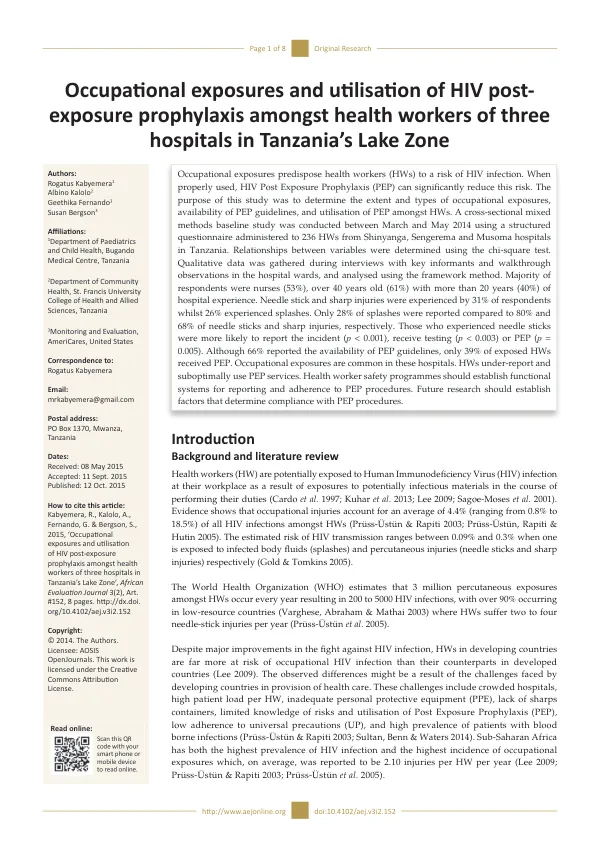
Occupational exposures and utilisation of HIV post-exposure prophylaxis amongst health workers of three hospitals in Tanzania’s Lake Zone
Open record 2012
2012USAID DEC