USAID DEC
Sustainable Agriculture and Production Linked to Improved Nutrition Status, Resilience, and Gender Equity (SAPLING) Infant Food Consumption Survey Report
Sign inHELLEN KELLER INTERNATIONAL
Sustainable Agriculture and Production Linked to Improved Nutrition Status, Resilience, and Gender Equity (SAPLING) Infant Food Consumption Survey Report
The Chittagong Hill Tracts (CHT) is an ethnically diverse and historically conflict-ridden area in Bangladesh.
2018 · 23 pages
Sign in to readA free account is required to download.
Abstract
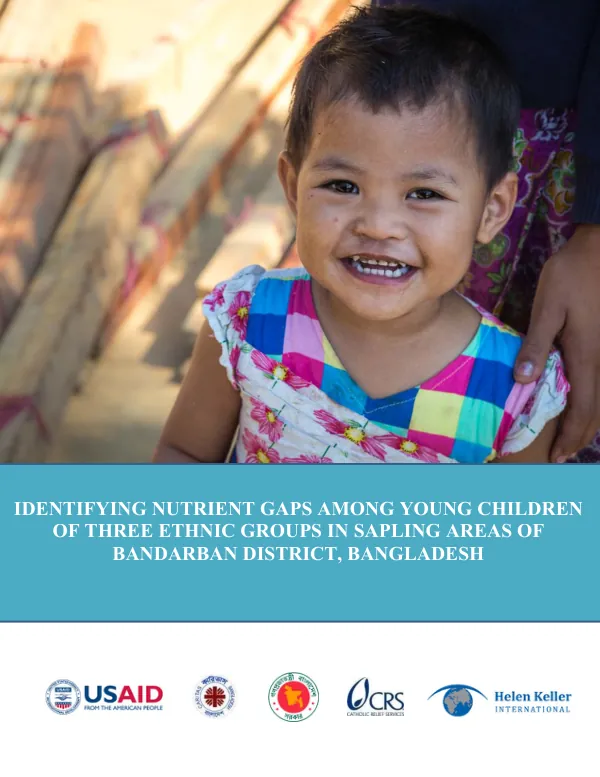
The region is home to three major ethnic groups: Bengali, Marma, and Mro. A key aim of the Sustainable Agriculture and Production Linked to Improve Nutrition Status, Resilience, and Gender Equality (SAPLING) project is to improve child nutritional outcomes through changing behavior around complementary feeding of young children. The first 1,000 days of life, between conception and two years of age, is a unique period of opportunity for the foundation of optimum health, growth, and neurodevelopment. This study seeks to develop and test complementary feeding guidelines for children nine to 17 months of age among the three major ethnic groups in the SAPLING area using the Optifood software. Optifood was developed by the World Health Organization (WHO) in collaboration with the London School of Hygiene and Tropical Medicine, Food and Nutrition Technical Assistance (FANTA) project, and Blue-Infinity. It identifies nutrients that individuals currently obtain from their local diets and formulates and tests food-based recommendations to meet their nutritional needs. A cross-sectional dietary 24-hour recall survey and anthropometric measurement of length and weight of targeted children were conducted from mid-January to mid-February 2017. A sample size of 40 to 42 children from each ethnic group was surveyed, with a lower sample attainment in the Mro community due to unrest at the time of data collection. Age and anthropometry were similar across groups, but Bengali children had more diverse diets, and fewer nutrients that could not be met with their existing diet. The Optifood analysis revealed that Bengali children had higher feeding recommendations compared to the Marma and Mro communities. Recommendations for consumption of different foods included Bengali children consuming eggs daily, followed by twice a week for Mro, and once a week for Marma children. At least two servings of vegetables each day were recommended for all ethnic groups. Fish and meat were recommended for consumption every day of the week, with three days of the week having fish and another four days having meat. Fruits were also recommended for all groups, but with differences in the frequency of current consumption. The results of this assessment highlight the differences in young child feeding practices between the three major ethnic groups in the Bandarban district and the limitations current consumption patterns impose on the ability of young children to meet their nutritional needs. The inability of the improved combinations of local foods to ensure population-level dietary adequacy for all twelve micronutrients, including Calcium, Iron, and Zinc, is a significant concern. The study's findings will be used to promote specific foods in the SAPLING agriculture and nutrition education components for children in this age group.
Related documents