USAID DEC
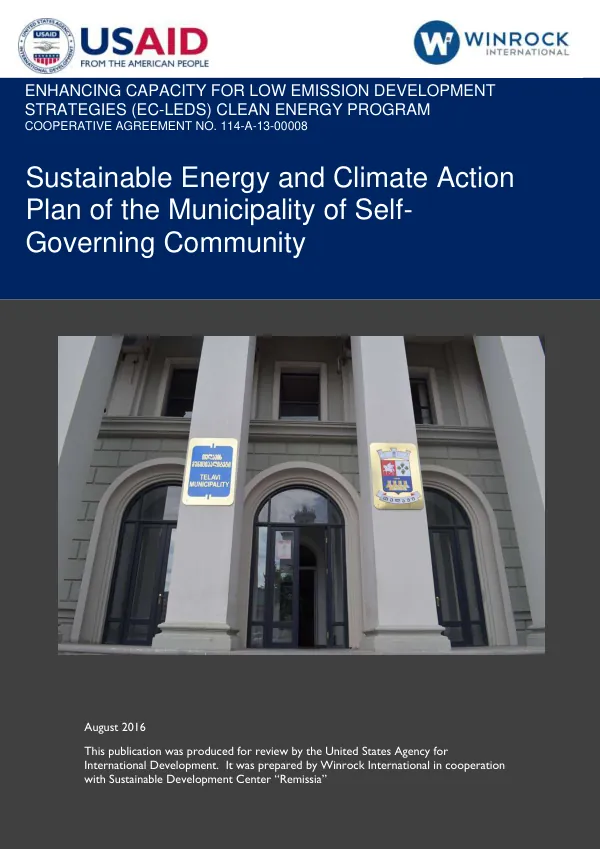
Sustainable Energy and Climate Action Plan of the Municipality of Self-Governing Community Telavi
Sign inUSAID
Sustainable Energy and Climate Action Plan of the Municipality of Self-Governing Community Telavi
The Sustainable Energy and Climate Action Plan of the Municipality of Self-Governing Community Telavi was developed in August 2016.
2016 · 165 pages
Sign in to readA free account is required to download.
Abstract
The plan aims to reduce greenhouse gas emissions and promote sustainable energy practices in the municipality. The plan is a result of the technical assistance provided by the project "Enhancing Capacity for Low Emission Development Strategies (EC-LEDS)/Clean Energy Program" implemented by Winrock International Georgia under the support of the US Agency for International Development. The plan focuses on six sectors: transportation, buildings, street lighting, greening, waste, and agriculture. The transportation sector accounts for 44% of the municipality's greenhouse gas emissions, primarily due to the use of fossil fuels in vehicles. The plan proposes reducing emissions from the transportation sector by increasing the use of electric and hybrid vehicles, promoting non-motorized transportation, and improving public transportation. The buildings sector is responsible for 26% of the municipality's greenhouse gas emissions, mainly due to energy consumption in residential and commercial buildings. The plan recommends improving energy efficiency in buildings through the use of renewable energy sources, such as solar and wind power, and promoting energy-efficient appliances and lighting. The street lighting sector accounts for 10% of the municipality's greenhouse gas emissions, primarily due to the use of high-pressure sodium lamps. The plan proposes replacing traditional streetlights with energy-efficient LED lights and reducing energy consumption through the use of smart lighting systems. The greening sector has the potential to remove 1,200 tons of carbon dioxide equivalent per year, primarily through the planting of trees and other vegetation. The plan recommends increasing the number of trees and other vegetation in the municipality and promoting green spaces in public areas. The waste sector accounts for 5% of the municipality's greenhouse gas emissions, primarily due to the decomposition of organic waste in landfills. The plan proposes reducing waste through recycling, composting, and proper waste disposal practices. The agriculture sector is vulnerable to climate change, with changing weather patterns and increased frequency of extreme weather events affecting crop yields and livestock productivity. The plan recommends promoting sustainable agriculture practices, such as agroforestry and conservation agriculture, to reduce greenhouse gas emissions and improve crop yields. The plan also includes a monitoring and verification system to track progress and ensure the implementation of the climate action plan. The responsible unit for monitoring is the municipality's environmental department, which will track key indicators, including greenhouse gas emissions, energy consumption, and waste generation. The plan aims to reduce greenhouse gas emissions by 20% by 2020 and 30% by 2030 compared to the baseline scenario. The plan also aims to increase the use of renewable energy sources to 20% of the municipality's energy mix by 2020 and 30% by 2030. The plan is expected to contribute to the municipality's sustainable development and reduce its carbon footprint.
Related documents
Documents in this collection
 2016
2016USAID DEC
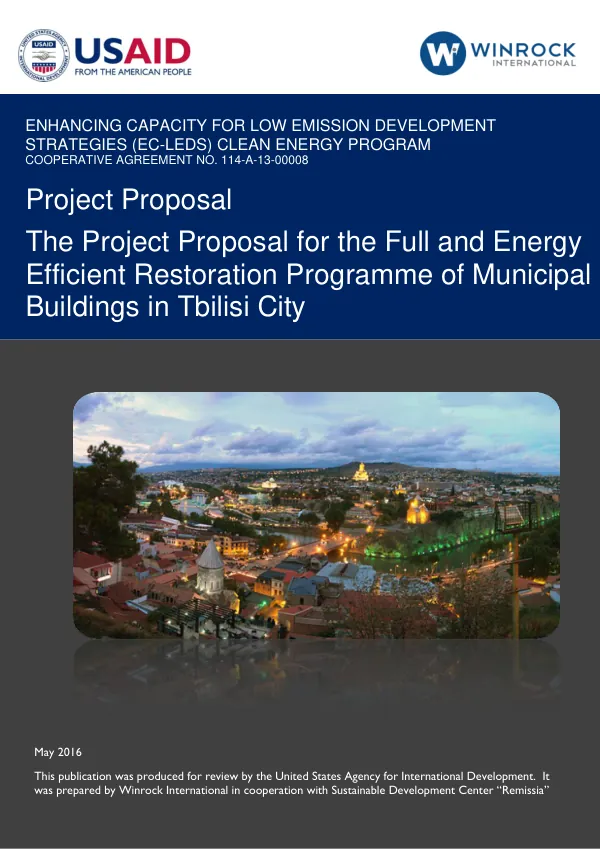
Enhancing Capacity for Low Emission Development Strategies (EC-LEDS) Clean Energy Program Project Proposal: Full and Energy Efficient Restoration Programme of Municipal Buildings in Tbilisi City
Open record 2016
2016USAID DEC