USAID DEC
Sustaining HIV/AIDS Treatment Services: Estimating the Health Insurance Liability for Treatment of People Living with HIV/AIDS in Vietnam
Sign inUSAID DEC
Sustaining HIV/AIDS Treatment Services: Estimating the Health Insurance Liability for Treatment of People Living with HIV/AIDS in Vietnam
The Sustainable Financing Options Project for HIV/AIDS prevention and control in Vietnam aims to ensure long-term sustainability of HIV/AIDS treatment services.
2015 · 4 pages
Sign in to readA free account is required to download.
Abstract
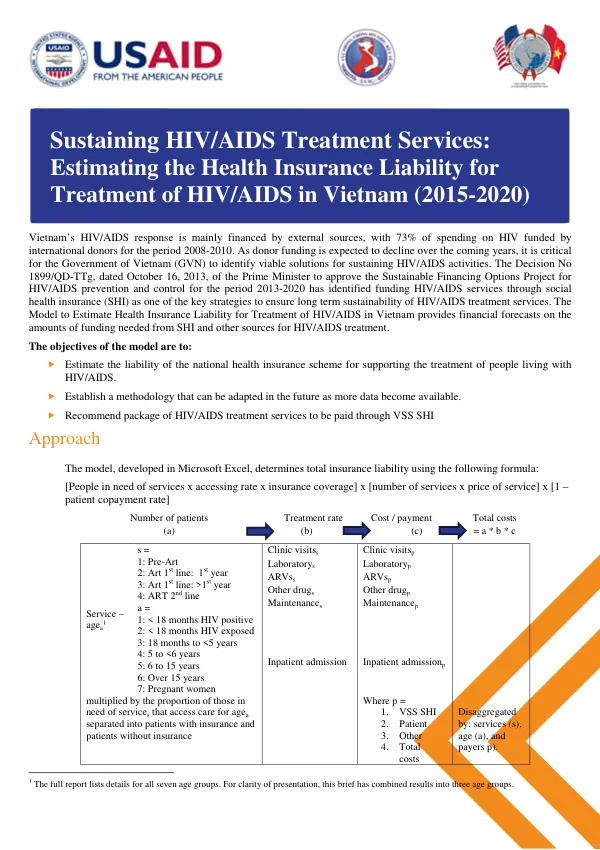
The project identifies funding HIV/AIDS services through social health insurance (SHI) as a key strategy to achieve this goal. The Model to Estimate Health Insurance Liability for Treatment of HIV/AIDS in Vietnam provides financial forecasts on the amounts of funding needed from SHI and other sources for HIV/AIDS treatment. The model determines total insurance liability using the formula: [People in need of services x accessing rate x insurance coverage] x [number of services x price of service] x [1 – patient copayment rate]. The model takes into account various factors, including the number of patients, treatment rate, cost/payment, and patient copayment rate. The model also considers different age groups, treatment components, and services. The estimated number of people living with HIV/AIDS accessing treatment and on insurance is projected to increase from 111,000 in 2015 to 155,000 in 2020, with about 80 percent of people seeking HIV treatment covered by SHI. The total number of people receiving ARV treatment is projected to be over 190,000 in 2020, with over 150,000 receiving ARV treatment with SHI. The estimated insurance liability for outpatient treatment is expected to increase from VND 267 billion in 2015 to VND 813 billion in 2020, with outpatient examinations/laboratory and ARV drugs accounting for 94 percent of outpatient treatment liability. The total cost of all HIV/AIDS treatment services is projected to increase from VND 919 billion in 2015 to VND 1,566 billion in 2020, with health insurance representing the plurality of payments across all 6 years. The recommended package of HIV/AIDS treatment services includes various components, such as examination, laboratory work, ARV treatment, and other services. The estimated number of services per patient per year varies by age cohort and HIV/AIDS treatment component. The model assumes that patients with SHI incur a 20 percent copayment rate. The study highlights the importance of understanding the liability of social health insurance for HIV/AIDS treatment services. The model provides a framework for estimating the liability and can be adapted in the future as more data become available. The study recommends that HIV/AIDS treatment facilities be eligible to provide HIV examination and treatment services through SHI, and that the legal framework for payment of HIV/AIDS treatment through SHI be available and effective. The study also identifies major limitations, including the lack of data on important parameters, such as current enrollment in SHI, poverty status, and rates of accessing inpatient care by people living with HIV/AIDS. The study recommends that data on these parameters be collected to improve the model and understand the liability of social health insurance for HIV/AIDS treatment services.
Related documents
Documents in this collection
 2021
2021USAID DEC
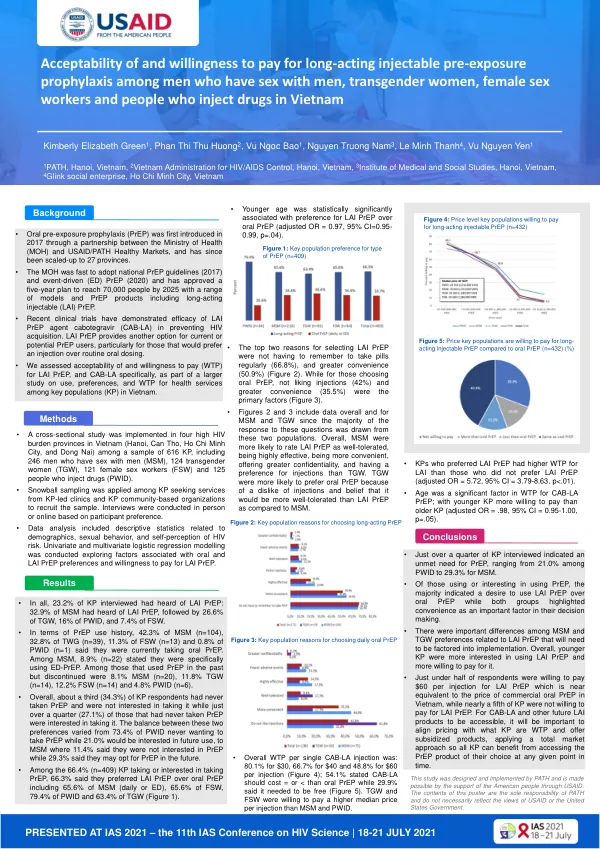
Acceptability of and willingness to pay for long-acting injectable pre-exposure prophylaxis among men who have sex with men, transgender women, female sex workers and people who inject drugs in Vietnam
Open record 2021
2021USAID DEC
Facilitating TLD and PrEP Health Technology Assessment
Open record