JOHNS HOPKINS UNIVERSITY
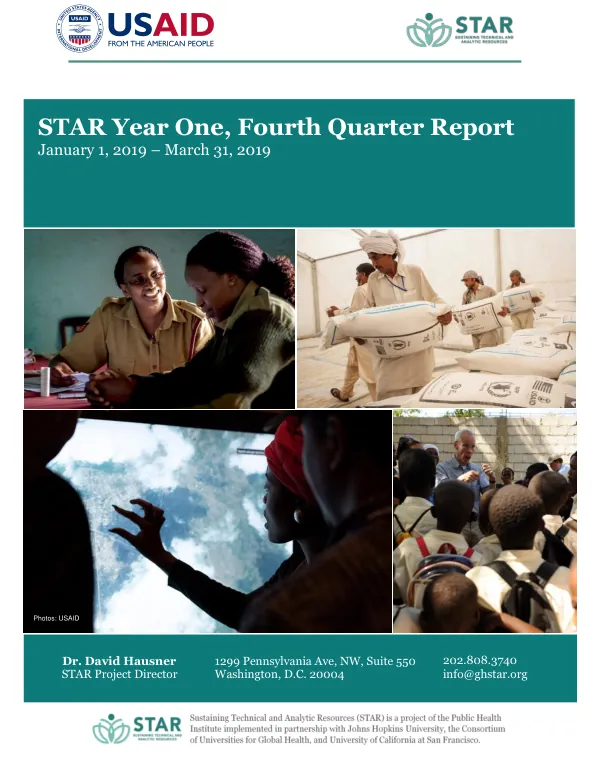
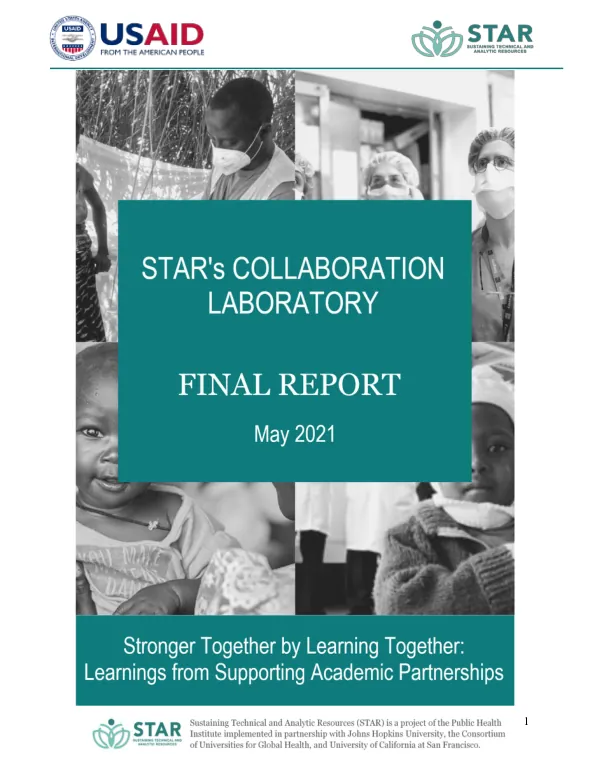
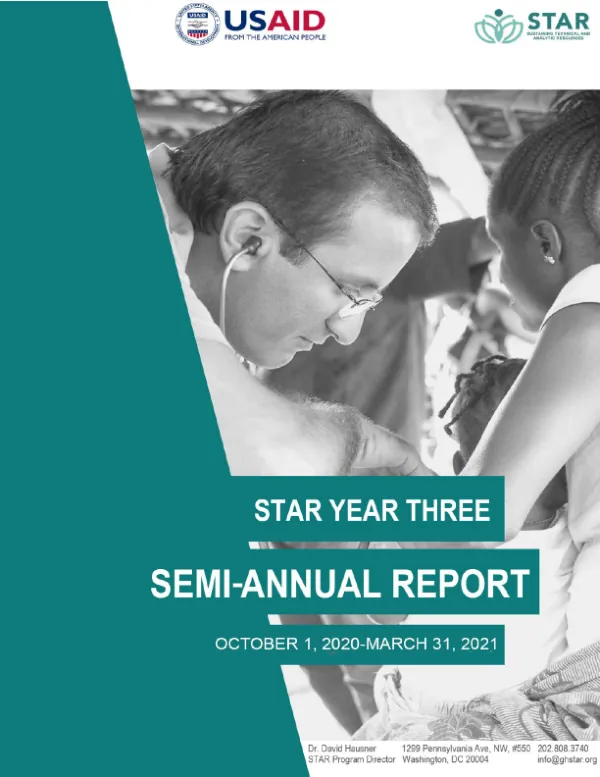
Sustaining Technical and Analytic Resources (STAR) Project Report, PY3
The Sustaining Technical and Analytic Resources (STAR) project entered its third project year with significant progress in achieving planned programmatic goals and maintaining support for participants.
2021 · 70 pages
Sign in to readA free account is required to download.
Abstract
The project supports building the capacity of diverse global health professionals and organizations at all levels to make inclusive, contributory, and innovative contributions to global health. STAR participants and partners collaborate in the development of systems and tools that strengthen and sustain local and global health responses to address diseases, epidemics, and pandemics in resource-constrained settings. The project's focus on recruitment and support for Fellows and Interns has been a key area of emphasis, with STAR consistently prioritizing meeting the needs of USAID. The project has also placed a strong emphasis on diversity, equity, and inclusion (DEI) issues, with a focus on increased awareness and responsiveness to the Black Lives Matter movement for racial justice. STAR has prioritized blind recruitment and has shared resources with participants to promote DEI. During the reporting period, between October 1, 2020, and March 31, 2021, STAR supported 132 participants, compared to 132 in the previous project year and 59 in the first project year. The project has implemented a range of activities, including performance management, learning, and administrative support for participants. STAR has also continued to support USAID's COVID-19 response, including critical respiratory care technical assistance. The project has maintained strong partnerships with various organizations, including the University of California, San Francisco (UCSF), and Johns Hopkins University (JHU). STAR has also collaborated with the Global Health Bureau at USAID to support diversity, equity, and inclusion activities. The project has concluded four Collaboration Laboratory academic partnerships grants and has continued to build leadership and management capacity. The STAR project has demonstrated resilience in the face of significant challenges, including a reduction in workforce due to budgetary concerns and the COVID-19 pandemic. The project's focus on recruitment and support for Fellows and Interns has been a key factor in its success, and its emphasis on DEI issues has helped to promote a more inclusive and equitable work environment. The project's performance management and learning activities have been critical to its success, with STAR providing strong support for participants and partners. The project has also maintained a strong focus on administrative support, including administrative support for participants. STAR has continued to support USAID's COVID-19 response, including critical respiratory care technical assistance. The STAR project has made significant progress in achieving its planned programmatic goals and has maintained support for participants. The project's focus on recruitment and support for Fellows and Interns has been a key area of emphasis, and its emphasis on DEI issues has helped to promote a more inclusive and equitable work environment. The project's performance management and learning activities have been critical to its success, and its administrative support has been essential in supporting participants and partners.
Related documents