GOVERNMENT OF INDONESIA
Maternal and Newborn Health Toolkit
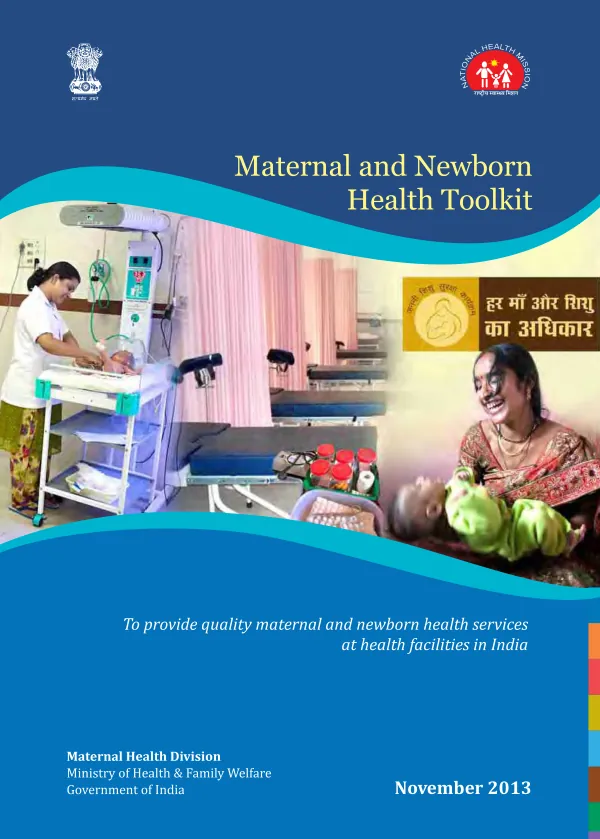
The Maternal and Newborn Health Toolkit was developed by the Maternal Health Division of the Ministry of Health & Family Welfare, Government of India, in November 2013.
2013 · 196 pages
Sign in to readA free account is required to download.
Abstract
The toolkit aims to provide standardized maternal and neonatal care packages across the country to ensure quality services at public health institutions. The initiative is part of the National Rural Health Mission (NRHM) and is supported by various development partners, including UNICEF, UNFPA, and WHO. The toolkit was conceptualized by Anuradha Gupta, Additional Secretary and Mission Director, NRHM, with the goal of improving the quality of care being rendered at public health facilities. The guidelines for the toolkit were developed after thorough deliberations and sustained efforts of the Maternal Health Division and other stakeholders. The toolkit is designed to provide knowledge and information on standardized maternal and neonatal care packages, including technical protocols for setting up state-of-the-art maternal and child health (MCH) wings, labour rooms, wards, and operation theaters (OTs). The toolkit focuses on improving the condition and protocols of labour rooms, with the aim of ensuring quality services with dignity and respect to mothers and babies. The guidelines emphasize the importance of timely provision of emergency obstetric care and routine essential obstetric and newborn care in reducing maternal and neonatal morbidity and mortality. The toolkit also highlights the need for standardization of design in terms of infrastructure, equipment, human resources, infection prevention and control, and referral models to ensure quality maternal and neonatal health services. The toolkit is designed to be useful for programme managers and clinicians in organizing critical areas of service provision as per standards laid down in the toolkit for Maternal and Neonatal Health (MNH) services in states and districts. The guidelines have been developed with the support of various experts, including Dr. Rakesh Kumar, Joint Secretary, and Dr. H. Bhushan, Deputy Commissioner (MH). The toolkit is expected to help in planning and operationalizing safe motherhood services with dignity and quality for lakhs of women approaching public health maternity facilities in all states. The toolkit emphasizes the importance of client-friendly facilities that render quality services with dignity and respect to mothers and babies. It highlights the need for standard treatment protocols to be followed in order to ensure quality service to every pregnant woman, mother, and newborn accessing public health facilities. The toolkit is expected to contribute to the acceleration of the decline in maternal mortality rate (MMR) by improving the quality of care being rendered at public health facilities.